ICF
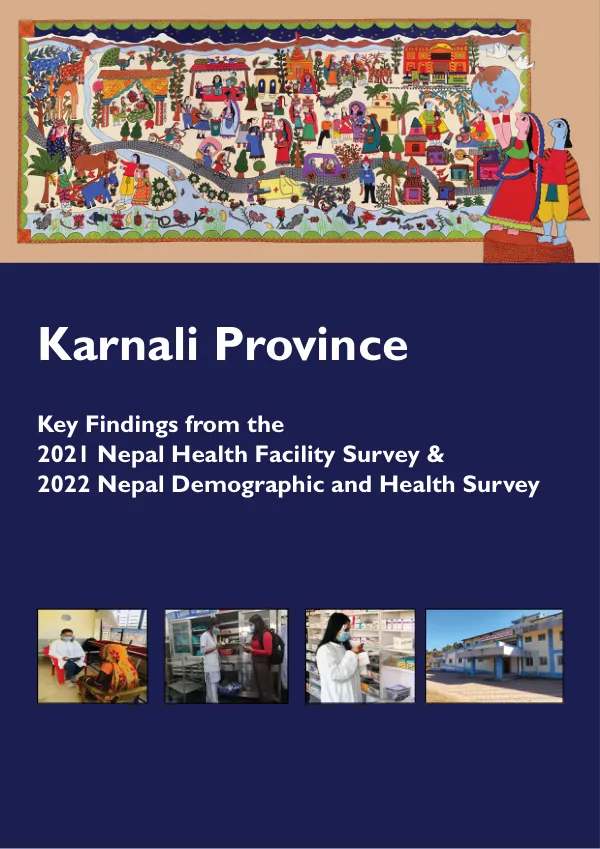
Karnali Province Key Findings from the 2021 Nepal HFS & 2022 Nepal DHS
The 2021 Nepal Health Facility Survey (NHFS) is a comprehensive assessment of health facilities in Nepal, harmonizing various health facility surveys among the Ministry of Health and Population and health development partners.
2023 · 112 pages
Sign in to readA free account is required to download.
Abstract
The survey was conducted by New ERA under the aegis of the Ministry of Health and Population of Nepal, with funding from the United States Agency for International Development (USAID), the UK's Foreign, Commonwealth, and Development Office (FCDO), and the United Nations Population Fund (UNFPA). The survey aimed to provide information on the availability and readiness of health facilities, as well as the quality of care provided. The survey collected data from a nationally representative sample of 1,200 health facilities, including hospitals, clinics, and health posts. The data collection process involved a combination of interviews with facility administrators, observations of facilities, and review of facility records. The survey instrument was designed to collect data on a range of indicators, including facility infrastructure, equipment, staffing, and service delivery. The survey results indicate that the majority of health facilities in Nepal are not equipped to provide basic emergency obstetric care, with only 22% of facilities having a skilled birth attendant available 24/7. Additionally, the survey found that 45% of facilities do not have a functional laboratory, and 30% do not have a functional pharmacy. The survey also found that the majority of facilities do not have a system in place for tracking patient outcomes, and that many facilities do not have a clear policy for handling patient complaints. The 2022 Nepal Demographic and Health Survey (NDHS) is a household survey that provides information on the health and well-being of the population in Nepal. The survey was conducted by New ERA under the aegis of the Ministry of Health and Population of Nepal, with funding from USAID. The survey aimed to provide information on a range of indicators, including fertility rates, infant and child mortality, and maternal health. The survey collected data from a nationally representative sample of 24,000 households, using a combination of interviews with household members and observations of household conditions. The survey instrument was designed to collect data on a range of indicators, including fertility rates, infant and child mortality, and maternal health. The survey results indicate that the total fertility rate in Nepal has declined from 4.4 children per woman in 2011 to 2.6 children per woman in 2022. The survey also found that the infant mortality rate has declined from 43 deaths per 1,000 live births in 2011 to 28 deaths per 1,000 live births in 2022. Additionally, the survey found that the maternal mortality ratio has declined from 258 deaths per 100,000 live births in 2011 to 139 deaths per 100,000 live births in 2022. The report provides provincial-level program managers with information on the population's health and health facility services in Karnali Province. The report compares the performance of selected indicators from both the 2021 NHFS and the 2022 NDHS for Karnali Province with the national indicators. The report highlights the importance of quality data in evidence-based planning and program management, and provides insights into the performance of selected indicators from both surveys. The report also notes that there are limitations in terms of sample size at the provincial level, and that several indicators have very few cases, which should be interpreted with caution. The report provides provincial-level tables at the back of the report, which include data from the 2021 NHFS and the 2022 NDHS.
Related documents