ANALYSIS, INFORMATION MANAGEMENT AND COMMUNICATION ACTIVITY PROJECT
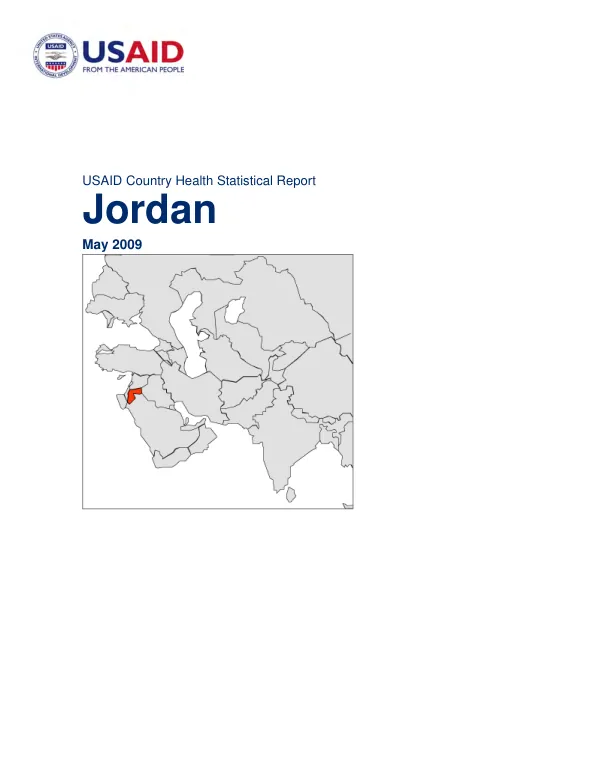
USAID Country Health Statistical Report Jordan
The total population of Jordan is 6,342,948 as of 2009.
2009 · 20 pages
Sign in to readA free account is required to download.
Abstract
The population growth rate is 2.3% per year, with 79% of the population residing in urban areas. The number of women aged 15-19 is 323,575, and the number of women aged 15-49 is 1,679,054. The life expectancy at birth is 78.9 years, and the crude birth rate is 19.6 per 1,000 people. Jordan's socioeconomic indicators show a GNI per capita of $5,280 in 2005, with health expenditure accounting for 9.4% of the country's GDP in 2003. The country has a relatively high adult literacy rate of 89.9%, with 96.7% of children enrolled in primary school. However, access to improved water sources and sanitation facilities varies across rural and urban areas, with 91% of the population in both areas having access to improved water sources and 85% and 94% having access to improved sanitation facilities in rural and urban areas, respectively. The total fertility rate in Jordan is 2.4 children per woman, with a contraceptive prevalence rate of 36.4% among all women and 41.9% among married women. The median age of sexual debut among women aged 25-49 is not available, and the mean ideal family size is 4.2 children. Women's reproductive health indicators show that 98.5% of women receive antenatal care, with 99% of deliveries assisted by a health professional. Child survival indicators in Jordan show an infant mortality rate of 15 per 1,000 live births, with 75% of children under 5 receiving care for acute respiratory infections and 24.9% receiving oral rehydration therapy. The under-5 mortality rate is 19.3 per 1,000 live births, and the neonatal mortality rate is 14 per 1,000 live births. Exclusive breastfeeding rates are 28.2% and 21.8% for children under 4 and 6 months, respectively. Vaccination coverage in Jordan is high, with 97.4% of children receiving the DPT3 vaccine, 94.3% receiving the measles vaccine, and 98% receiving the polio vaccine. However, equity in DPT3 coverage and improved sanitation/hygiene practices are not available.
Related documents