USAID DEC
U.S. Food Regulations: A Guide for Exporting Processors
The U.S.
103 pages
Sign in to readA free account is required to download.
Abstract
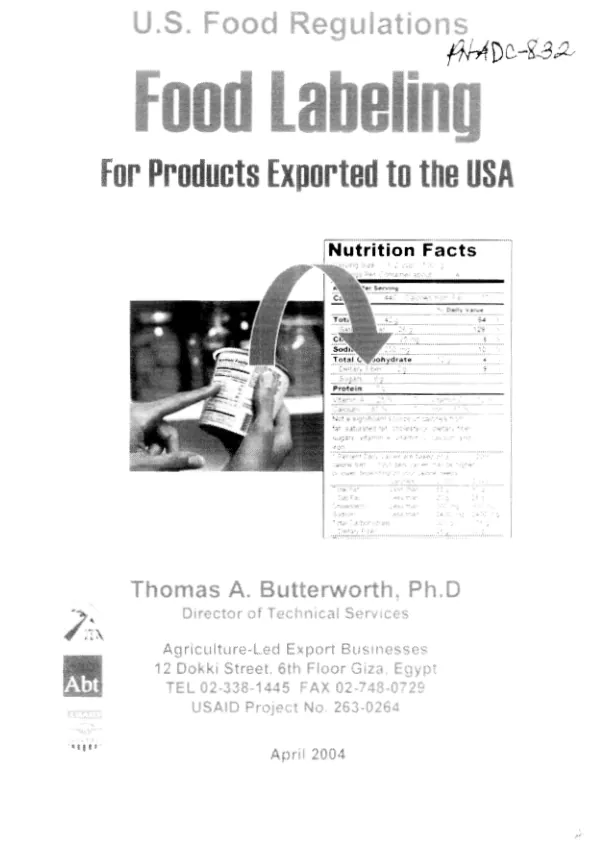
Food Regulations: A Guide for Exporting Processors is a comprehensive resource for food manufacturers seeking to export their products to the United States. The guide is authored by Thomas A. Butterworth, Ph.D., Director of Technical Services at ALEB. The guide emphasizes the importance of complying with U.S. food regulations, particularly those outlined in the Code of Federal Regulations (21 CFR 101.1). This regulation stipulates that food labels must include a statement of identity, net quantity statement, and other required information. The guide provides detailed explanations of these requirements, including the principal display panel (PDP) and alternate PDP. The PDP is defined as the portion of the package label most likely to be seen by the consumer at the time of purchase. It must include the name of the food and the quantity of contents. The guide notes that many containers have two or more different surfaces suitable for display as the PDP, and that these alternate PDPs must also comply with the regulations. The guide also addresses the issue of FDA detention reports, which are used to track and monitor food shipments that have been detained by the U.S. Food and Drug Administration (FDA). Exporting processors are advised to familiarize themselves with these reports and to take steps to prevent detention. In terms of labeling requirements, the guide emphasizes the importance of accurate and clear labeling. The principal display panel must include the name of the food, quantity of contents, and other required information. The guide provides examples of compliant labels, including a sample label for a cereal product. The guide also touches on the topic of food safety, noting that exporting processors must ensure that their products meet U.S. food safety standards. This includes complying with regulations related to food allergens, contaminants, and other safety concerns. Overall, the U.S. Food Regulations: A Guide for Exporting Processors provides a comprehensive resource for food manufacturers seeking to export their products to the United States. By understanding and complying with U.S. food regulations, exporting processors can ensure that their products meet the necessary standards and avoid detention or other regulatory issues.