USAID DEC
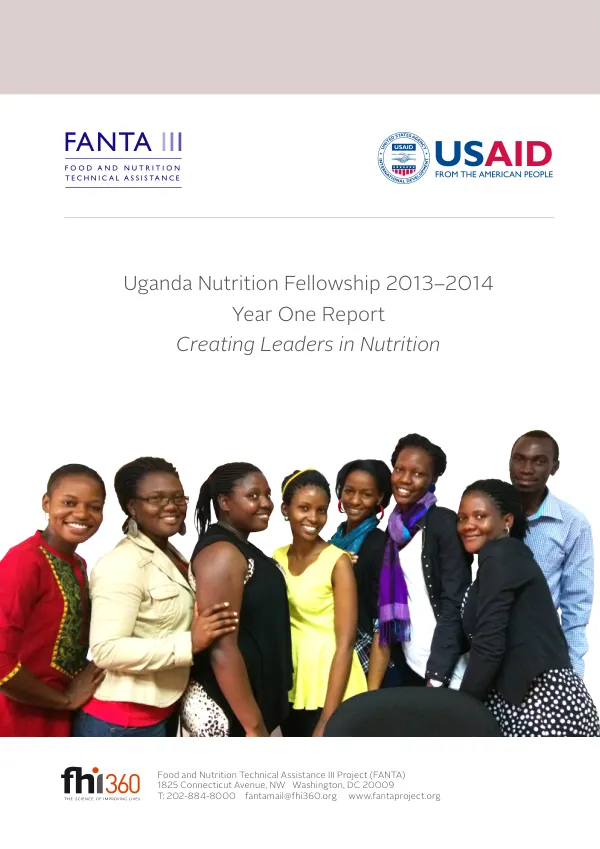
Uganda Nutrition Fellowship 2013–2014 Year One Report: Creating Leaders in Nutrition
Sign inFANTA
Uganda Nutrition Fellowship 2013–2014 Year One Report: Creating Leaders in Nutrition
The Uganda Nutrition Fellowship (UNF) is a capacity-strengthening program that targets university graduates studying nutrition with the goal of creating a contingent of future leaders in nutrition.
2014 · 10 pages
Sign in to readA free account is required to download.
Abstract
Implemented by the Food and Nutrition Technical Assistance III Project (FANTA), UNF places recent graduates with host organisations where they are provided with a unique mix of work experience, professional development, and mentorship. The program aims to narrow the capacity gap in implementing the multisectoral Uganda Nutrition Action Plan and to guarantee youth engagement in addressing nutrition challenges. Eight nutrition graduates were selected for the 2013-2014 cohort and placed at various host organisations, including government entities, development partners, community-based organisations, and organisations in the private sector. The host organisations included USAID's Community Connector project, USAID's Strengthening Partnership, Results, and Innovations in Nutrition Globally (SPRING) project, World Vision/Uganda, and the Ministry of Health. The Fellows received a monthly stipend of 894,770 Ugandan Shillings based on the salary of an entry-level nutritionist in the Ministry of Health. The UNF program included a range of activities, including orientation, professional development workshops, and retreats. The orientation was held in June 2013 and provided an opportunity for Fellows to meet their mentors and supervisors, understand UNF objectives, set goals, develop work plans, and learn about planned activities for the year. The professional development workshops and retreats were designed to enhance Fellows' skills and competencies, with a focus on communication, management, leadership, and team dynamics. Each Fellow was required to develop a UNF project in response to a challenging issue identified at their organisation. The projects covered a range of topics, including policy implementation, value chains, health communication, and community-based interventions. The projects were reviewed and evaluated by members of FANTA staff, and the highest ranking project received a recognition award at the graduation ceremony. The UNF program also included mentorship and teamwork activities, with Fellows benefiting from the valuable professional advice and perspective provided by their mentors. The program was well-received, with Fellows and host organisations reporting positive experiences and outcomes. The program's success was attributed to the strong support and guidance provided by the UNF advisory committee, which included representatives from academia, government, professional societies for nutrition, donor agencies, and host organisations. The UNF program has the potential to make a significant impact in addressing nutrition challenges in Uganda, by developing a contingent of future leaders in nutrition who are equipped with the skills and knowledge necessary to drive positive change. The program's focus on mentorship, teamwork, and professional development is particularly noteworthy, as it provides a unique opportunity for Fellows to learn from experienced professionals and develop the skills and competencies necessary to succeed in their careers. The UNF program's success has also been attributed to the strong partnerships and collaborations that have been established with host organisations, government agencies, and other stakeholders. These partnerships have provided a platform for the program to leverage resources, expertise, and networks, and to achieve its objectives in a more effective and efficient manner. Overall, the Uganda Nutrition Fellowship program has demonstrated its potential to make a significant impact in addressing nutrition challenges in Uganda, and to develop a contingent of future leaders in nutrition who are equipped with the skills and knowledge necessary to drive positive change.