FINTRAC
USAID-ACCESO Snapshot: Dairy Cows Present New Sources of Income in Honduras
Rural farmers in Honduras, particularly women, are generating a constant income from milk sales through good livestock management practices.
2013 · 1 pages
Sign in to readA free account is required to download.
Abstract
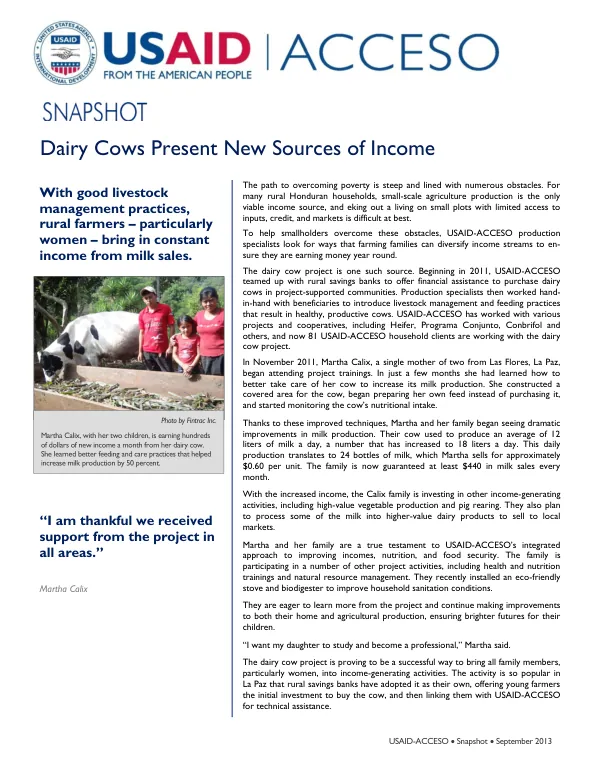
Martha Calix, a single mother of two, is earning hundreds of dollars a month from her dairy cow after learning better feeding and care practices that increased milk production by 50 percent. The dairy cow project is a source of diversified income for small-scale agriculture production households in Honduras. USAID-ACCESO production specialists teamed up with rural savings banks to offer financial assistance to purchase dairy cows in project-supported communities. The project has worked with various organizations, including Heifer, Programa Conjunto, Conbrifol, and others, and now 81 USAID-ACCESO household clients are participating in the dairy cow project. In La Paz, rural savings banks have adopted the dairy cow project as their own, offering young farmers the initial investment to buy the cow and linking them with USAID-ACCESO for technical assistance. Martha Calix, who began attending project trainings in November 2011, learned how to better take care of her cow to increase its milk production. She constructed a covered area for the cow, prepared her own feed instead of purchasing it, and monitored the cow's nutritional intake. Thanks to these improved techniques, Martha's cow now produces 18 liters of milk a day, a 50 percent increase from the average of 12 liters a day. This daily production translates to 24 bottles of milk, which Martha sells for approximately $0.60 per unit. The family is now guaranteed at least $440 in milk sales every month. With the increased income, the Calix family is investing in other income-generating activities, including high-value vegetable production and pig rearing. The dairy cow project is proving to be a successful way to bring all family members, particularly women, into income-generating activities. The project's integrated approach to improving incomes, nutrition, and food security is evident in Martha's family, who are participating in various project activities, including health and nutrition trainings and natural resource management. They have also installed an eco-friendly stove and biodigester to improve household sanitation conditions.
Related documents