FINTRAC
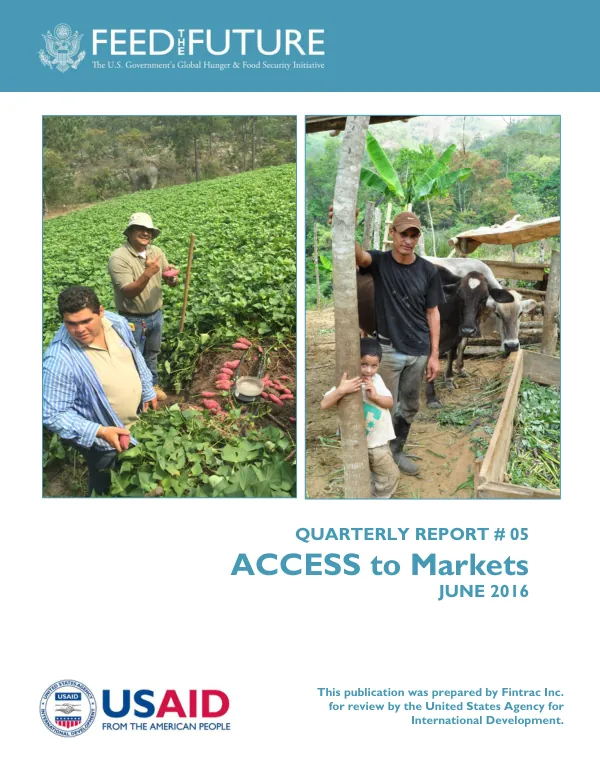
Quarterly Report #04: ACCESS to Markets
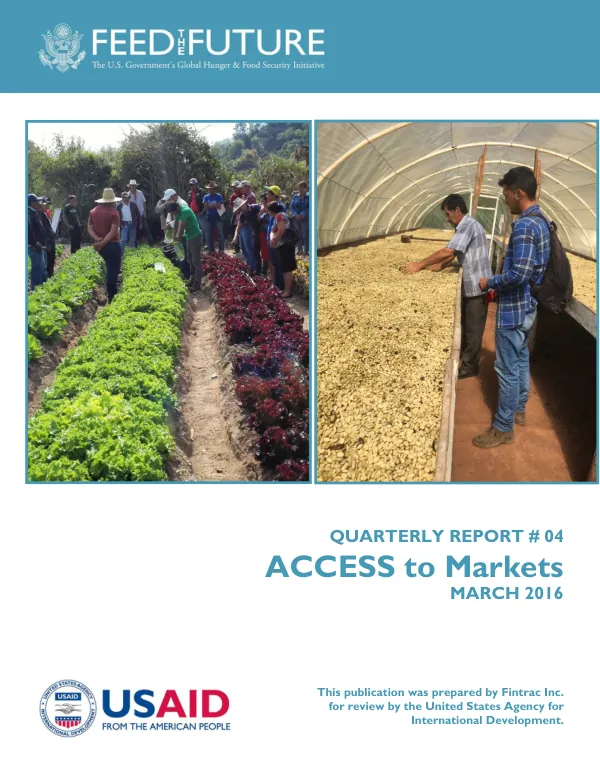
Feed the Future ACCESS to Markets is a direct follow-on activity to USAID-ACCESO, building on the strong results and best practices delivered in Honduras for USAID, the government of Honduras, farmer clients, households, and private sector clients for the past 15 years.
2016 · 88 pages
Sign in to readA free account is required to download.
Abstract
The initiative targets multiple causes of poverty, food insecurity, and health issues to improve the overall well-being of both directly-assisted households and entire communities. The ACCESS to Markets program utilizes and expands the whole-systems approach developed under USAID-ACCESO at farm, household, and community levels. This approach aims to increase agricultural sector growth, improve market demand and access, and increase investment in agriculture and employment opportunities. The program also focuses on improving nutritional status, especially for women and children, by increasing access to diverse and quality food and nutrition-related behaviors. In the first quarter of 2016, a total of 8,052 household clients transitioned from USAID-ACCESO and were provided technical assistance in ACCESS to Markets. An additional 4,161 new household clients were incorporated, including 948 in the present quarter, for a total of 12,213 client households. The program achieved significant milestones, including 6,958 new individuals receiving agricultural sector productivity or food security training, with 19,169 participants to date. Training events were also conducted, with a total of 4,898 events carried out and 39,829 participants, including 34,022 male and 5,807 female. Technical assistance visits were made, with 6,691 visits in the first quarter and 22,014 visits to date. The majority of these visits were under the production component, animal production, and processing. The program's focus on gender integration, natural resource management, and collaboration with USG-funded activities also contributed to its success. The ACCESS to Markets program is expected to continue delivering successful interventions in agriculture, health, and nutrition for at least 15,000 client households in three departments of the dry corridor of Honduras. The program's whole-systems approach and focus on multiple causes of poverty, food insecurity, and health issues position it for long-term success and impact.