DAI
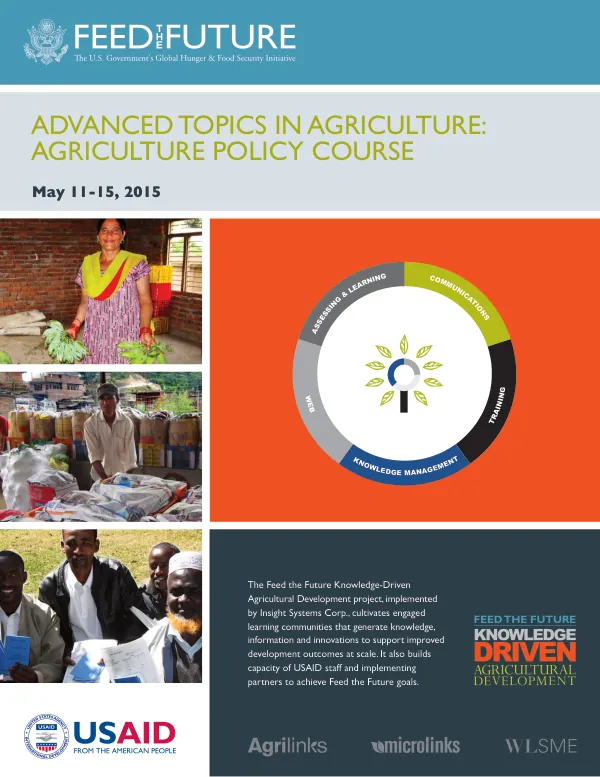
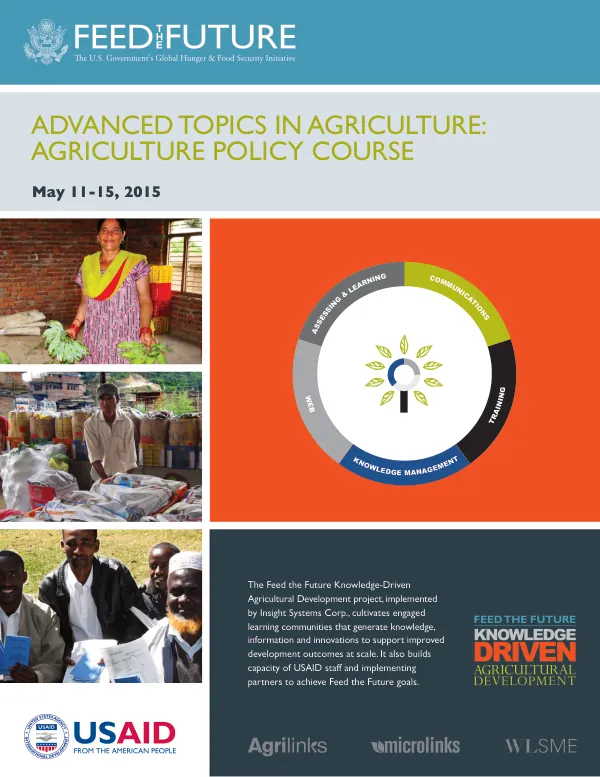
USAID Agriculture Policy Course | 2015
The Feed the Future Knowledge-Driven Agricultural Development project, implemented by Insight Systems Corp., cultivates engaged learning communities that generate knowledge, information, and innovations to support improved development outcomes at scale.
2015 · 90 pages
Sign in to readA free account is required to download.
Abstract
It also builds capacity of USAID staff and implementing partners to achieve Feed the Future goals. The project focuses on cultivating knowledge and innovations to support improved development outcomes at scale. This is achieved through the creation of engaged learning communities that generate knowledge, information, and innovations. The project also aims to build the capacity of USAID staff and implementing partners to achieve Feed the Future goals. A key component of the project is the development of knowledge and innovations that support improved development outcomes. This is achieved through the creation of engaged learning communities that generate knowledge, information, and innovations. The project also focuses on building the capacity of USAID staff and implementing partners to achieve Feed the Future goals. The project's approach to cultivating knowledge and innovations is centered on the creation of engaged learning communities. These communities generate knowledge, information, and innovations that support improved development outcomes at scale. The project also focuses on building the capacity of USAID staff and implementing partners to achieve Feed the Future goals. The project's goals are aligned with the Feed the Future initiative, which aims to improve agricultural development outcomes at scale. The project's approach to cultivating knowledge and innovations is centered on the creation of engaged learning communities that generate knowledge, information, and innovations. The project also focuses on building the capacity of USAID staff and implementing partners to achieve Feed the Future goals. The Advanced Topics in Agriculture: Agriculture Policy Course, held from May 11-15, 2015, was a key component of the project. The course aimed to build the capacity of USAID staff and implementing partners to achieve Feed the Future goals. The course focused on advanced topics in agriculture policy, including policy systems, mutual accountability, and institutional architecture. The course was designed to provide participants with a comprehensive understanding of agriculture policy and its role in achieving Feed the Future goals. The course covered topics such as policy systems, mutual accountability, and institutional architecture, and provided participants with the knowledge and skills necessary to develop and implement effective agriculture policies. The course was led by experienced facilitators, including Ed Salt, John Thomas, Jeff Hill, Jim Oehmke, Dan Charette, David Atwood, and David Quinn. The facilitators provided participants with a comprehensive understanding of agriculture policy and its role in achieving Feed the Future goals. The course included a range of activities, including plenary discussions, group exercises, and panel discussions. The activities were designed to provide participants with the opportunity to engage with the course material and to share their experiences and perspectives. The course covered a range of topics, including policy systems, mutual accountability, and institutional architecture. The course also covered topics such as setting the policy agenda, prioritizing the policy agenda, and mutual accountability. The course provided participants with the knowledge and skills necessary to develop and implement effective agriculture policies. The course was attended by a range of participants, including USAID staff, implementing partners, and other stakeholders. The participants were drawn from a range of countries, including those in Africa and Asia. The course was evaluated using a range of methods, including daily evaluations and a final evaluation. The evaluations provided feedback on the course content, facilitation, and overall effectiveness. The course was a key component of the Feed the Future Knowledge-Driven Agricultural Development project, and played an important role in building the capacity of USAID staff and implementing partners to achieve Feed the Future goals. The course provided participants with a comprehensive understanding of agriculture policy and its role in achieving Feed the Future goals, and provided them with the knowledge and skills necessary to develop and implement effective agriculture policies.
Related documents