DAI
Feed the Future Knowledge-Driven Agricultural Development project
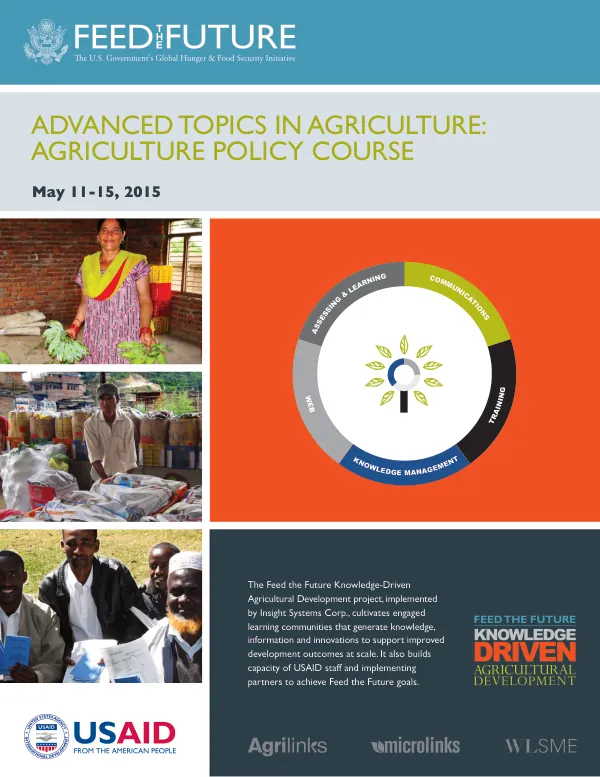
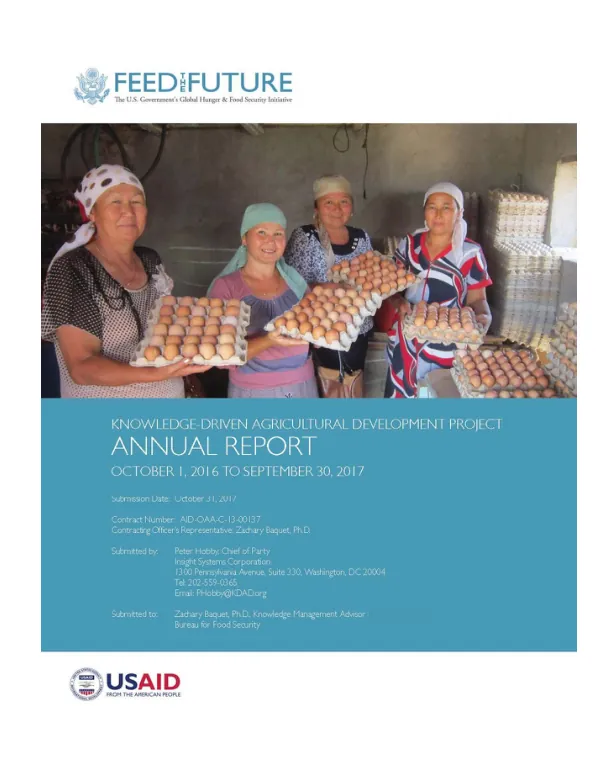
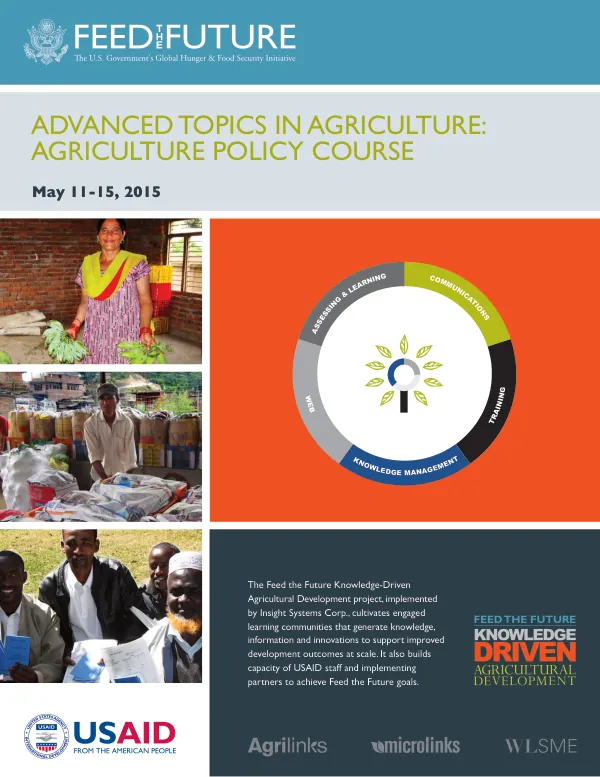
The Feed the Future Knowledge-Driven Agricultural Development project, implemented by Insight Systems Corp., cultivates engaged learning communities that generate knowledge, information, and innovations to support improved development outcomes at scale.
2015 · 74 pages
Sign in to readA free account is required to download.
Abstract
It also builds capacity of USAID staff and implementing partners to achieve Feed the Future goals. The project focuses on cultivating knowledge and innovations to support improved development outcomes at scale. This is achieved through the creation of engaged learning communities that generate knowledge, information, and innovations. The project also builds capacity of USAID staff and implementing partners to achieve Feed the Future goals. The capacity building involves training and equipping staff and partners with the necessary skills and knowledge to implement effective agricultural development programs. The project's approach to capacity building is centered around the concept of mutual accountability. This involves creating a framework for mutual accountability among stakeholders, including governments, civil society organizations, and the private sector. The framework is designed to promote transparency, accountability, and cooperation among stakeholders, ultimately leading to improved development outcomes. The project also emphasizes the importance of institutional architecture in supporting policy change. Institutional architecture refers to the systems, processes, and relationships that influence food security policy development. The project uses a framework called Institutional Architecture Assessment (IAA) to assess a country's readiness to change its food security policies. The IAA framework involves mapping key systems, processes, and relationships that influence food security policy development, as well as assessing a country's capacity to implement policy changes. The IAA framework consists of six key policy elements: predictability of the guiding policy framework, policy development and coordination, inclusivity and stakeholder consultation, evidence-based analysis, policy implementation, and mutual accountability. The framework is designed to help countries identify areas for improvement and develop strategies to address these gaps. By using the IAA framework, countries can create a more effective and sustainable food security policy system that promotes transparency, accountability, and cooperation among stakeholders.