USAID DEC
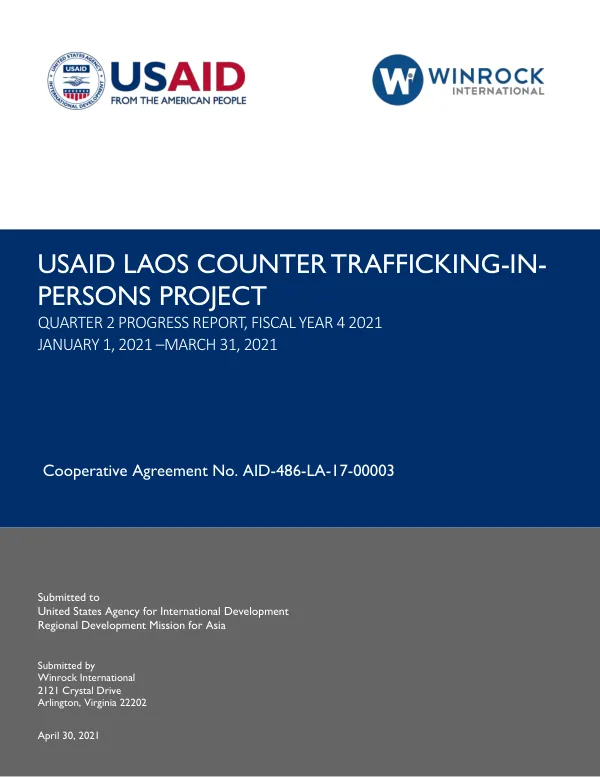
USAID Asia Counter Trafficking in Persons (CTIP) Program Year Two Annual Report FY2018
Sign inUSAID
USAID Asia Counter Trafficking in Persons (CTIP) Program Year Two Annual Report FY2018
The USAID Asia Counter Trafficking in Persons (CTIP) program is a five-year initiative aimed at reducing human trafficking across the region, particularly in Southeast Asia and countries where USAID bilateral programs and Associate Awards are operating.
2018 · 94 pages
Sign in to readA free account is required to download.
Abstract
The program operates in Bangladesh, Cambodia, Laos, Nepal, and Thailand. Through its three force multipliers, USAID Asia CTIP strengthens learning around TIP, improves coordination and cooperation between source, transit, and destination countries, and reduces incentives for trafficking in persons through private sector engagement. In Year Two, USAID Asia CTIP focused on building on the groundwork laid in Year One, ensuring that the program acts in concert with key stakeholders and incorporates the input of those most vulnerable and those in the best position to take action to reduce trafficking in persons. However, the program faced a significant challenge due to a 62% reduction in available obligated funds, necessitating program downsizing. The revised Year Two plan prioritized the most strategic interventions that supported gained momentum in regional learning and private sector collaboration and maximized the value of existing USAID CTIP investments. Under Force Multiplier 1, USAID Asia CTIP completed a research review and worked with bilateral CTIP programs to develop a joint Learning Agenda and Learning Action Plan for the subsequent years. The project facilitated the first structured collective learning event for USAID CTIP stakeholders in Asia in Bangkok, Thailand, in June 2018. Additionally, the CTIP M&E Working Group updated the joint regional CTIP indicators and collected baseline data, as well as began harmonization of project strategies in victim case data management. USAID Asia CTIP also started testing the "proximate determinants" TIP impact measurement methodology in Cambodia and Thailand. Under Force Multiplier 2, USAID Asia CTIP, through Liberty Asia and its Freedom Collaborative, piloted data collection and a visualization initiative of trafficking routes, providing real-time data for service providers and decision-makers to assist their planning, resource allocation, and research. The comprehensive package of materials being developed to prompt action in the palm oil industry in Malaysia was complemented by the corporate accountability review that will be finalized in Year Three. Together with other pieces of evidence gathered on palm oil and related recommendations, the document will be summarized in the palm oil industry Learning & Action Brief as a basis for proactive advocacy and engagement. The program also continued to support regional platforms, including Freedom Collaborative and Legal Impact Hub, and implemented targeted private sector engagement interventions. Once the revised workplan was approved in June, Winrock accelerated the work on the prioritized activities. Despite the challenges faced, USAID Asia CTIP made significant progress in Year Two, laying the groundwork for continued success in the subsequent years.
Related documents
Documents in this collection
 2020
2020USAID DEC
USAID Asia Counter Trafficking in Persons Program Annual Report (October 1, 2019 – September 30, 2020)
Open record 2012
2012USAID DEC
Climate Change Project Preparation Facility for Asia and the Pacific (ADAPT Asia-Pacific) Quarterly Report Fifth Quarter: October 1 to December 31, 2012
Open record