USAID DEC
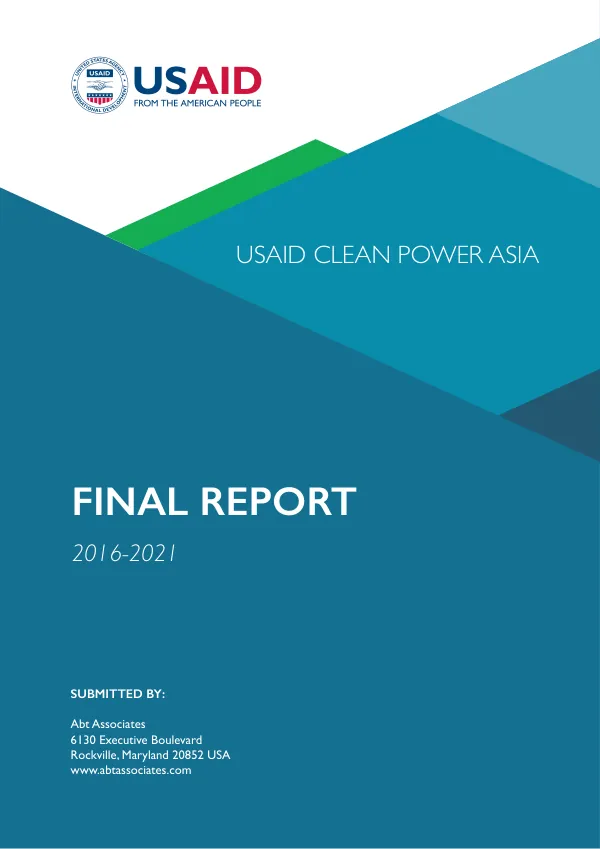
USAID Clean Power Asia: Promoting Low-Emission Power Systems in the Lower Mekong Region
Sign inABT ASSOCIATES
USAID Clean Power Asia: Promoting Low-Emission Power Systems in the Lower Mekong Region
The USAID Clean Power Asia initiative focuses on promoting the development and integration of renewable energy sources into the power grids of Lower Mekong countries and other Association of Southeast Asian Nations (ASEAN) member states.
2017 · 2 pages
Sign in to readA free account is required to download.
Abstract
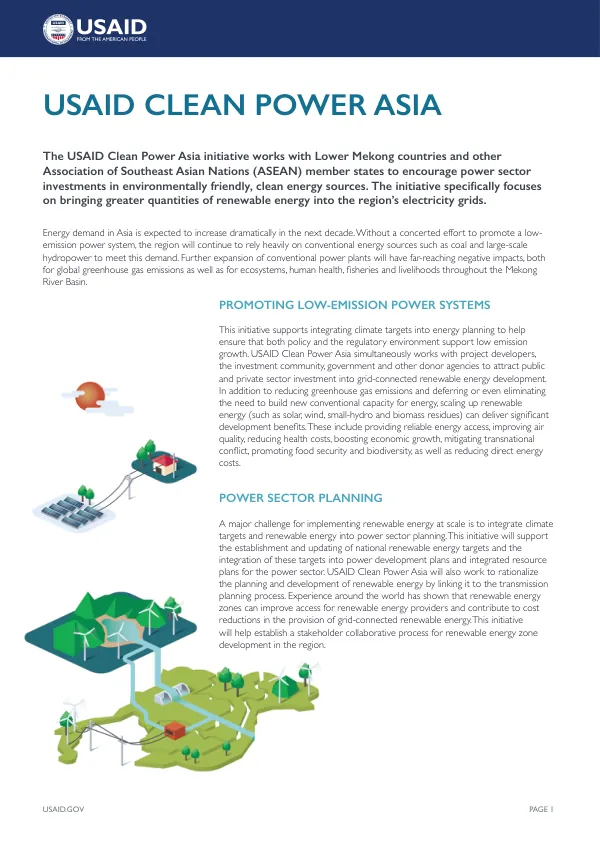
Energy demand in Asia is expected to increase dramatically in the next decade, and without a concerted effort to promote a low-emission power system, the region will continue to rely heavily on conventional energy sources such as coal and large-scale hydropower. This will have far-reaching negative impacts on global greenhouse gas emissions, ecosystems, human health, fisheries, and livelihoods throughout the Mekong River Basin. The initiative supports integrating climate targets into energy planning to ensure that both policy and the regulatory environment support low-emission growth. USAID Clean Power Asia works with project developers, the investment community, government, and other donor agencies to attract public and private sector investment into grid-connected renewable energy development. Scaling up renewable energy can deliver significant development benefits, including providing reliable energy access, improving air quality, reducing health costs, boosting economic growth, mitigating transnational conflict, promoting food security and biodiversity, and reducing direct energy costs. A major challenge for implementing renewable energy at scale is to integrate climate targets and renewable energy into power sector planning. The initiative will support the establishment and updating of national renewable energy targets and the integration of these targets into power development plans and integrated resource plans for the power sector. USAID Clean Power Asia will also work to rationalize the planning and development of renewable energy by linking it to the transmission planning process. Renewable energy zones can improve access for renewable energy providers and contribute to cost reductions in the provision of grid-connected renewable energy. USAID Clean Power Asia aims to mobilize at least $750 million in clean energy investments over the next five years. It will also support installing at least 500 megawatts of grid-tied renewable energy generation and assist in implementing laws, policies, strategies, plans, or regulations that contribute to reductions of greenhouse gas emissions. The initiative will help establish a stakeholder collaborative process for renewable energy zone development in the region, promoting standardized documentation and evaluation practices and approval processes for financing renewable energy projects. This will support financial institutions, developers, and other relevant stakeholders in securing and reducing the cost of finance for renewable energy projects.
Related documents