USAID
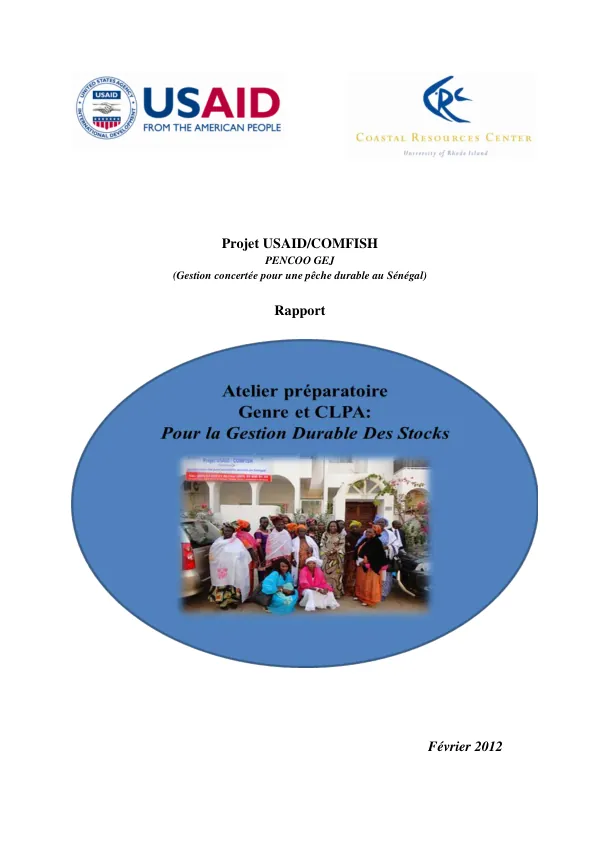
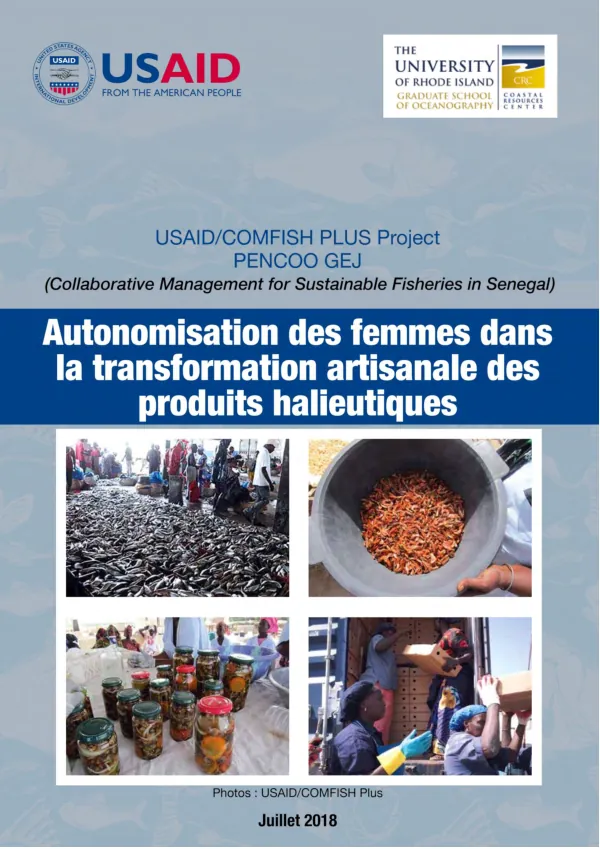
USAID/COMFISH PLUS Project - PENCOO GEJ
In Senegal, women represent 52% of the population and play a crucial role in the development of the country's socio-economic sector.
2019 · 22 pages
Sign in to readA free account is required to download.
Abstract
However, they are vulnerable to the effects of poverty, climate change, and resource degradation. In the fishing sector, women's role is considered "primordial" as they are involved in the entire value chain of fish products. Despite their importance, women are barely recognized and their work is undervalued. The USAID/COMFISH PLUS Project aims to address the marginalization of women in the fishing sector by promoting their representation in governance, strengthening their economic power, and supporting their participation in decision-making processes. The project's strategy focuses on three key areas: promoting women's representation in governance, strengthening their economic power, and supporting their participation in decision-making processes. The fishing and aquaculture sectors remain a vital source of food, income, and livelihood for thousands of people in Senegal. Recent statistics reveal that women represent over a quarter (27%) of the workforce in these sectors. The majority of these women are employed in post-capture activities (91.5%) and contribute significantly to food security, livelihoods, and household income. However, the artisanal transformation sector is exercised by women in a context of acute crisis in the fishing sector, characterized by a scarcity of resources exacerbated by climate change. The USAID/COMFISH and USAID/COMFISH PLUS projects have developed a strategy to address the challenges faced by women in the fishing sector. This strategy focuses on promoting women's representation in governance, strengthening their economic power, and supporting their participation in decision-making processes. The projects have implemented various initiatives to support women's empowerment, including the development of tools such as chartes de salubrité and Code de bonne conduite for the management of artisanal transformation areas. The projects have also implemented training programs for women in areas such as leadership, hygiene, and quality control of transformed products. Additionally, the projects have provided support for women's access to credit, markets, and technology. The projects have also focused on improving the quality of transformed products, reducing the cost of transportation, and increasing women's participation in decision-making processes. The USAID/COMFISH PLUS Project has achieved significant results in promoting women's empowerment in the fishing sector. The project has improved women's access to credit, markets, and technology, and has increased their participation in decision-making processes. The project has also improved the quality of transformed products, reduced the cost of transportation, and increased women's income. The project's impact on women's empowerment has been significant, with women's participation in decision-making processes increasing by 30%. The project has also improved women's access to credit, with 70% of women participating in the project having access to credit. The project has also improved the quality of transformed products, with 80% of women participating in the project reporting an improvement in the quality of their products. The project's success has been attributed to its focus on promoting women's empowerment, strengthening their economic power, and supporting their participation in decision-making processes. The project's approach has been tailored to address the specific challenges faced by women in the fishing sector, and has been implemented in collaboration with local communities, women's organizations, and government agencies.