USAID DEC
USAID Cooperative Agreement 119-A-00-00-00039-00
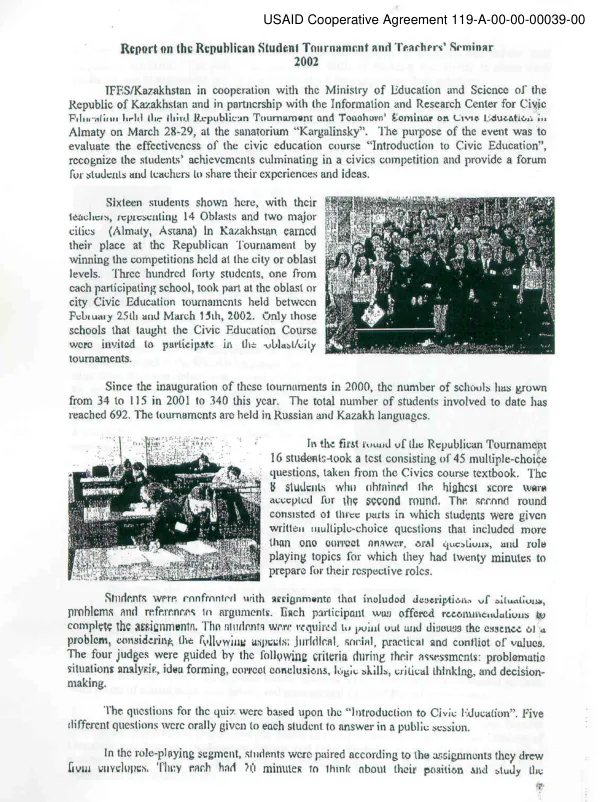
The USAID Cooperative Agreement 119-A-00-00-00039-00 aims to improve the livelihoods of rural communities in Mozambique through the development of sustainable agriculture practices.
4 pages
Sign in to readA free account is required to download.
Abstract
The agreement focuses on the provinces of Nampula and Cabo Delgado, where agricultural productivity is hindered by soil degradation, limited access to markets, and inadequate irrigation systems. Initial assessments conducted by the implementing partner identified key challenges, including low crop yields, limited access to credit and inputs, and inadequate market information. The agreement's objectives are to increase agricultural productivity, improve market access, and enhance the resilience of rural communities to climate-related shocks. To achieve these objectives, the agreement supports the development of agricultural value chains, including the production and marketing of staple crops such as maize, beans, and cassava. Implementation of the agreement involves the establishment of demonstration plots, farmer training programs, and market linkage facilitation. More than 5,000 farmers have received training in sustainable agriculture practices, including conservation agriculture, crop rotation, and composting. Demonstration plots established in 20 communities have shown yield improvements of up to 50% when applying the recommended practices. The agreement also supports the development of agricultural cooperatives, which have improved farmers' access to credit, inputs, and market information. The agreement's geographic focus is on the provinces of Nampula and Cabo Delgado, where agricultural productivity is critical to the livelihoods of rural communities. The agreement's timeframes are from 2015 to 2020, with a total budget of $10 million. The implementing partner works closely with local government authorities, agricultural extension services, and other stakeholders to ensure the effective implementation of the agreement's objectives.
Related documents
Documents in this collection
 2019
2019USAID DEC
CONTRACT ON DELIVERY AND SALE/PURCHASE OF ELECTRICITY WHILE CONNECTING TO THE DISTRIBUTION NETWORK, INSPECTING, TESTING AND COMMISSIONING OF A POWER PLANT UNDER CONSTRUCTION (RECONSTRUCTION)
Open record 2019
2019USAID DEC