ANALYSIS, INFORMATION MANAGEMENT AND COMMUNICATION ACTIVITY PROJECT
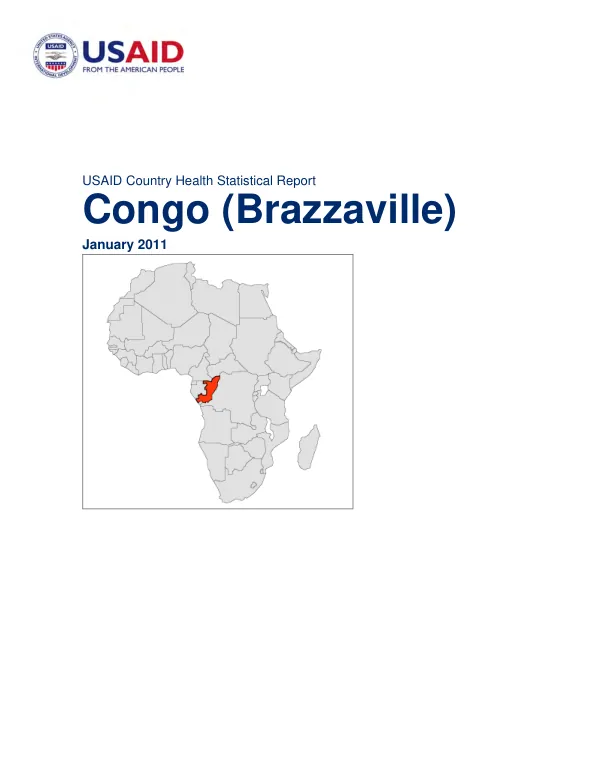
USAID Country Health Statistical Report Congo (Brazzaville)
The Republic of Congo has a total population of 4,125,916 as of 2010.
2011 · 21 pages
Sign in to readA free account is required to download.
Abstract
The population growth rate is 2.8% per year, with 56% of the population residing in urban areas. The country has a high total fertility rate, with an average of 5.8 children per woman. The population is predominantly rural, with 45.8% of the population under the age of 15. The country has a low life expectancy at birth, with an average of 54.5 years. The crude birth rate is 41 per 1,000 people, while the crude death rate is 10.8 per 1,000 people. The number of births in 2010 was 169,204. The healthy life expectancy at birth for females is 47 years, while for males it is 45 years. The country has a low adult literacy rate, with 82.8% of the population able to read and write. The adult literacy rate for females is 77%, while for males it is 89%. The gross national income per capita is $810, while health expenditure as a percentage of GDP is 10%. The country has a low number of physicians, with 0.2 per 1,000 people. The country has a high infant mortality rate, with an average of 77.9 deaths per 1,000 live births. The under-5 mortality rate is 128.8 per 1,000 live births. The neonatal mortality rate is 33 per 1,000 live births. The exclusive breastfeeding rate is 24.2%, while the stunted rate is 26%. The wasted rate is 6.5%. The country has a low vaccination coverage, with a DPT3 vaccination rate of 68.4%. The measles vaccination rate is 66.2%, while the polio vaccination rate is 69.1%. The tetanus toxoid vaccination rate is 45.6%. The equity in DPT3 vaccination is 0.46. The vitamin A supplementation coverage among children 6-59 months is 65.5%. The country has a high HIV prevalence, with an estimated 3.5% of adults living with HIV. The estimated number of people living with HIV is 79,000. The estimated number of people living with HIV among females is 43,000, while among children it is 6,600. The males reporting condom use with their last non-regular partner is 42.8%, while the females reporting condom use is 21%. The country has a high tuberculosis case detection rate, with an estimated 15,196 cases in 2007. The tuberculosis case detection rate is 58%. The tuberculosis (DOTS) treatment success rate is 53%. The malaria cases per 100,000 people is 5,840. The DOTS coverage is 60%. The HIV-infected with active tuberculosis is 30.6%.
Related documents