ANALYSIS, INFORMATION MANAGEMENT AND COMMUNICATION ACTIVITY PROJECT
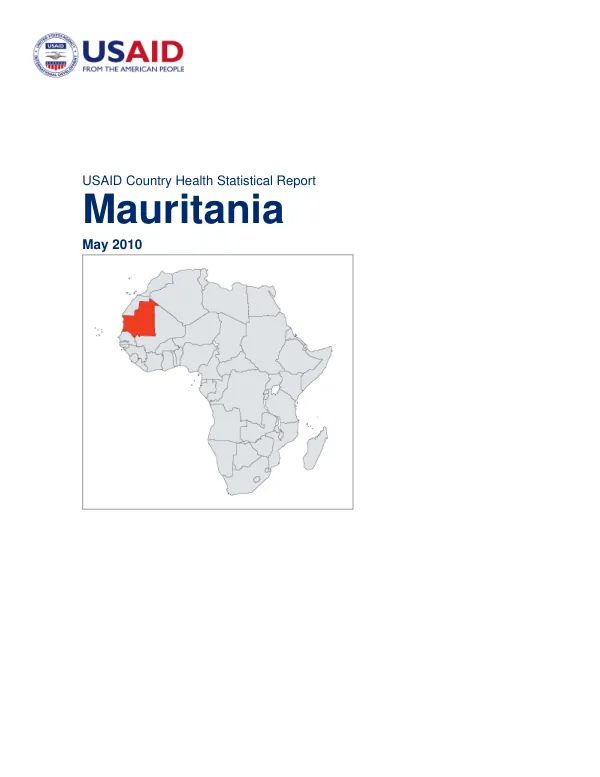
USAID Country Health Statistical Report Mauritania
The population of Mauritania is approximately 3,205,060 as of 2010.
2010 · 21 pages
Sign in to readA free account is required to download.
Abstract
The country's population growth rate is 2.4% per annum, with 63% of the population residing in urban areas. The total fertility rate is 4.4 children per woman, with a crude birth rate of 33.7 per 1,000 people and a crude death rate of 9 per 1,000 people. The country's socioeconomic indicators reveal a relatively low standard of living. The GNI per capita is $2,150, and the health expenditure as a percentage of GDP is 4.2%. The adult literacy rate is 51.2%, with a significant disparity between male and female literacy rates, at 60% and 31%, respectively. The gross enrollment ratio for primary school is 103.2%, and the gender parity index for net enrollment ratio is 1.6. Mauritania's family planning indicators show a low level of contraceptive prevalence, with 3.1% of all women and 5.1% of married women using modern contraceptive methods. The total fertility rate is 4.4 children per woman, with a mean ideal family size of 6.2 children. The unmet need for family planning is 29.3% in rural areas and 34.9% in urban areas. The maternal health indicators in Mauritania are concerning, with a maternal mortality ratio of 820 per 100,000 live births. The antenatal care coverage is 62.9%, with 56.1% of women receiving at least two antenatal care visits. The assisted delivery rate by a health professional is 56.9%, with 9.8% of deliveries assisted by a doctor. The child survival indicators in Mauritania are also alarming, with an infant mortality rate of 61.9 per 1,000 live births. The under-5 mortality rate is 107.5 per 1,000 live births, and the neonatal mortality rate is 44 per 1,000 live births. The exclusive breastfeeding rate is 27.7%, and the stunting rate is 34.5%. The vaccination coverage in Mauritania is low, with a DPT3 vaccination rate of 39.9% among children under 5 years old. The measles vaccination rate is 62%, and the polio vaccination rate is 43.8%. The tetanus toxoid vaccination rate is 24.7%. The equity in DPT3 coverage is not available, and the improved sanitation/hygiene practices are also not available. The HIV/AIDS prevention indicators in Mauritania show a low level of HIV prevalence, with 0.8% of adults aged 15-49 years living with HIV. The estimated number of people living with HIV is 14,000, with 3,900 women and 500 children under 14 years old.
Related documents