ANALYSIS, INFORMATION MANAGEMENT AND COMMUNICATION ACTIVITY PROJECT
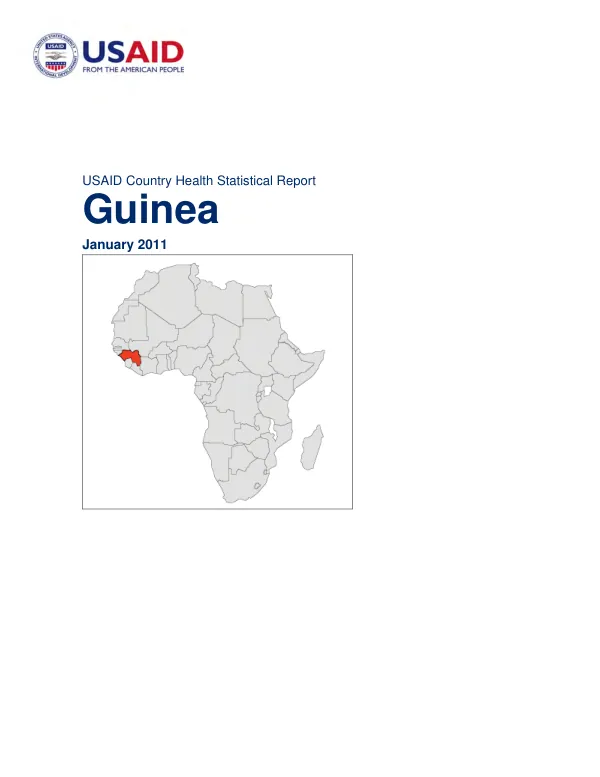
USAID Country Health Statistical Report for Guinea
The population of Guinea is approximately 10.3 million people, with a population growth rate of 2.7% in 2010.
2011 · 21 pages
Sign in to readA free account is required to download.
Abstract
The country has a relatively high percentage of urban population, with 36% of the population residing in urban areas. The total fertility rate in Guinea is 5.2 children per woman, with a contraceptive prevalence rate of 6.8% among all women and 5.7% among married women. Guinea has a high infant mortality rate, with 63.1 deaths per 1,000 live births in 2010. The under-5 mortality rate is also high, with 143.6 deaths per 1,000 live births in 2010. The country has made progress in reducing the number of children under 5 who die from acute respiratory infections and oral rehydration therapy, with 34.5% of children under 5 receiving care for acute respiratory infections and 56.7% receiving oral rehydration therapy in 2005. The country has a high prevalence of HIV/AIDS, with an estimated 1.6% of adults aged 15-49 living with the virus in 2007. The estimated number of people living with HIV/AIDS in Guinea is 87,000, with 48,000 women and 6,300 children under 14 years old. The country has also reported a high number of tuberculosis cases, with an estimated 26,928 cases in 2007. Guinea has made progress in improving access to healthcare, with 78.5% of women receiving antenatal care in 2005. However, the country still has a high maternal mortality ratio, with 910 deaths per 100,000 live births in 2005. The country has also reported a high prevalence of anemia among women of reproductive age, with 53.3% of women suffering from anemia in 2005. The country has a relatively low level of economic development, with a gross national income per capita of $2,240 in 2005. The country has also reported a high level of poverty, with 47% of the population living below the poverty line in 2006. The country has a relatively low level of access to improved water sources, with 38% of the rural population and 78% of the urban population having access to improved water sources in 2002. Guinea has made progress in improving access to education, with a gross enrollment ratio of 90.8% in primary school in 2007. However, the country still has a high level of adult illiteracy, with 29.5% of adults unable to read or write in 2004. The country has also reported a high level of inequality in access to education, with a gender parity index of 0.87 in 2007. The country has a relatively low level of access to healthcare, with a physician-to-population ratio of 0.1 per 1,000 people in 1997-2004. The country has also reported a high level of infant mortality, with 63.1 deaths per 1,000 live births in 2010. The country has made progress in improving access to healthcare, with 78.5% of women receiving antenatal care in 2005. However, the country still has a high maternal mortality ratio, with 910 deaths per 100,000 live births in 2005. Guinea has a relatively high level of access to improved sanitation facilities, with 25% of the urban population and 6% of the rural population having access to improved sanitation facilities in 2002. However, the country still has a high level of open defecation, with 74% of the rural population and 21% of the urban population practicing open defecation in 2002. The country has made progress in improving access to improved water sources, with 38% of the rural population and 78% of the urban population having access to improved water sources in 2002.
Related documents