ANALYSIS, INFORMATION MANAGEMENT AND COMMUNICATION ACTIVITY PROJECT
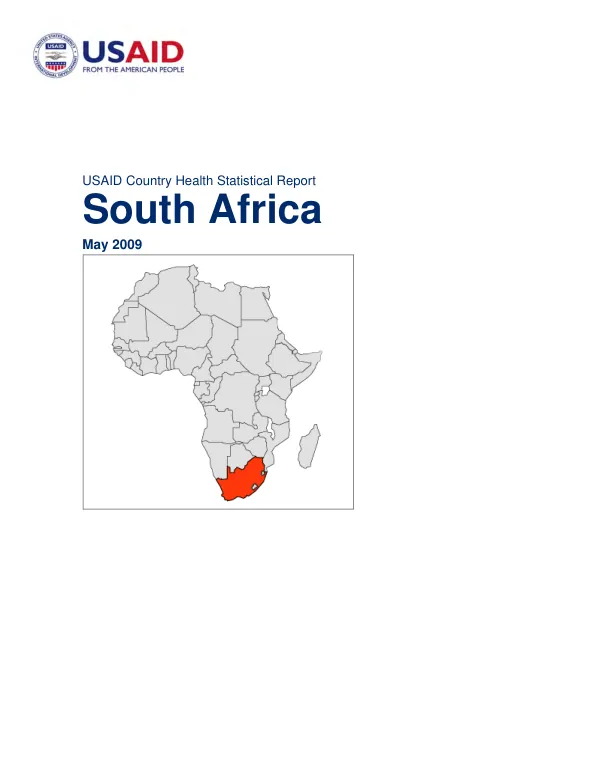
USAID Country Health Statistical Report for South Africa
The total population of South Africa is 49,052,489 as of 2009.
2009 · 20 pages
Sign in to readA free account is required to download.
Abstract
The population growth rate is 0.28% per year, and 57% of the population resides in urban areas. The total fertility rate is 2.4 children per woman, and the contraceptive prevalence rate among married women is 59.8%. The maternal mortality ratio is 400 deaths per 100,000 live births, and the infant mortality rate is 44.4 deaths per 1,000 live births. The country's socioeconomic indicators show a GNI per capita of $12,120 in 2005, with a health expenditure as a percentage of GDP of 8.4%. The adult literacy rate is 82.4%, and the gross enrollment ratio for primary school is 105.5%. The population living below $1 a day is 10.7%, and the human development index is 0.67. South Africa's family planning indicators show a total fertility rate of 2.1 children per woman, and the contraceptive prevalence rate among all women is 50.1%. The median age of sexual debut among women is 18.5 years, and the mean ideal family size is 2.5 children. The unmet need for family planning is 16.7% in rural areas and 12.6% in urban areas. The country's child survival indicators show an infant mortality rate of 44.4 deaths per 1,000 live births, and an under-5 mortality rate of 97.6 deaths per 1,000 live births. The vaccination coverage for DPT3 is 67%, and the measles vaccination rate is 62%. The polio vaccination rate is 65.1%, and the tetanus toxoid vaccination rate is 26.2%. The vitamin A supplementation coverage among children 6-59 months is 39.1%. South Africa's HIV/AIDS prevention indicators show an HIV prevalence proportion of 18.1% among adults aged 15-49 years, and an estimated number of people living with HIV of 5,700,000. The estimated number of people living with HIV among women aged 15 and above is 3,200,000.
Related documents