DFID
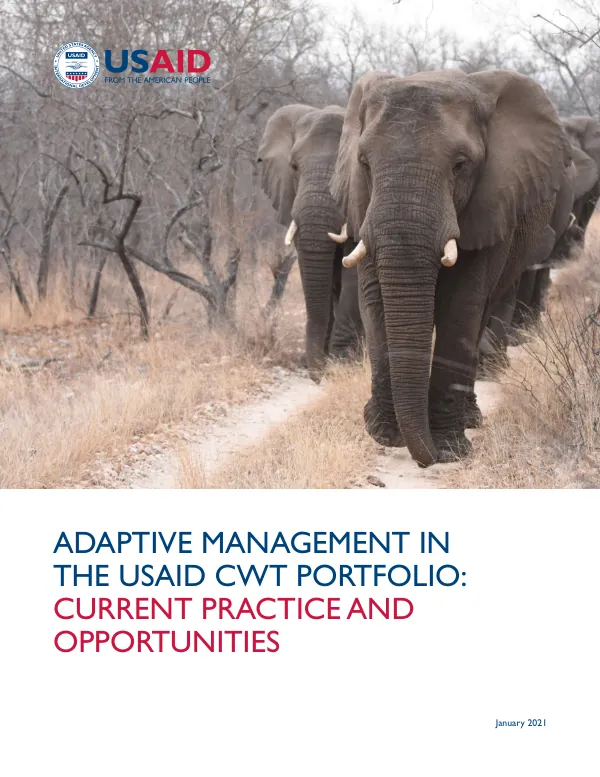
USAID CWT Adaptive Management Assessment Report
Adaptive management in the USAID Combating Wildlife Trafficking (CWT) portfolio is a widely practiced and integral component of implementing a CWT program.
2021 · 37 pages
Sign in to readA free account is required to download.
Abstract
Across the portfolio, there is a shared understanding of what adaptive management is, with practitioners relying on collaborating, learning, and adapting (CLA) guidance, the Conservation Standards, and engagement with adaptive management experts to shape their conceptualization and practice of adaptive management. Practitioners generally define adaptive management as a process that involves defining the intended outcomes of an activity and associated assumptions, checking progress toward intended outcomes, and making adjustments as necessary. This process is often iterative, with a focus on continuous learning and improvement. Adaptive management is seen as essential for addressing the complex and dynamic nature of wildlife trafficking, which requires effective and responsive strategies to combat. The practice of adaptive management in the USAID CWT portfolio is influenced by various factors, including the level of support and resources available, the complexity of the program, and the level of engagement with stakeholders. Practitioners also face challenges in implementing adaptive management, such as limited capacity and resources, inadequate data and information, and conflicting priorities. Despite these challenges, there are opportunities to improve the practice of adaptive management in the USAID CWT portfolio. One key area for improvement is the development of more effective and efficient monitoring and evaluation systems, which can provide timely and accurate data to inform adaptive management decisions. Additionally, there is a need for more effective communication and collaboration among stakeholders, including USAID, implementing partners, and local communities. The assessment also highlights the importance of enabling conditions for adaptive management, such as a supportive organizational culture, adequate resources, and a clear understanding of the program's goals and objectives. These conditions can facilitate the practice of adaptive management and enable practitioners to respond effectively to changing circumstances. In terms of opportunities for improving the practice of adaptive management, the assessment identifies several key areas for focus. These include the development of more effective and efficient monitoring and evaluation systems, the improvement of communication and collaboration among stakeholders, and the enhancement of enabling conditions for adaptive management. By addressing these areas, practitioners can improve the effectiveness and efficiency of adaptive management in the USAID CWT portfolio and better address the complex and dynamic nature of wildlife trafficking. The assessment also highlights the importance of learning and adaptation in the practice of adaptive management. Practitioners should prioritize continuous learning and improvement, using data and information to inform adaptive management decisions and making adjustments as necessary. This approach can help to ensure that programs are responsive to changing circumstances and effective in addressing the complex and dynamic nature of wildlife trafficking. Overall, the assessment provides valuable insights into the practice of adaptive management in the USAID CWT portfolio and identifies key areas for improvement. By addressing these areas, practitioners can improve the effectiveness and efficiency of adaptive management and better address the complex and dynamic nature of wildlife trafficking.