ENVIRONMENTAL INCENTIVES, LLC
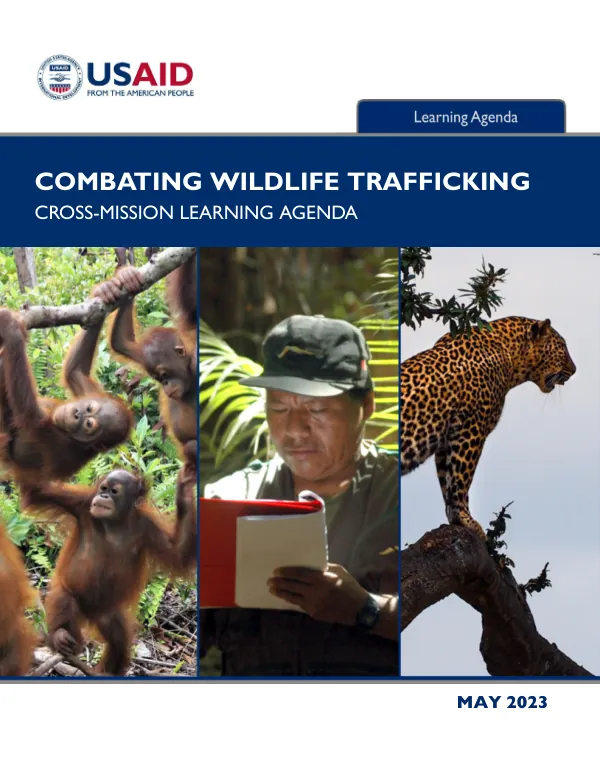
Cross-Mission Learning Agenda for Combating Wildlife Trafficking
The Combating Wildlife Trafficking (CWT) Learning Agenda is a cross-mission learning program implemented by the U.S.
2023 · 18 pages
Sign in to readA free account is required to download.
Abstract
Agency for International Development (USAID) Bureau for Development, Democracy, and Innovation (DDI) Center for Environment, Energy, and Infrastructure. The program aims to increase the effectiveness of commonly-applied strategic approaches in USAID biodiversity programs by improving understanding of the conditions under which specific strategic approaches are successful in achieving desired outcomes. The CWT Learning Group focuses on testing key assumptions and building the evidence base regarding the effectiveness of three strategic approaches: Reduce Consumer Demand through Behavior Change Methodologies, Build Capacity for Effective Enforcement and Prosecution, and Increase Community Conservation Action and Support to Combat Poaching and Trafficking. These approaches are frequently carried out in parallel to achieve a common set of results. The Learning Group developed detailed results chain diagrams for each of the three strategic approaches, drawing from a review of USAID documents, peer-reviewed literature, gray literature, and input from USAID staff. A single overarching results chain was also developed, which begins with the three strategic approaches and leads to a number of intermediate results. Strategic Approach #1, Reduce Consumer Demand through Behavior Change Methodologies, is expected to result in target audiences responding to messages and exhibiting the desired behavior change. This changes social norms within the broader population, leading to reduced purchases of the target illegal wildlife products. Strategic Approach #2, Build Capacity for Effective Enforcement and Prosecution, is expected to lead target audiences to acquire and maintain the needed resources and competencies. This removes barriers to key enforcement actions, leading to increased compliance and enforcement actions, which increase the risks for wildlife criminals and contribute to reducing purchases of target illegal wildlife products by consumers. Strategic Approach #7, Increase Community Conservation Action and Support to Combat Poaching and Trafficking, is expected to establish community incentive structures that will, in combination with the removal of enforcement barriers, lead communities and enforcement agencies to establish effective cooperation. All of these results are expected to reduce the profits of, and increase risks for, wildlife criminals, leading to a reduction in overall levels of wildlife crime, and therefore, better prospects for protected and regulated species. The Learning Group has adapted the overarching results chain to an icon-based theory of change, which provides a visual representation of the expected results and underlying assumptions. The CWT Learning Agenda is a collaborative effort between USAID staff and implementing partners to capitalize on previous experiences, share the latest information, and spread innovative ideas across Missions on this critical issue. The program aims to improve the effectiveness of USAID's efforts to combat wildlife trafficking and promote biodiversity conservation. The Learning Group has developed a single overarching results chain, which begins with the three strategic approaches and leads to a number of intermediate results. The results chain is expected to reduce the profits of, and increase risks for, wildlife criminals, leading to a reduction in overall levels of wildlife crime, and therefore, better prospects for protected and regulated species. The CWT Learning Agenda is a critical component of USAID's efforts to combat wildlife trafficking and promote biodiversity conservation. The program's focus on testing key assumptions and building the evidence base regarding the effectiveness of strategic approaches will help to improve the effectiveness of USAID's efforts and promote better prospects for protected and regulated species.
Related documents