USAID DEC
USAID/DRC Integrated Youth Development Activity: Rapid Education Risk Assessment & Do No Harm Conflict Sensitivity Analysis (RERA / DNH)
Sign inCATHOLIC RELIEF SERVICES ORGANIZATION
USAID/DRC Integrated Youth Development Activity: Rapid Education Risk Assessment & Do No Harm Conflict Sensitivity Analysis (RERA / DNH)
The USAID/DRC Integrated Youth Development Activity (IYDA) is a three-year initiative aimed at increasing the resilience of youth to conflict and violence in eastern Democratic Republic of the Congo (DRC).
2019 · 107 pages
Sign in to readA free account is required to download.
Abstract
Funded by the U.S. Agency for International Development (USAID), the project is implemented by Education Development Center (EDC) and its consortium of partners, including Family Health International 360 (FHI 360), Catholic Relief Services (CRS), and Souktel. The project's primary objective is to provide vulnerable youth with learning pathways and inclusive economic opportunities in the North and South Kivu regions of the DRC. The project focuses on two main areas: education and vocational training. IYDA works with existing structures, such as education and vocational training centers, governmental officials, the private sector, and local youth-serving organizations, to implement its activities. Specifically, the project collaborates with accelerated learning programs (ALP), vocational training centers (CAP), and community literacy programs. Vulnerable youth receive one academic year of basic education followed by six months of livelihoods and employment support. The project's geographic focus is on the cities of Goma and Bukavu and the South Kivu districts of Kalehe, Kabare, and Walungu. IYDA's approach is centered on working with existing structures and building on local capacities to promote peace and stability in the region. The project's methodology involves a combination of desk research, analysis, and primary data collection, including focus group discussions, key informant interviews, and in-depth interviews. The project's context is characterized by conflict dynamics, health and food insecurity, and high levels of sexual and gender-based violence. The DRC has a complex history of conflict, with multiple armed groups operating in the region. The state of education in the DRC is also a significant concern, with many children out of school and limited access to education in conflict-affected areas. Youth livelihoods in the Kivus are also a major challenge, with high levels of poverty and unemployment. The project's primary data findings highlight the localized sources of conflict in targeted communities, including access to education, barriers to retention, and safe learning environments. The data also reveal the importance of mitigating factors and connectors in targeted communities, including local capacities for peace, values and interests, shared experiences, and youth civic engagement. Based on the project's findings and analysis, IYDA recommends an implementation strategy that focuses on building on local capacities, promoting inclusive economic opportunities, and supporting vulnerable youth. The project's recommendations include strengthening existing structures, such as education and vocational training centers, and building partnerships with local organizations and stakeholders. The project also recommends increasing access to education and vocational training, particularly for vulnerable youth, and promoting safe learning environments. Overall, the USAID/DRC Integrated Youth Development Activity is a critical initiative aimed at promoting peace and stability in eastern DRC by supporting vulnerable youth and building on local capacities. The project's approach is centered on working with existing structures and promoting inclusive economic opportunities, and its recommendations have the potential to make a significant impact in the region.
Related documents
Documents in this collection
 2019
2019USAID DEC
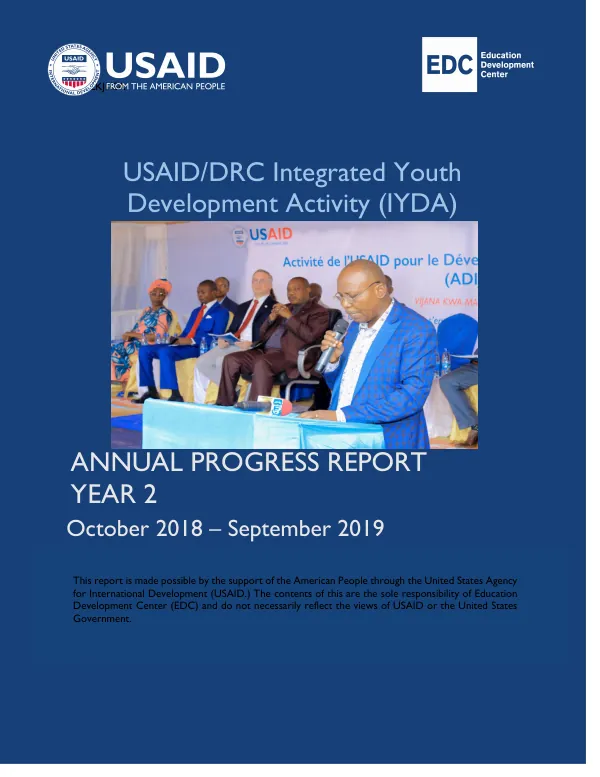
Annual Progress Report—Year 2 Fiscal Year 2019 USAID/DRC Integrated Youth Development Activity (IYDA)
Open record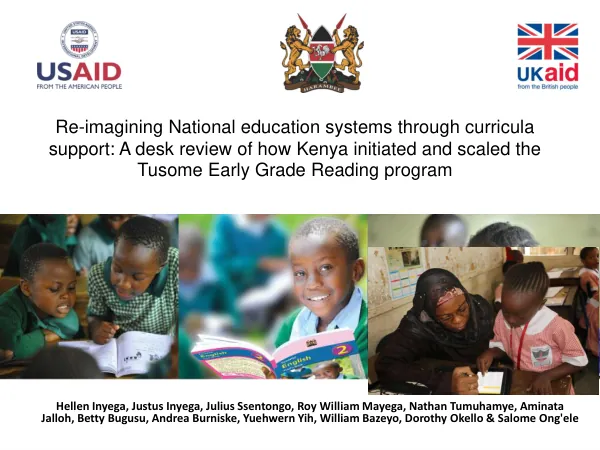 2019
2019USAID DEC
Re-imagining National education systems through curricula support: A desk review of how Kenya initiated and scaled the Tusome Early Grade Reading program
Open record