CONCERN INTERNATIONAL
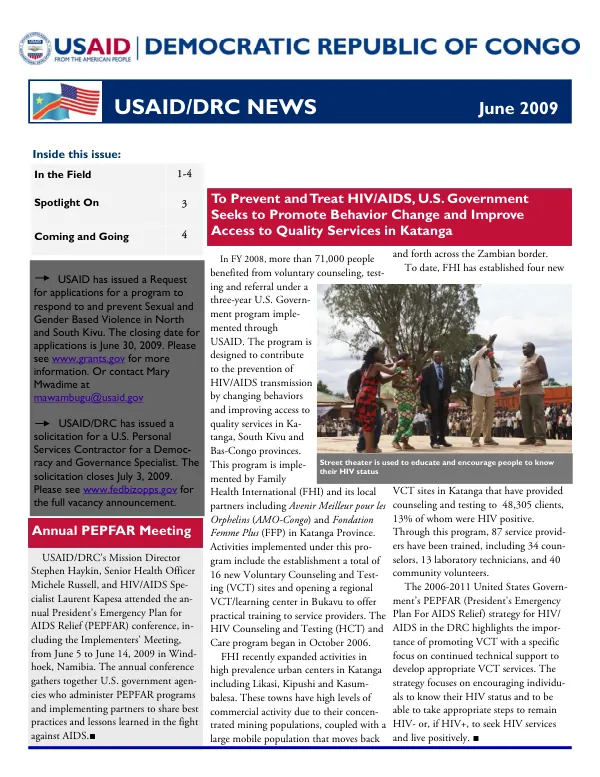
USAID/DRC NEWS June 2009
The Democratic Republic of Congo (DRC) has been a focus of international aid efforts, particularly in the areas of food security, HIV/AIDS prevention, and disaster relief.
2009 · 4 pages
Sign in to readA free account is required to download.
Abstract
In June 2009, the USAID/DRC News highlighted several initiatives aimed at improving the lives of vulnerable populations in the region. One such initiative was the USAID Food Security Project, implemented by the Salvation Army World Service Office (SAWSO) in Bas-Congo province. The project provided USAID/ Food For Peace-donated commodities to Tuberculosis (TB) patients, People Living with HIV/AIDS (PLWHA), and children under five affected by Kwashiorkor, a severe disease caused by chronic deficiency of protein and calories in the diet. The project aimed to achieve sustainable improvements in the health and nutritional status of children under five and PLWHA, improve the Salvation Army response to TB in Bas Congo, and increase the rate of recovery time for people undergoing TB treatment. The project was implemented in Massa (Kasangulu), Kisantu, and Kimpese health zones, with the objectives of improving the quality of life of the poor in these areas. Nutrition statistics in the DRC are among the world's worst, with more than 31% of children under five being underweight, 13% wasted, and 38% stunted. The project aimed to address these issues by providing comprehensive supplemental feeding programs integrated with community outreach. Another initiative highlighted in the USAID/DRC News was the cash-for-work road and bridge rehabilitation program implemented by Concern in Masisi, North Kivu. The program aimed to improve the food security of displaced people and host communities in villages and camps between Lushebere and Loashi by providing essential non-food items and seeds and increasing households' access to income. The program's activities responded to immediate economic and access needs by engaging in 36 kilometers of road repairs via the cash-for-work program that targeted key access roads between Lushebere and Loashi and within three IDP camps. The program was a component of Concern's overall project to provide emergency assistance to internally displaced people (IDP) and host communities in the lowland areas of Masisi, North Kivu, with funding from USAID/DRC's Office of Foreign Disaster Assistance. The aim of the project was to improve the food security of displaced people and host communities in the region. In addition to these initiatives, the USAID/DRC News also highlighted the importance of promoting behavior change and improving access to quality services in the fight against HIV/AIDS. The U.S. Government's President's Emergency Plan for AIDS Relief (PEPFAR) strategy for HIV/AIDS in the DRC highlighted the importance of promoting Voluntary Counseling and Testing (VCT) with a specific focus on encouraging individuals to know their HIV status and take appropriate steps to remain HIV- or, if HIV+, seek HIV services. The PEPFAR strategy was implemented through a three-year program implemented by Family Health International (FHI) and its local partners, including Avenir Meilleur pour les Orphelins (AMO-Congo) and Fondation Femme Plus (FFP) in Katanga Province. The program aimed to contribute to the prevention of HIV/AIDS transmission by changing behaviors and improving access to quality services in Katanga, South Kivu, and Bas-Congo provinces. The program's activities included the establishment of a total of 16 new VCT sites and opening a regional VCT/learning center in Bukavu to offer practical training to service providers. The program also trained 87 service providers, including 34 counselors, 13 laboratory technicians, and 40 community volunteers. The program's focus on promoting behavior change and improving access to quality services was critical in addressing the high prevalence of HIV/AIDS in the DRC. Overall, the USAID/DRC News highlighted several initiatives aimed at improving the lives of vulnerable populations in the DRC, particularly in the areas of food security, HIV/AIDS prevention, and disaster relief. These initiatives demonstrated the importance of addressing the complex needs of vulnerable populations in the region and highlighted the need for continued international support to address these issues.
Related documents