RTI INTERNATIONAL
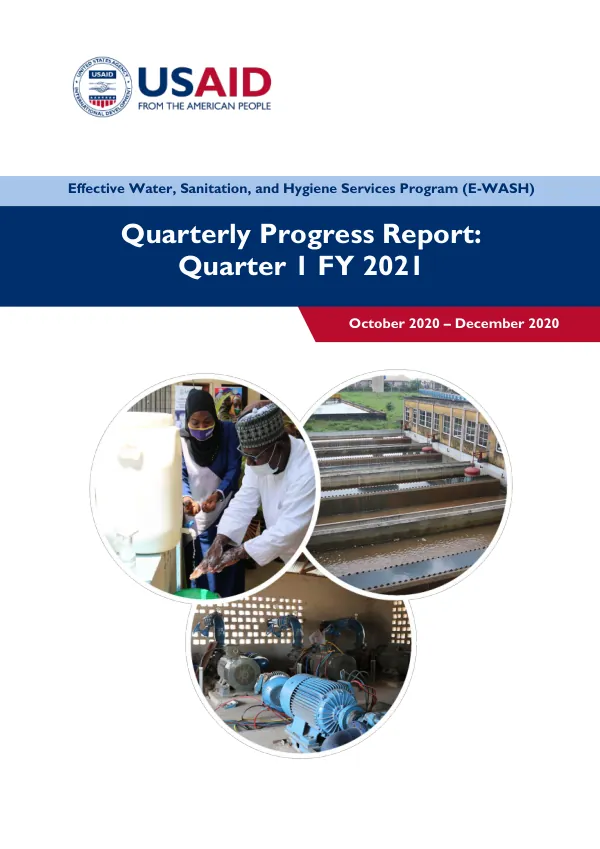
USAID E-WASH FY21 Quarter 3 Report
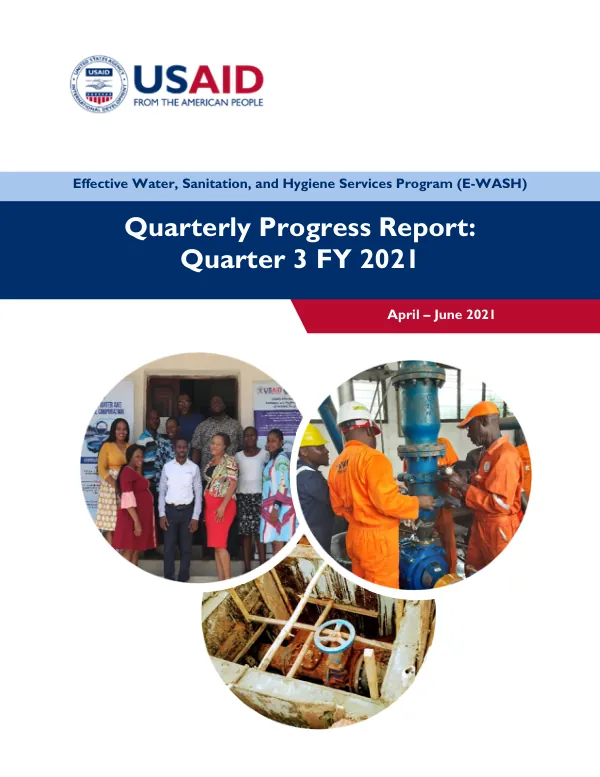
The Effective Water, Sanitation, and Hygiene Services Program (E-WASH) in Nigeria is a USAID-funded initiative aimed at improving access to safe water, sanitation, and hygiene services.
2021 · 65 pages
Sign in to readA free account is required to download.
Abstract
The program began on May 24, 2018, and is set to conclude on February 22, 2022. The program is divided into four components: Component 1 focuses on creating professionally managed, commercially oriented water and sanitation boards (SWBs); Component 2 aims to improve the financial and operational viability of SWBs; Component 3 seeks to strengthen policy, institutional, and regulatory frameworks for improved WASH services; and Component 4 builds coordination, advocacy, and strategic communications to promote reform in the WASH sector. During the third quarter of Fiscal Year 2021 (April – June 2021), significant progress was made in all components. Component 1 achieved notable milestones, including the development of a state WASH master plan in collaboration with the Delta State Urban Water and Sanitation Agency (DESUWACO). Component 2 made strides in improving the financial and operational viability of SWBs, with notable achievements including the implementation of a tariff structure meeting at DESUWACO and the installation of bulk meters in Delta State. Component 3 strengthened policy, institutional, and regulatory frameworks for improved WASH services, with notable achievements including the signing of the Water, Sewage, and Hygiene Development Bill by the Abia State Executive Governor. Component 4 built coordination, advocacy, and strategic communications to promote reform in the WASH sector, with notable achievements including the development of a state WASH master plan and the implementation of a USF (Urban Water and Sanitation Fund) implementation summary for various SWBs. Monitoring, evaluation, and learning (MEL) activities were also conducted during the quarter, with notable achievements including the completion of reports and studies, such as the USAID E-WASH Meeting with DESUWACO to Develop the State’s WASH Master Plan and the Abia State Executive Governor Signs the Water, Sewage, and Hygiene Development Bill. The program's management update highlights adaptive management, quality, cost control, and progress toward Q3 FY21 deliverables. Notable challenges and risks were identified, including the need for improved coordination and communication among stakeholders, and remedial actions were taken to address these issues. Lessons learned from the quarter included the importance of effective communication and coordination among stakeholders, as well as the need for continued support to SWBs to improve their financial and operational viability. The program's planned activities for the next quarter (Q4) include continued implementation of the USF, completion of the state WASH master plan, and strengthening of policy, institutional, and regulatory frameworks for improved WASH services. Overall, the E-WASH program made significant progress during the third quarter of Fiscal Year 2021, with notable achievements in all components and a strong focus on monitoring, evaluation, and learning.