ENVIRONMENTAL INCENTIVES, LLC
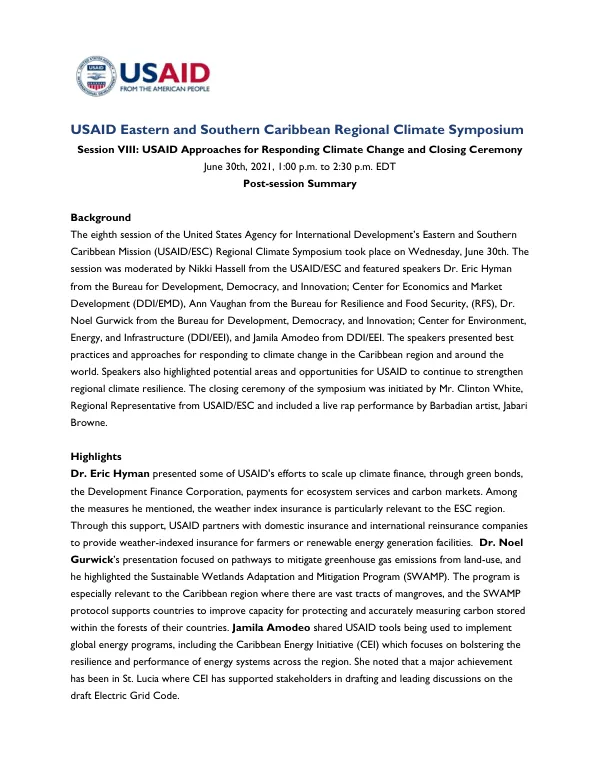
USAID Eastern and Southern Caribbean Regional Climate Symposium Session II Summary
The USAID Eastern and Southern Caribbean Regional Climate Symposium, Session II, focused on climate change impacts and future projections.
2021 · 2 pages
Sign in to readA free account is required to download.
Abstract
The session took place on June 16th, 2021, and was moderated by Dr. Janice Cumberbatch from the University of the West Indies. Climate specialists from the region, including Professor Michael Taylor, Dr. Cedric Van Meerbeeck, and Dr. Mark Bynoe, presented their findings on the human costs of climate change. Professor Michael Taylor emphasized the urgent need for climate action, stating that the Caribbean region is under a worst-case scenario and cannot afford the cost of catastrophic climate change. He called for a strong mitigation and adaptation agenda, which must be evidence-based and contextual to the region's challenges. Dr. Cedric Van Meerbeeck highlighted the importance of early warning systems, such as those implemented by the Caribbean Institute for Meteorology and Hydrology, which provide people with information to prepare and adapt to extreme weather. Dr. Mark Bynoe discussed regional responses to climate change, including economic and social implications. He noted that recent hurricanes have had a significant impact on the long-term nutmeg market in Grenada, increased alcohol consumption and domestic abuse in Guyana, and increased housing loans in Dominica. Dr. Bynoe emphasized the importance of incorporating social impacts into reports and highlighted the role of youth and women in implementing climate efforts and nature-based solutions. Key takeaways from the session include the need to incorporate climate change issues into development strategies, with people at the core of the strategy. Capacity-building efforts should focus on tackling current problems and building systems to provide solutions for the future. The Caribbean region has sufficient information, capacity, expertise, and examples to strengthen climate resilience, and the time for action is now. The youth need to be involved in these efforts, as they have the enthusiasm and energy to support climate action. The session highlighted the importance of partnerships between private, public, and academic sectors in addressing climate change. The speakers underscored the need for evidence-based and contextual approaches to climate action, which must prioritize the needs and challenges of the Caribbean region. The session also emphasized the importance of incorporating social impacts into reports and highlighting the role of youth and women in implementing climate efforts and nature-based solutions.