PALLADIUM INTERNATIONAL, LLC
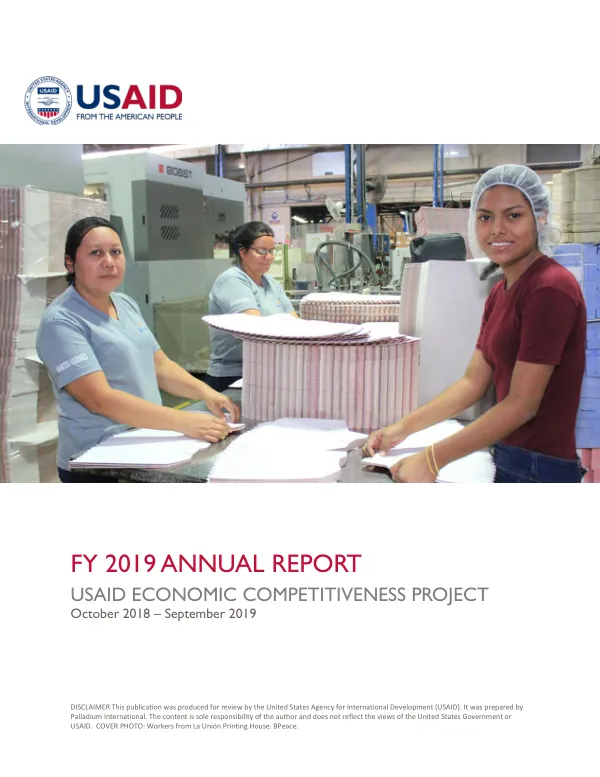
USAID Economic Competitiveness Project FY 2019 Annual Report
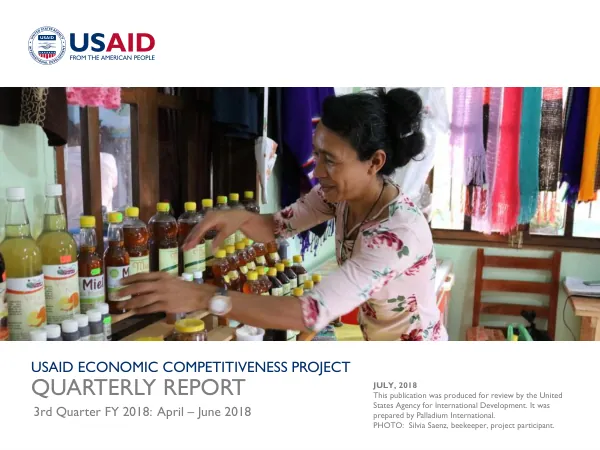
The USAID Economic Competitiveness Project in El Salvador aims to increase the competitiveness of the country's key economic sectors by strengthening the capacity of micro, small, and medium enterprises (MSMEs) to compete in domestic and export markets.
2019 · 71 pages
Sign in to readA free account is required to download.
Abstract
The project is designed to achieve a set of ambitious results, including creating 42,000 new jobs and increasing MSME sales by $315 million. The project's expected outcomes are to be achieved through the collaboration with and support to business service development providers (BSDPs) as major counterpart organizations. The project is structured around two main objectives: Objective 1, Equipping for Growth, and Objective 2, Governing for Growth. Objective 1 focuses on increasing the capacity of the private sector to compete in export value- and supply-chains, while Objective 2 aims to strengthen the national and subnational business enabling environment to make El Salvador more competitive. The project has a value chain cross-cutting strategy that offers a holistic approach to improve competitiveness and boost economic growth. The project has been working with 28 prioritized municipalities, targeting to benefit 10,000 MSMEs by the end of the project. The project's initiatives are generating more opportunities in areas where undocumented migrants return to, thus easing the re-inclusion process and mitigating repeated incidents of migration. In FY 2019, the project created a total of 1,783 jobs in five municipalities with high returned migrant rates, representing 36% of the project's total jobs created in the fiscal year. The total generated sales in these municipalities was $17.2 million, accounting for 40% of the total sales generated in FY 2019. The project's initiatives are aimed at generating more job opportunities for Salvadorans. In FY 2019, a poll was conducted with partners whose initiatives supported by the project are creating the most jobs. The results of the poll showed that the project's initiatives are having a positive impact on job creation, with a total of 1,783 jobs created in the five municipalities with high returned migrant rates. The project's value chain cross-cutting strategy involves working with value chains to build improved competitiveness and boost economic growth. In 28 prioritized municipalities, the project is implementing initiatives to improve the competitiveness of MSMEs and increase their access to global markets. The project's initiatives are focused on strengthening institutional capacity, increasing innovation and use of improved technology, and linking MSMEs to global markets. The project's expected results are to be achieved through the collaboration with and support to business service development providers (BSDPs) as major counterpart organizations. The project's initiatives are generating more opportunities in areas where undocumented migrants return to, thus easing the re-inclusion process and mitigating repeated incidents of migration. The project's efforts are aimed at boosting the country's productivity and competitiveness by increasing sales and developing more jobs. The project's Development Hypothesis is that if firms commit to sustainable private sector capabilities, increase resource capacities, improve their business management skills through innovation and self-reliant broad-based know-how, the government improves the regulatory framework and streamlines doing business procedures, and the public and private sectors work together to achieve mutual economic growth objectives, El Salvador's key economic sectors will be more competitive. The project's target is to benefit 10,000 MSMEs over the life of the project.
Related documents