ADVANCED ENGINEERING ASSOCIATES INTERNATIONAL, INC. /SGGA
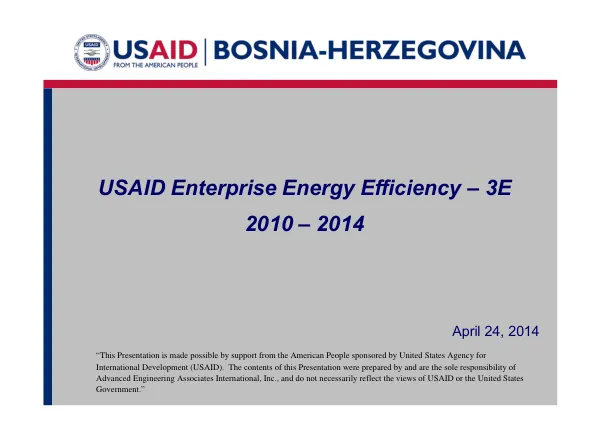
USAID Enterprise Energy Efficiency – 3E
The USAID Enterprise Energy Efficiency – 3E project was implemented in Bosnia and Herzegovina from 2010 to 2014.
2014 · 52 pages
Sign in to readA free account is required to download.
Abstract
The project aimed to promote energy efficiency in the country by providing training and technical assistance to various stakeholders, including bank staff, public sector counterparts, and small and medium-sized enterprises (SMEs). The project also focused on raising awareness about the benefits of energy management and promoting the adoption of energy-efficient technologies. The project achieved significant results, including the implementation of 17 pilot projects, which resulted in a total energy savings of 2,260 MWh annually. This led to a reduction of 1,246 tons of CO2 emissions annually, as well as total savings of 355,791 KM annually. Additionally, the project trained 456 public sector counterparts on the benefits of energy management, 294 SME representatives, and 30 bank staff on energy efficiency project financing. The project also made significant progress in promoting energy efficiency in Bosnia and Herzegovina. The country's primary energy consumption per capita increased, as did electricity consumption and CO2 emissions. However, the project highlighted the need for energy efficiency measures to mitigate these trends. The project's results were presented at a conference on April 24, 2014, which brought together stakeholders from the public and private sectors to discuss the project's achievements and lessons learned. The project's impact was also evident in the number of energy efficiency project applications received, which increased from 30 to 69 during the project period. The project's website received a significant number of hits, with 17,822 visitors. The project also organized seminars for chambers of commerce and crafts associations, as well as technology providers presenting their energy-efficient solutions. These efforts helped to raise awareness about the benefits of energy efficiency and promote the adoption of energy-efficient technologies in Bosnia and Herzegovina. The project's success was attributed to the collaboration between the USAID 3E team and various stakeholders, including government agencies, private sector companies, and civil society organizations. The project's results demonstrated the potential for energy efficiency measures to reduce energy consumption and mitigate climate change in Bosnia and Herzegovina. The project's lessons learned and best practices can serve as a model for future energy efficiency initiatives in the country.
Related documents