ADVANCED ENGINEERING ASSOCIATES INTERNATIONAL, INC. /SGGA
USAID 3E Pilot Project for Energy Efficiency in Srebrenica
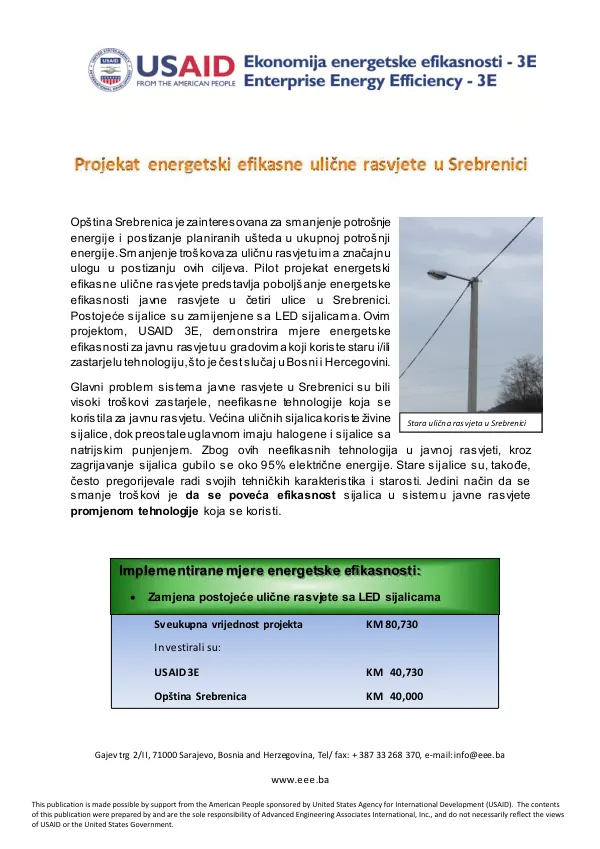
The municipality of Srebrenica in Bosnia and Herzegovina is interested in reducing energy consumption and achieving planned savings in total energy consumption.
2014 · 2 pages
Sign in to readA free account is required to download.
Abstract
A significant role in achieving these goals is played by reducing costs for street lighting. The pilot project for energy-efficient street lighting represents an improvement in the energy efficiency of public lighting in four streets in Srebrenica. Existing streetlights were replaced with LED streetlights. This project, USAID 3E, demonstrates energy-saving measures for public lighting in cities that use old and/or outdated technology, which is a common case in Bosnia and Herzegovina. The main problems with the public lighting system in Srebrenica were high costs of outdated, inefficient technologies used for public lighting. Most streetlights use incandescent bulbs, while the rest are mostly halogen and sodium-filled bulbs. Due to these inefficient technologies in public lighting, around 95% of electrical energy is lost through heating of the streetlights. Old streetlights also often overheat due to their technical characteristics and age. The only way to reduce costs is to increase the efficiency of streetlights in the public lighting system by replacing outdated technology. The municipality of Srebrenica implemented measures to improve energy efficiency, including replacing existing streetlights with LED streetlights. This change is expected to reduce energy consumption and lower costs for the municipality. The project aims to promote proven energy-saving technologies that can be implemented in Bosnia and Herzegovina with a return on investment period of less than seven years. Consumers will achieve savings through lower bills for heating, electricity, and water, and savings will continue even after the investment is repaid. The USAID 3E project is a $4.5 million program for promoting energy-saving technologies through the development of pilot projects in publicly and privately funded objects. The project aims to increase the capacity of municipal partners from the public sector, as well as small and medium-sized enterprises (SMEs), and raise public awareness of the benefits of energy efficiency. The US government, primarily through USAID, has secured almost $1.6 billion in assistance for economic, democratic, and social progress in Bosnia and Herzegovina. The expected results of the project include a yearly savings of 16,366.00 KM in energy consumption, a reduction of 54.00 t CO2 emissions per year, and an increase in public awareness and knowledge of the possibilities and benefits of implementing energy-saving measures.