TETRA TECH
USAID Greening Prey Lang: Rapid Assessment of COVID-19 Impacts
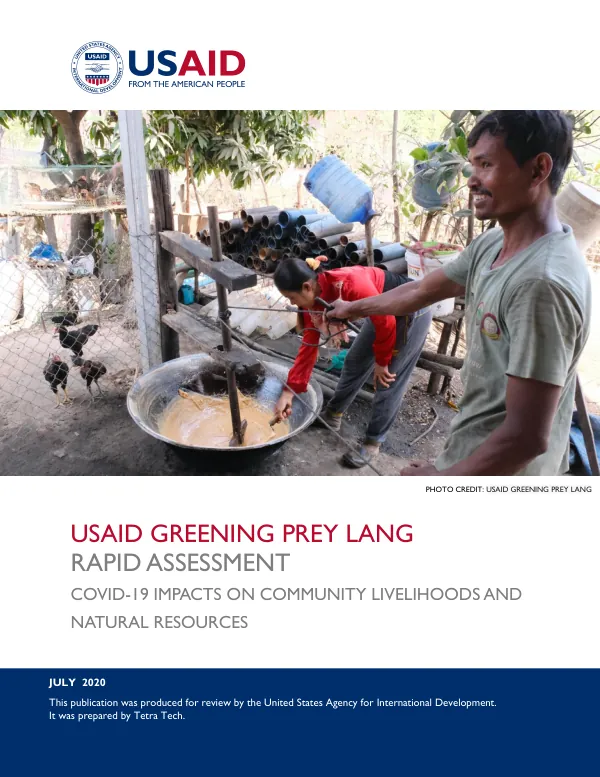
The agricultural cooperative (AC) members from Kampong Thom province produce palm sugar for sale in local Cambodian markets.
2020 · 27 pages
Sign in to readA free account is required to download.
Abstract
The production of palm sugar is a significant livelihood activity for many community members in the Prey Lang Extended Landscape (PLEL). However, the COVID-19 pandemic has had a profound impact on community livelihoods and natural resources in the PLEL. Climate change has affected community livelihoods, primarily due to the decrease in availability of water caused by lack of and late rainfall. This has resulted in late planting and decline in agriculture yields. Non-timber forest product (NTFP) yields have also decreased, especially resin, forest fruits, and mushrooms, resulting in a reduction in family income generation. The lack of rainfall and increasing temperature have a deadly effect on livestock, fish, and wildlife, making livestock raising less profitable. The COVID-19 pandemic has further exacerbated the challenges faced by community members in the PLEL. The restricted movement, reduced daily spending, and slowed down business operations have negatively impacted the sale of agriculture products and other businesses. The price of cashew nut, which is grown by 45% of community member respondents, has declined by approximately 50% compared to the previous year. This reduction in price, in addition to the loss of jobs in other sectors due to the travel ban and businesses being closed, has resulted in a significant loss of family income. The COVID-19 pandemic has also had an indirect negative effect on natural resources, especially forest and wildlife. In certain communities in the PLEL, there have been a reported increase in illegal logging and land clearance for cultivation, which destroy wildlife habitat, and poisoning of wildlife. These illegal activities are a significant concern for the conservation of natural resources in the PLEL. The assessment recommends certain interventions to address the climate change impacts on livelihoods, including support for the implementation of climate-smart agriculture, facilitation of market linkages for vegetable and other agriculture products, support for interventions to improve natural management and prevention of forest loss, support for interventions to improve retention of water resources, and mobilization of investments to prevent forest loss and support communities. Additionally, the project should consider improving local market linkages and facilitating farmers to engage with ACs, offering support for alternative livelihood options that can generate income in the short term, and promoting target ecotourism sites to attract local tourists to address the financial impacts to communities from COVID-19. The Prey Lang Extended Landscape (PLEL) is a critical ecosystem that supports a wide range of biodiversity, including many endangered species. The PLEL is also home to many community members who depend on the natural resources for their livelihoods. The COVID-19 pandemic has highlighted the need for sustainable livelihoods and conservation of natural resources in the PLEL. The assessment emphasizes the importance of addressing the climate change impacts on livelihoods and conserving natural resources to ensure the long-term sustainability of the PLEL ecosystem.