INTERNATIONAL ORGANIZATION FOR MIGRATION
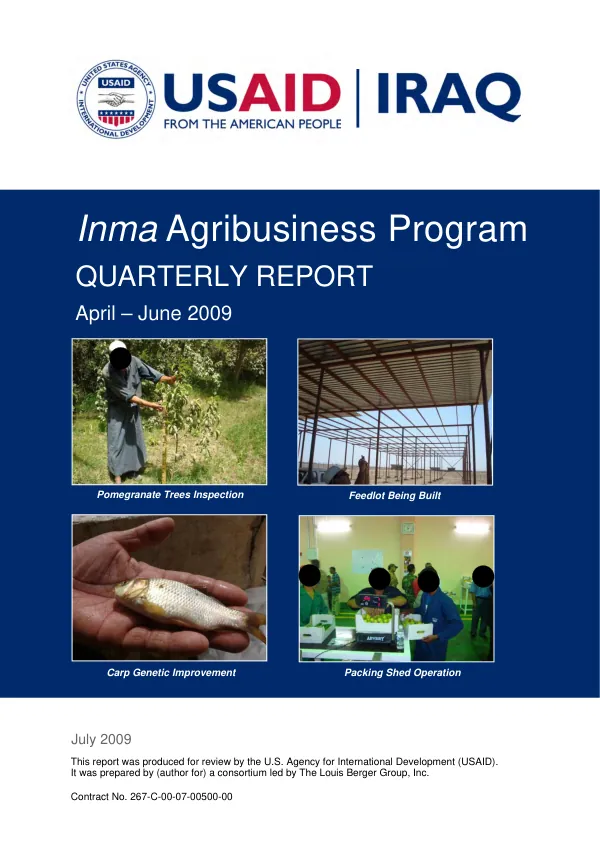
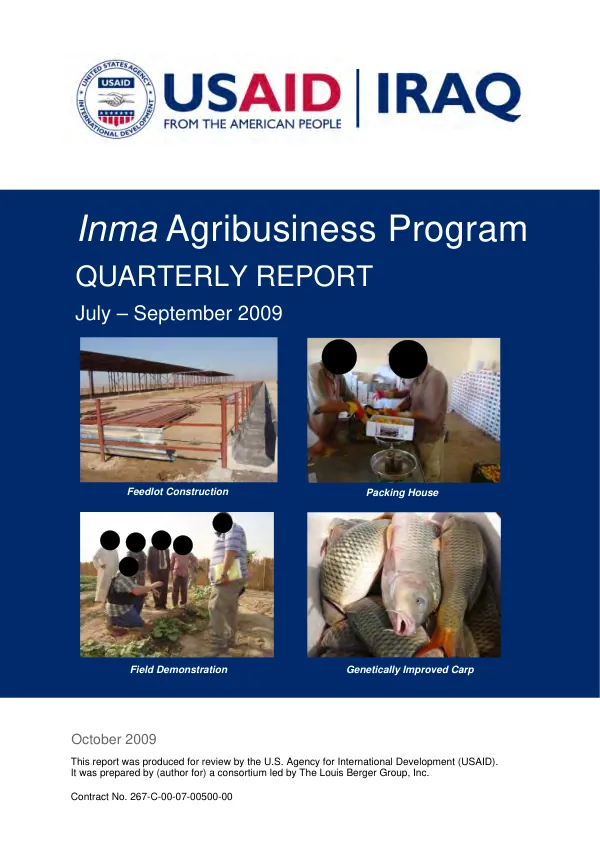
USAID-Inma Agribusiness Program
The USAID-Inma Agribusiness Program in Iraq began in 2018 with funding from the United States Agency for International Development (USAID).
36 pages
Sign in to readA free account is required to download.
Abstract
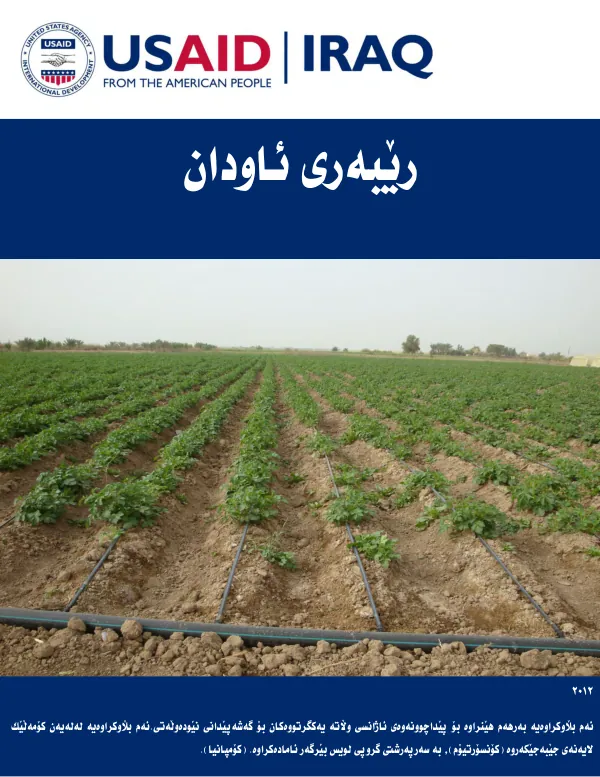
The program aimed to improve agricultural productivity and income for smallholder farmers in Iraq. The program also focused on improving irrigation systems, with a focus on drip irrigation and sprinkler systems. The program aimed to increase water efficiency and reduce water waste. The program also worked to improve crop yields through the use of precision agriculture techniques, such as soil testing and crop monitoring. The program's geographic focus was on the Eastern Province of Iraq, with a focus on the provinces of Basra, Dhi Qar, and Maysan. The program worked with local farmers, extension agents, and government officials to implement the program's interventions. The program's timeframes were from 2018 to 2022, with a focus on the first three years of implementation. The program's recommendations included continued support for farmer training programs, infrastructure development, and market linkage facilitation. The program also recommended continued investment in irrigation systems and precision agriculture techniques. The program's methodology included a combination of quantitative and qualitative research methods, including surveys, focus groups, and key informant interviews. The program's data collection and analysis were conducted by local researchers and international experts. The program's findings included a significant increase in household income among program participants, as well as improvements in food security indicators. The program's results also showed a high level of adoption of sustainable agriculture practices among program participants. The program's conclusions included the importance of continued support for farmer training programs, infrastructure development, and market linkage facilitation. The program also concluded that continued investment in irrigation systems and precision agriculture techniques was necessary to improve crop yields and reduce water waste. The program's recommendations included continued support for the program's interventions, as well as continued investment in irrigation systems and precision agriculture techniques. The program also recommended continued collaboration with local farmers, extension agents, and government officials to ensure the program's sustainability and impact.
Related documents