MINISTRY OF HEALTH
Al-Garraf Local Health Committee Leads to Improved Water for Primary School
The Al-Garraf Local Health Committee plays a crucial role in improving access to clean water for the Al-Faraked Primary School in Iraq.
2014 · 1 pages
Sign in to readA free account is required to download.
Abstract
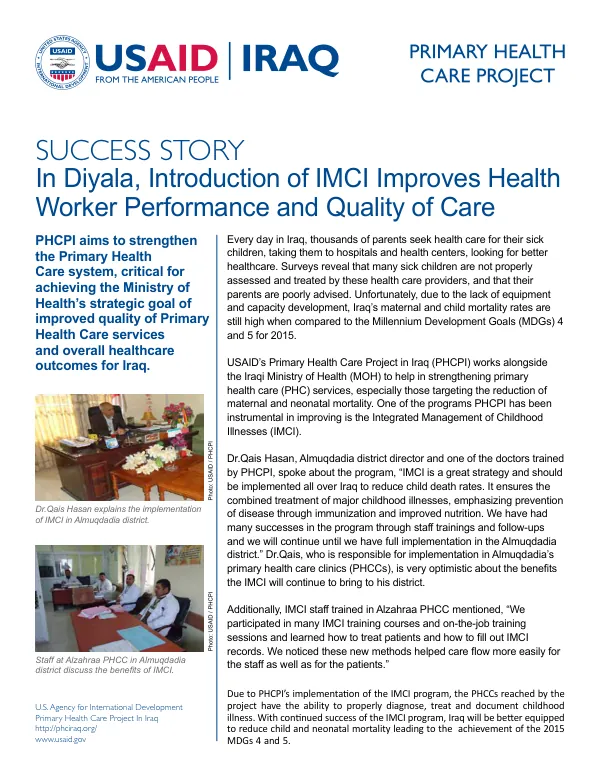
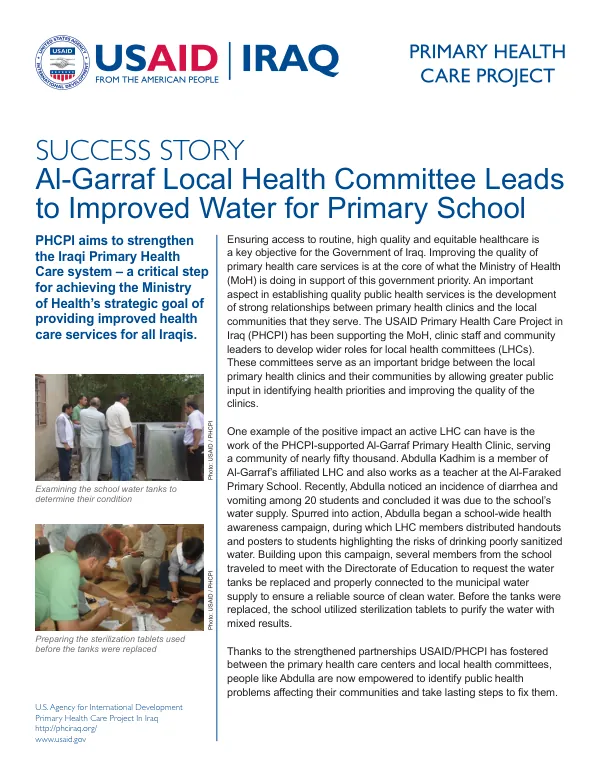
The school serves a community of nearly 50,000 people and had been experiencing issues with its water supply, leading to an outbreak of diarrhea and vomiting among 20 students. Abdulla Kadhim, a member of the Al-Garraf Local Health Committee and a teacher at the school, took the initiative to address the problem. Abdulla launched a school-wide health awareness campaign, distributing handouts and posters to students highlighting the risks of drinking poorly sanitized water. Building on this effort, several members from the school met with the Directorate of Education to request the replacement of the school's water tanks and proper connection to the municipal water supply. Prior to the tank replacement, the school used sterilization tablets to purify the water, but this method had mixed results. The strengthened partnerships between primary health care centers and local health committees, facilitated by the USAID Primary Health Care Project in Iraq (PHCPI), have empowered individuals like Abdulla to identify public health problems affecting their communities and take lasting steps to address them. The PHCPI aims to strengthen the Iraqi Primary Health Care system, a critical step towards achieving the Ministry of Health's strategic goal of providing improved health care services for all Iraqis. The Al-Garraf Local Health Committee's efforts demonstrate the impact of community-led initiatives in improving public health outcomes. By working together with local health committees, primary health clinics, and community leaders, the PHCPI is supporting the development of strong relationships between primary health clinics and their communities. This collaboration enables greater public input in identifying health priorities and improving the quality of clinics. The success of the Al-Garraf Local Health Committee's initiative has set a positive example for other communities in Iraq. By empowering individuals to take ownership of public health issues, the PHCPI is contributing to the creation of a more resilient and responsive health care system. The project's focus on strengthening partnerships between primary health care centers and local health committees has the potential to bring about lasting improvements in public health outcomes across Iraq.