U.S. DEPARTMENT OF STATE/OES
USAID/Iraq Monthly Newsletter - Volume 2, Issue 1 - Jan-Feb 2009
The Government of Iraq has made significant strides in furthering democracy in the country.
2009 · 4 pages
Sign in to readA free account is required to download.
Abstract
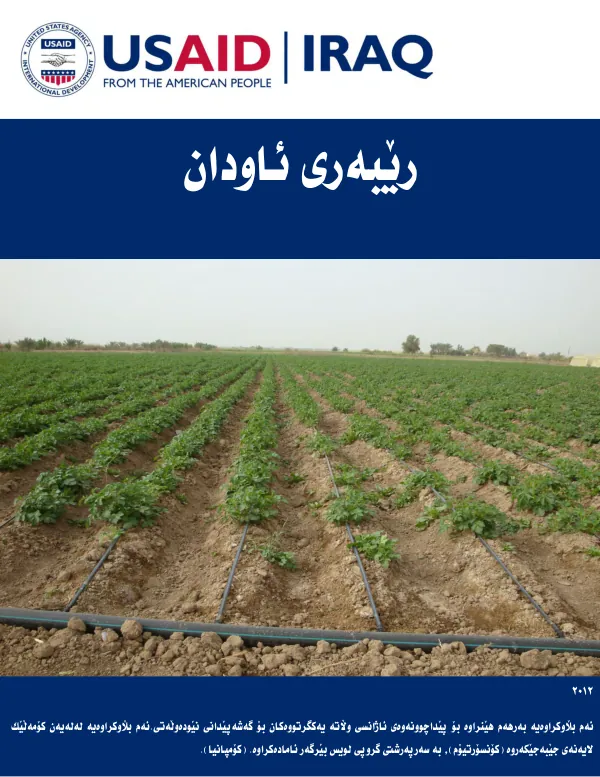
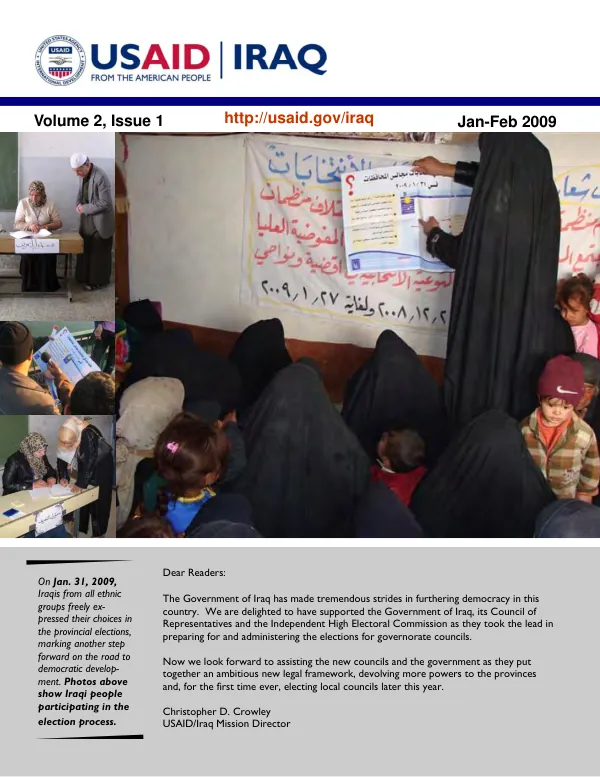
The Government of Iraq, its Council of Representatives, and the Independent High Electoral Commission have taken the lead in preparing for and administering the elections for governorate councils. This effort has been supported by the United States Agency for International Development (USAID) and other international partners. The provincial elections held on January 31, 2009, marked another step forward on the road to democratic development in Iraq. Iraqis from all ethnic groups freely expressed their choices, with a turnout of huge numbers in 14 of the 18 provinces. The elections involved the participation of all ethnic groups, unlike previous elections that saw mass boycotting. Voters faced an overwhelming number of candidates (14,000) with a range of goals. USAID provided assistance to the Independent High Electoral Commission (IHEC) through an agreement with the International Federation of Election Systems (IFES). This assistance was budgeted at $102 million and took into account the evolving needs of an election operation led and managed by Iraqis. The Government of Iraq provided a substantial amount of funding to the IHEC. Voter education was offered by civil society and non-governmental organizations (NGOs) that were trained under USAID's Iraq Rapid Assistance Program (IRAP). The media and NGOs reached out to one-third of the 14 million eligible voters, with 290,000 Iraqis attending activities led by NGOs and an estimated 4 million Iraqis receiving information from print and broadcast media. Voter education involved informing Iraqis about what their ballot should look like, the technical process of marking the ballot, the importance of being a part of the process, and where their polling place is located. USAID's elections program provided materials generated by IHEC for distribution to voters. Special efforts were made to provide direct education and accessibility measures for women and people with disabilities. Women appeared to be energized by the opportunity to exercise their right to vote, even in conservative rural areas. The elections marked a significant step forward in Iraq's democratic development, with Iraqis having a chance to vote for individuals and not just for parties. In addition to the elections, USAID has also been supporting the development of agriculture in Iraq. The Inma Agribusiness program provided a $836,000 grant to Anka, a non-governmental organization, to set up a specialized information service for farmers. The service provides market data to farmers through mobile phones, helping them to make informed decisions about their crops. The service has been successful, with Anka doubling the number of subscribers since its inception. The subscribers include commercial farmers, traders, processors, and marketers, with each paying about $180 a year for the text-message service. The service is also offered for free on Anka's Web site and radio. Early data show that subscribers are benefiting from the service, transforming the way they do business. With access to market prices, farmers are equipped with the relevant knowledge and have better bargaining power. USAID has also been supporting the work of Provincial Reconstruction Teams (PRTs) in Iraq. PRTs are composed of civilian and military members who work together to rebuild hospitals, schools, clinics, and businesses after decades of neglect under Saddam Hussein's regime. Tamra Halmrast-Sanchez, a disaster management expert, has been working with PRTs in Iraq, training and assisting city and governorate administrators to improve the delivery of essential services such as water, sewer, electricity, and trash collection and disposal.
Related documents