THE AMREF HEALTH AFRICA
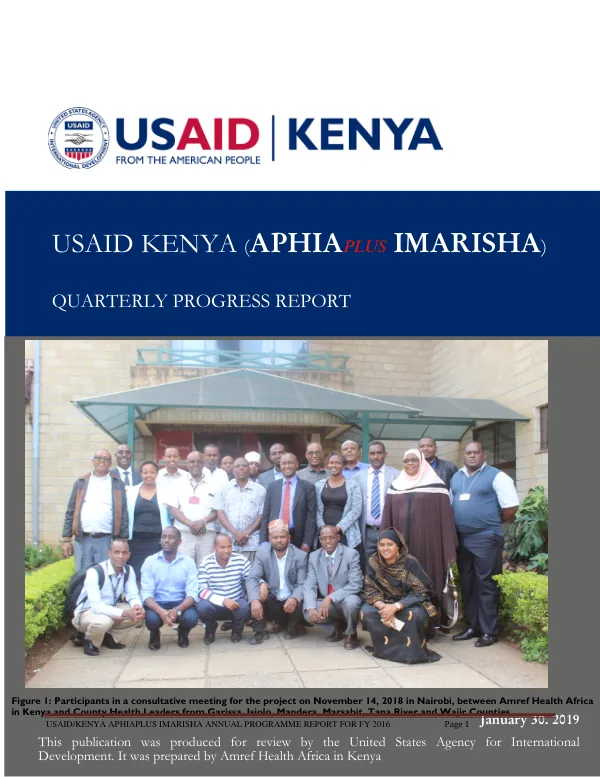
USAID/KENYA APHIAPLUS IMARISHA (OCT - DEC 2018) PROGRESS REPORT FOR FY 2019
APHIAplus IMARISHA continued to provide intensified quality HIV services across all central support counties in partnership with county governments' departments of Health.
2019 · 35 pages
Sign in to readA free account is required to download.
Abstract
The implementation approach emphasized integrated technical assistance and mentorship within DATIM health facilities, prioritizing high burden facilities and focusing on HIV/AIDS services delivery, identification, linkage to care/treatment, and viral load suppression. A total of 72,042 individuals were reached with HIV testing services (HTS) out of the targeted 10,567, representing a 682% achievement of the HTS target in the support counties. Of the 321 clients identified as HIV positive, 292 (91%) were linked to care and started on antiretroviral therapy (ART) as per guidelines recommendation. Lay counselors were re-engaged to act as linkage agents to ensure no missed opportunities for enrollment. The program also focused on the elimination of mother-to-child transmission of HIV. In the reporting period, a total of 1,200 pregnant women were reached with prevention of mother-to-child transmission (PMTCT) services, resulting in a 95% reduction in new HIV infections among children. The program's PMTCT services included antiretroviral prophylaxis, safe delivery practices, and postnatal care. APHIAplus IMARISHA collaborated with county governments to strengthen health systems and improve the quality of HIV services. The program provided technical assistance and mentorship to health facilities, focusing on areas such as HIV testing, counseling, and treatment, as well as maternal and child health services. The program also supported the development of county-level health plans and budgets, ensuring that HIV services were integrated into broader health sector plans. In terms of gender strategy, the program continued to focus on increasing access to HIV services for women and girls, particularly in areas with high HIV prevalence. The program's lay counselors and community health workers played a critical role in promoting gender equality and addressing gender-based violence. The program also supported the development of county-level policies and guidelines on gender-based violence, ensuring that HIV services were responsive to the needs of women and girls. The program's environmental mitigation and monitoring efforts focused on reducing the environmental impact of HIV services. The program implemented waste management practices, reduced energy consumption, and promoted the use of environmentally friendly products. The program also supported the development of county-level environmental policies and guidelines, ensuring that HIV services were environmentally sustainable. In terms of links to other USAID programs, APHIAplus IMARISHA collaborated with other USAID-funded programs to leverage resources and expertise. The program worked with the Kenya Medical Supplies Agency (KEMSA) to improve the availability and quality of HIV commodities, and with the Clinton Health Access Initiative (CHAI) to strengthen health systems and improve the quality of HIV services. The program's grants management system ensured that funds were allocated efficiently and effectively. The program's financial information was transparent and accountable, with regular audits and reviews to ensure compliance with USAID regulations. In terms of sustainability and exit strategy, APHIAplus IMARISHA worked with county governments to develop sustainable HIV programs that could continue beyond the program's lifespan. The program supported the development of county-level HIV plans and budgets, ensuring that HIV services were integrated into broader health sector plans. The program also supported the development of county-level policies and guidelines on HIV, ensuring that HIV services were responsive to the needs of the community. The program's global development alliance focused on leveraging resources and expertise from international partners to support HIV services in Kenya. The program worked with the World Health Organization (WHO) to strengthen health systems and improve the quality of HIV services, and with the United Nations Children's Fund (UNICEF) to support the elimination of mother-to-child transmission of HIV. In conclusion, APHIAplus IMARISHA continued to provide intensified quality HIV services across all central support counties in partnership with county governments' departments of Health. The program's implementation approach emphasized integrated technical assistance and mentorship within DATIM health facilities, prioritizing high burden facilities and focusing on HIV/AIDS services delivery, identification, linkage to care/treatment, and viral load suppression. The program's efforts resulted in significant achievements in HIV testing, counseling, and treatment, as well as maternal and child health services.
Related documents