NORC AT THE UNIVERSITY OF CHICAGO
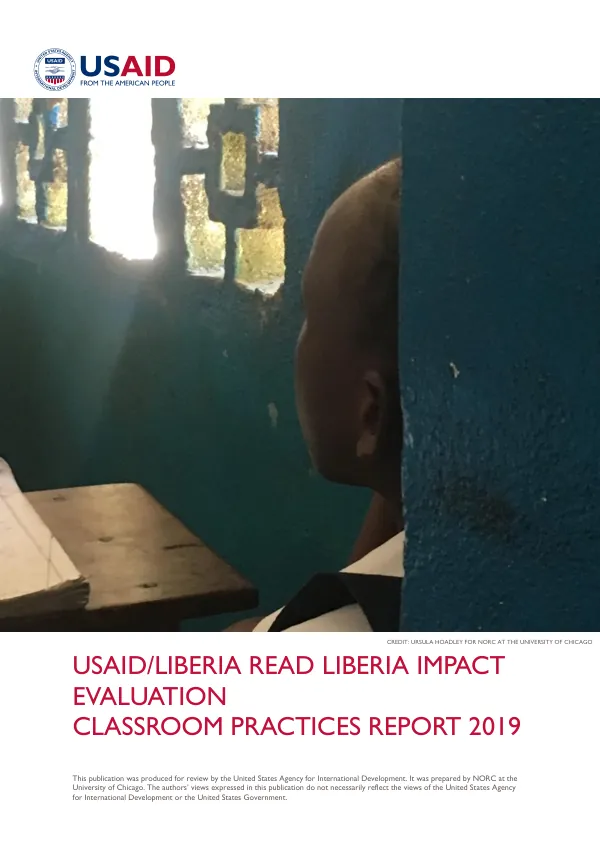
USAID/Liberia Read Liberia Impact Evaluation Classroom Practices Report 2019
The Read Liberia program aims to improve reading outcomes in primary schools in six Liberian counties.
2019 · 52 pages
Sign in to readA free account is required to download.
Abstract
The program includes four primary materials: a Teacher Instruction Guide (TIG), a Student Activity Book (SAB), a student reader titled Let's Read (LR), and a series of leveled readers. The TIG provides teachers with weekly overviews of the reading skills to be covered and daily lesson plans, which detail the content to be covered and how it should be taught. The TIG also includes lists of materials required for each lesson and makes cross-references to the SAB and the LR. The program incorporates a well-established conception of successful literacy instruction, based on the explicit and systematic teaching of different components of reading, including phonemic awareness, phonics, vocabulary, and comprehension. It also focuses on fluency, spelling, sight words, and shared writing. These components are structured into the scripted reading program for each day of the week, for 36 weeks. The program recognizes writing and oral language fluency as key to the development of reading. A further set of instructional principles informs the program, including scripted content, the 'I do, we do, you do' methodology, use of familiar language, monitoring and feedback, use of appropriate pacing, inclusion, positive discipline, and homework. The program is designed to be used together to provide a holistic lesson plan to improve early grade reading achievement. The classroom observation study was conducted from May 27 to June 7, 2019, in Treatment and Control schools. Fieldworkers observed a 45-minute Read Liberia reading lesson in Treatment schools and a 45-minute designated reading period in the Control group. The study aimed to investigate the implementation of the Read Liberia program in practice and how it is actually being implemented in schools. The study found that the uptake by teachers of the Read Liberia program materials in teaching early grade reading was variable. Some teachers reported using the program materials extensively, while others reported using them less frequently. The study also found that the uptake by teachers of the Read Liberia structured lesson plans in classrooms was variable, with some teachers reporting that they followed the lesson plans closely, while others reported making significant modifications. The study found significant differences in instructional practices between Treatment and Control classrooms. Treatment classrooms showed higher levels of engagement and participation among students, with more opportunities for students to read and engage with the material. Control classrooms showed lower levels of engagement and participation among students, with fewer opportunities for students to read and engage with the material. The study also found that the Read Liberia program materials were used more extensively in Treatment classrooms, with more teachers reporting using the program materials in their teaching. The study found that the program materials were used to support a range of instructional practices, including phonemic awareness, phonics, vocabulary, and comprehension. The study's findings suggest that the Read Liberia program has the potential to improve reading outcomes in primary schools in Liberia. However, the study also highlights the need for further support and training for teachers to ensure that they are using the program materials effectively. The study's findings also suggest that the program's instructional principles, including scripted content, the 'I do, we do, you do' methodology, and use of familiar language, are effective in supporting reading instruction. The study's findings have implications for the implementation of the Read Liberia program in Liberia. The study suggests that the program should be implemented with a focus on supporting teachers in using the program materials effectively, and that the program's instructional principles should be emphasized in teacher training and support. The study also suggests that the program should be evaluated regularly to ensure that it is meeting its goals and to identify areas for improvement.