THE ASIA FOUNDATION
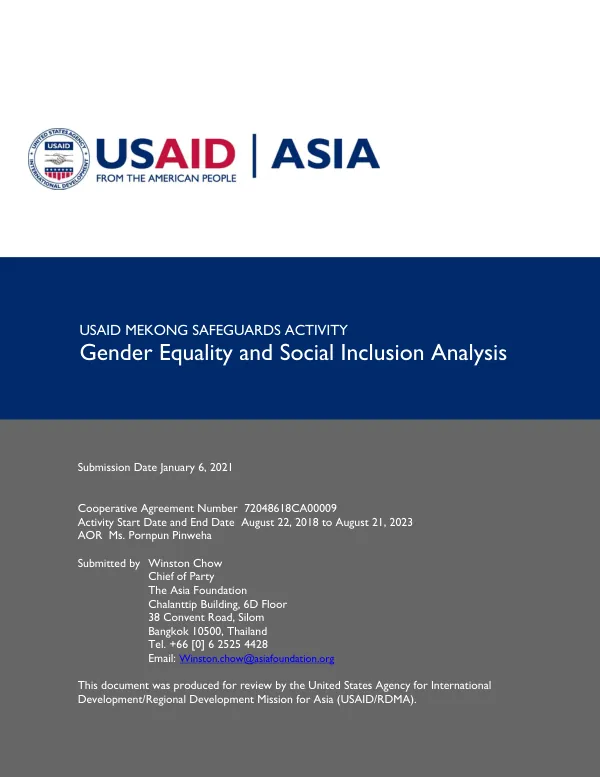
USAID Mekong Safeguards Activity Gender Equality and Social Inclusion Analysis
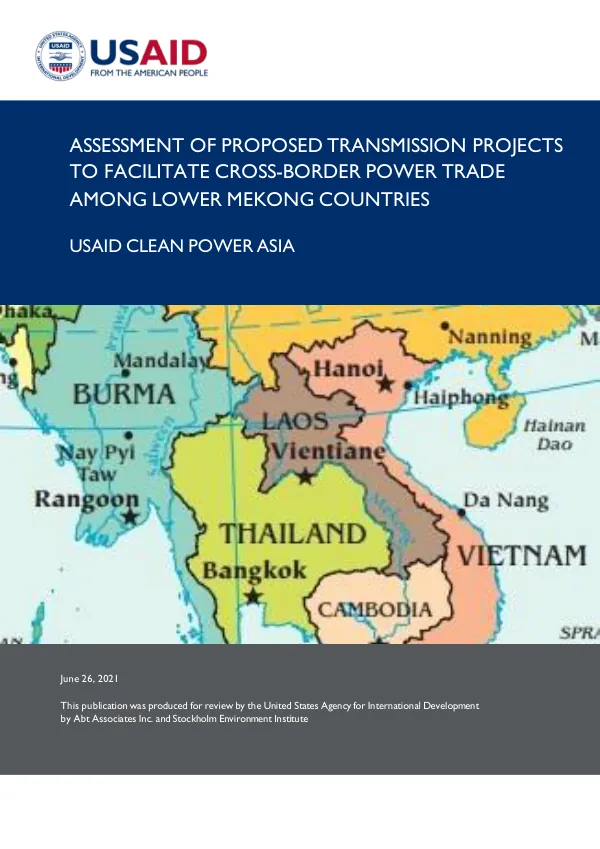
The USAID Mekong Safeguards Activity is a gender equality and social inclusion analysis conducted in the lower Mekong region, which includes Cambodia, Laos, Myanmar, Thailand, and Vietnam.
2021 · 126 pages
Sign in to readA free account is required to download.
Abstract
The activity began on August 22, 2018, and is set to conclude on August 21, 2023. The Asia Foundation serves as the prime implementing partner, with subawardees including The Henry L. Stimson Center, Global Environmental Institute, China International Contractors Association, and Beijing Rongzhi Corporate Social Responsibility Institute. The analysis focuses on the impacts of infrastructure development on gender equality and social inclusion in the region. It examines the effects of energy, transport, and resettlement projects on local communities, with a particular emphasis on the experiences of women, ethnic minorities, and other vulnerable groups. The study also assesses the implementation of environmental and social impact assessments, as well as the participation of local communities in decision-making processes. The analysis reveals that infrastructure development can have both positive and negative impacts on gender equality and social inclusion. On the one hand, energy projects have improved access to electricity for rural communities, while transport projects have enhanced connectivity and economic opportunities. However, these projects have also led to displacement, loss of livelihoods, and increased vulnerability to gender-based violence. The study identifies several gaps and barriers to achieving gender equality and social inclusion in the region. These include inadequate laws and policies, limited participation of women and marginalized groups in decision-making processes, and a lack of awareness and understanding of gender issues among project implementers. The analysis also highlights the need for more effective environmental and social impact assessments, as well as greater community engagement and participation in project planning and implementation. The report provides a range of recommendations for improving gender equality and social inclusion in the region. These include strengthening laws and policies, enhancing participation of women and marginalized groups in decision-making processes, and increasing awareness and understanding of gender issues among project implementers. The report also recommends the development of more effective environmental and social impact assessments, as well as greater community engagement and participation in project planning and implementation. The analysis was conducted through a combination of desk reviews, stakeholder consultations, and field research. The study team consulted with a range of stakeholders, including government officials, civil society organizations, and local communities. The report provides a comprehensive overview of the impacts of infrastructure development on gender equality and social inclusion in the lower Mekong region, and offers a range of recommendations for improving these outcomes. The report highlights the importance of addressing the social and environmental impacts of infrastructure development, and ensuring that these projects are designed and implemented in a way that promotes gender equality and social inclusion. The analysis provides a valuable contribution to the ongoing debate about the role of infrastructure development in promoting sustainable development and reducing poverty in the lower Mekong region. The study team used a range of methodologies, including desk reviews, stakeholder consultations, and field research. The report provides a comprehensive overview of the impacts of infrastructure development on gender equality and social inclusion in the lower Mekong region, and offers a range of recommendations for improving these outcomes. The analysis was conducted in accordance with the principles of the Equator Principles and the International Finance Corporation's Performance Standards.