DAI
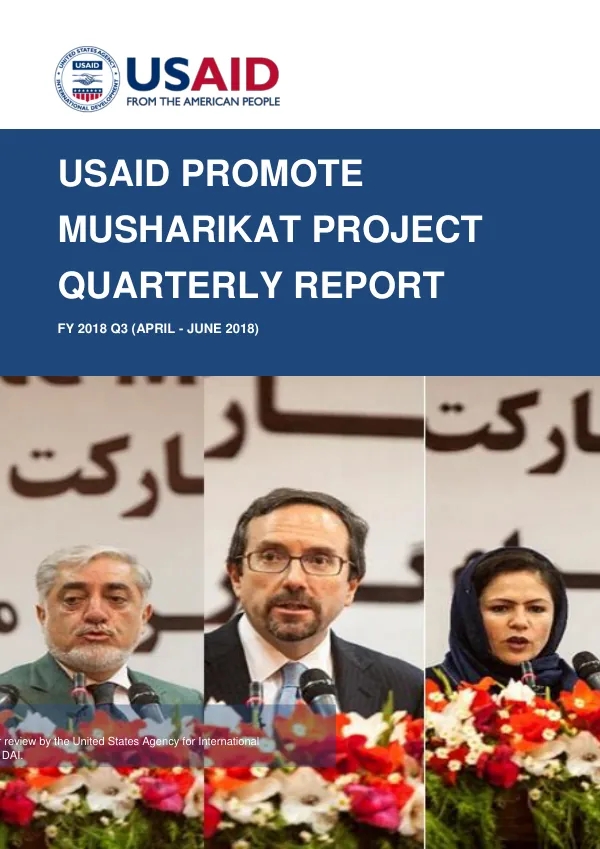
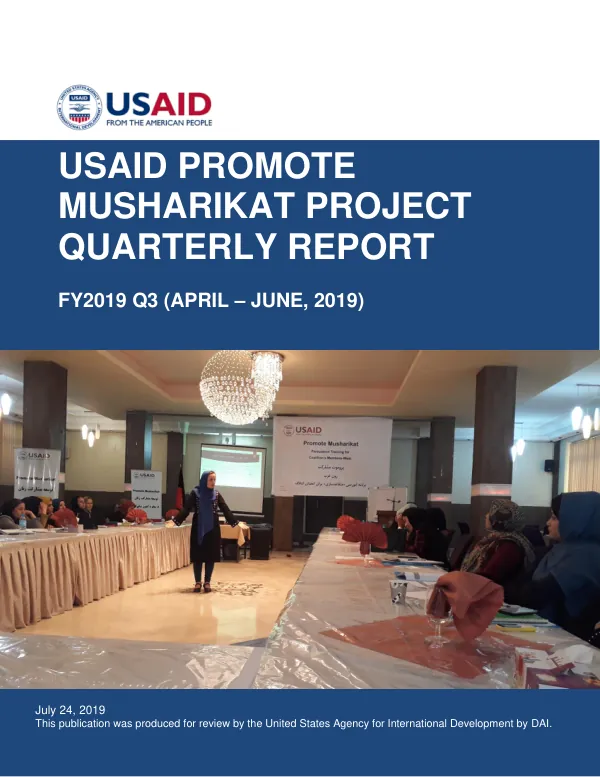
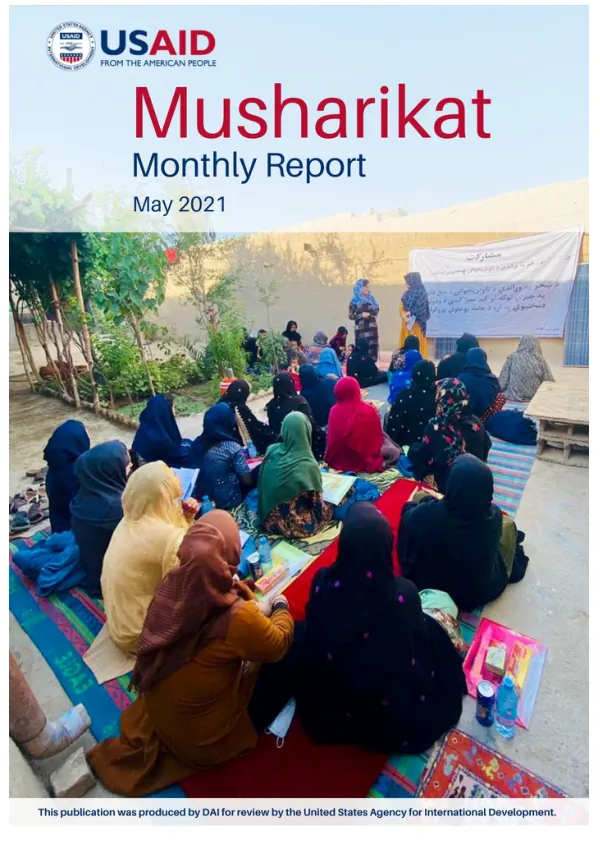
USAID Musharikat Monthly Report (May FY2021)
The Women in the Peace Process (WIP) Coalition works to improve the participation of women in the peace process.
2021 · 50 pages
Sign in to readA free account is required to download.
Abstract
Their activities aim to improve Afghan perceptions to support women's inclusion in the peace process. Through events, the coalition conducted training to advance coalition members' and activists' capacities in negotiation and persuasion skills and approaches to positive masculinity behavior. These activities directly reached 872 people, including 374 women and 498 men. Additionally, 5 million people were potentially engaged indirectly through radio roundtables. The WIP coalition's activities contributed to achieving Musharikat Year 6 deliverables, including improving communication between stakeholders, training an additional 700 coalition members in negotiation and persuasion skills, and reaching at least 50,000 individuals through women's empowerment campaign activities. The Women's Political Participation (WPP) Coalition raised Afghan women's awareness of their political rights through online and live event engagement with members. Online, 214 posts created by coalition members received 8,056 views and over 3,000 replies. Live events directly engaged 1,802 people, including 1,272 women and 530 men, in training activities and awareness raising events to support women to register for the national identification card, called the Tazkira. The WPP coalition's activities contributed to strengthening membership engagement, training at least 300 female civil society activists in leadership, negotiation, and negotiation skills, reaching at least 50,000 individuals through women's empowerment campaign activities, and improving coordination with the government. The Musharikat Project continued its efforts to promote women's rights and empowerment across Afghanistan in May 2021. The project carried out 209 training, awareness, and government coordination activities, reaching a total of 5,815 people, including 3,797 women and 2,018 men. The project's activities focused on supporting the Women in the Peace Process, Women's Political Participation, and Gender-Based Violence coalitions. The project's efforts aimed to strengthen the capacity of civil society organizations and activists to advocate for women's rights and empowerment in Afghanistan. The Musharikat Project employs a Coalitions for Change (C4C) approach to strengthen the capacity of civil society organizations and activists to effectively advocate for women's rights and empowerment in Afghanistan. The project functions as a mentor, facilitator, and funder to the coalitions and grantee civil society organizations, providing technical advice and resources to conduct awareness raising initiatives, establish strategic alliances, and plan and execute advocacy activities. The project's activities are guided by the following objectives: building constituencies among national, provincial, and local activists and civil society organizations focused on promoting women's equality and empowerment; strengthening advocacy for women's equality and empowerment; increasing awareness of, and support for, women's rights in all 34 provinces in Afghanistan; and increasing the effectiveness of civil society and the Government of the Islamic Republic of Afghanistan in the development and implementation of gender policies, laws, and regulations. The project's approach is based on the formation of inclusive, broad-based coalitions through transparent and competitive processes, each of which focuses on a single issue. The coalitions serve as the primary driver in achieving the project's objectives, and the project provides the necessary technical advice, resources, and resources to conduct awareness raising initiatives, establish strategic alliances, and plan and execute advocacy activities. The project's activities are guided by the following principles: inclusivity, transparency, and competitiveness. The project's approach is based on the formation of inclusive, broad-based coalitions through transparent and competitive processes, each of which focuses on a single issue. The coalitions serve as the primary driver in achieving the project's objectives, and the project provides the
Related documents