NASA
USAID-NASA Joint Development Initiative: SERVIR
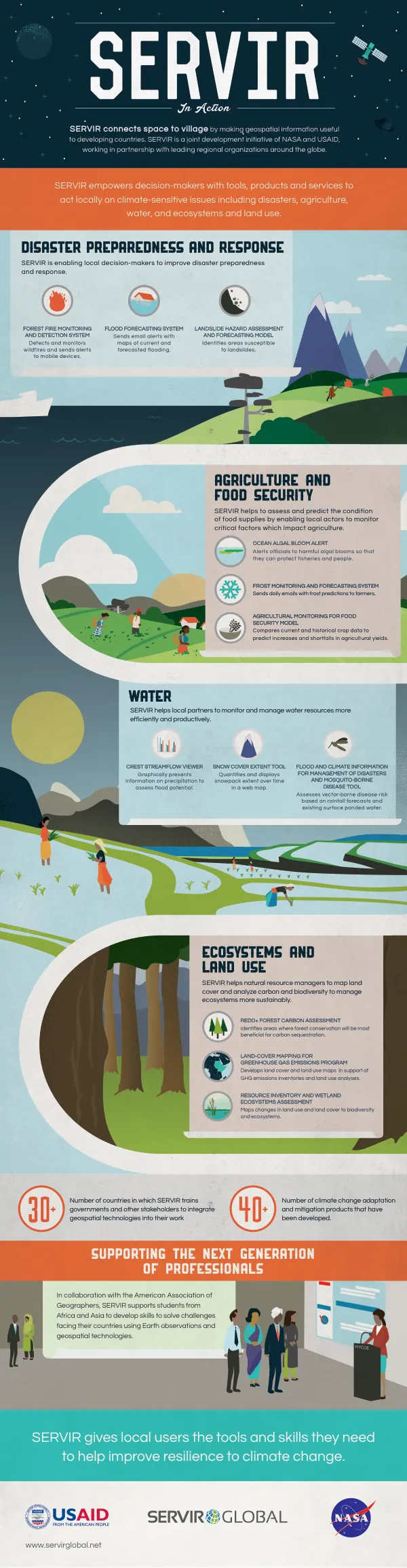
SERVIR is a joint development initiative of NASA and USAID that addresses the challenges of climate variability and change.
2014 · 1 pages
Sign in to readA free account is required to download.
Abstract
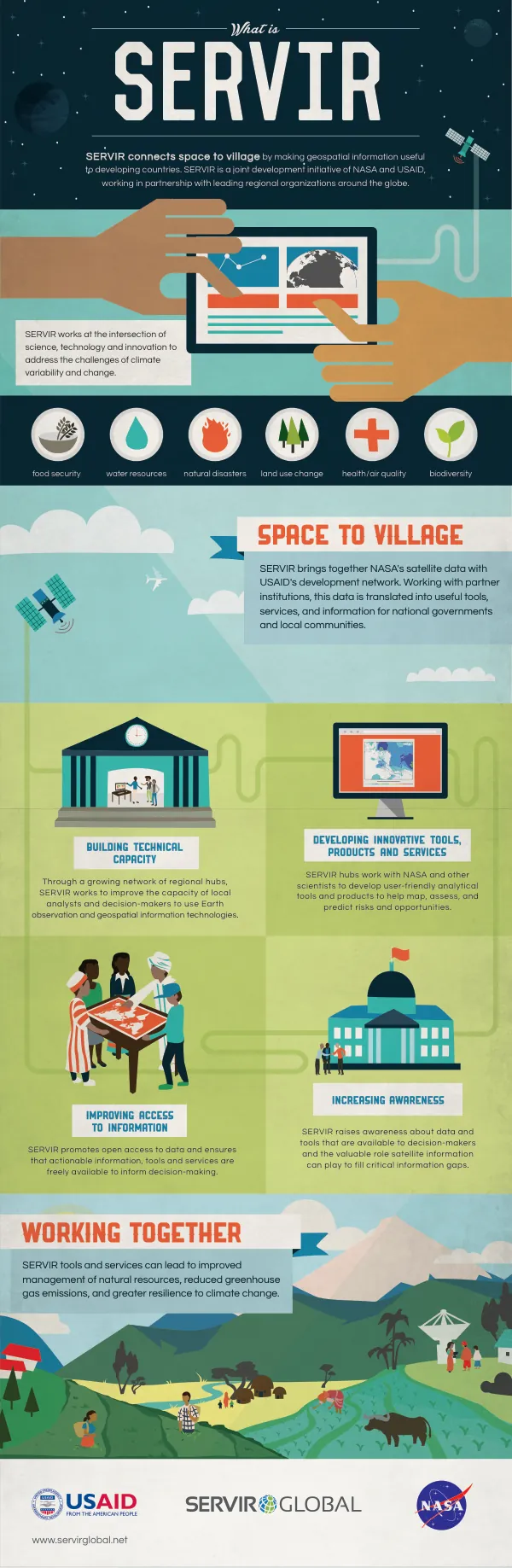
The program operates at the intersection of science, technology, and innovation to improve the capacity of local analysts and decision-makers in developing countries. SERVIR's primary focus areas include food security, water resources, natural disasters, land use change, health and air quality, and biodiversity. Through a network of regional hubs, SERVIR works with NASA and other scientists to develop user-friendly analytical tools and products that help map, assess, and predict risks and opportunities. These tools and services are designed to improve the management of natural resources, reduce greenhouse gas emissions, and enhance resilience to climate change. SERVIR's approach involves bringing together NASA's satellite data with USAID's development network to translate data into useful tools, services, and information for national governments and local communities. SERVIR promotes open access to data and ensures that actionable information, tools, and services are freely available to inform decision-making. The program connects space to village by making geospatial information useful to developing countries. By working in partnership with leading regional organizations around the globe, SERVIR aims to support sustainable development and improve the lives of people in developing countries. SERVIR's regional hubs are instrumental in improving the capacity of local analysts and decision-makers to use Earth observation and geospatial information technologies. These hubs work with NASA and other scientists to develop and apply analytical tools and products that address specific development challenges in their regions. By leveraging satellite data and geospatial information, SERVIR's regional hubs provide critical information to support decision-making and inform development strategies. The SERVIR initiative has the potential to make a significant impact on sustainable development in developing countries. By improving the management of natural resources, reducing greenhouse gas emissions, and enhancing resilience to climate change, SERVIR can help support the achievement of the United Nations' Sustainable Development Goals.
Related documents