FINTRAC
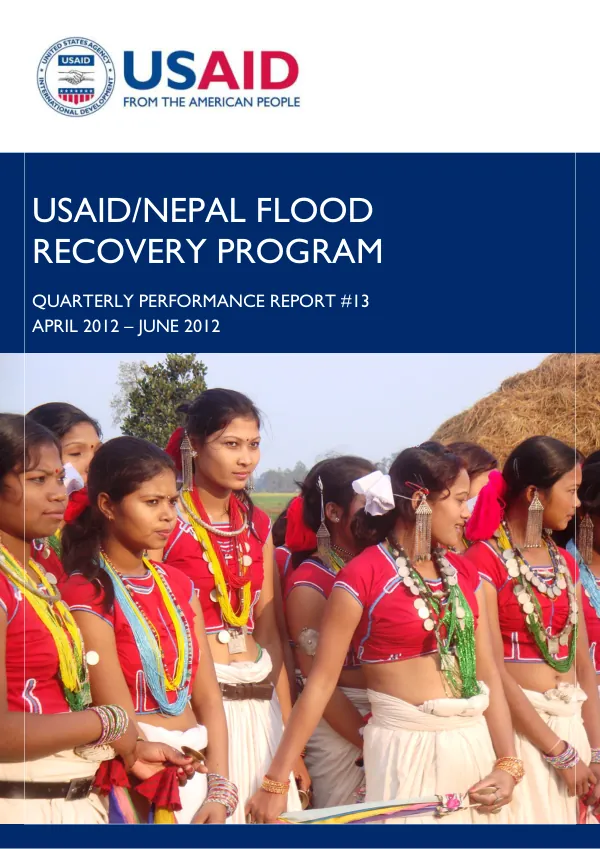
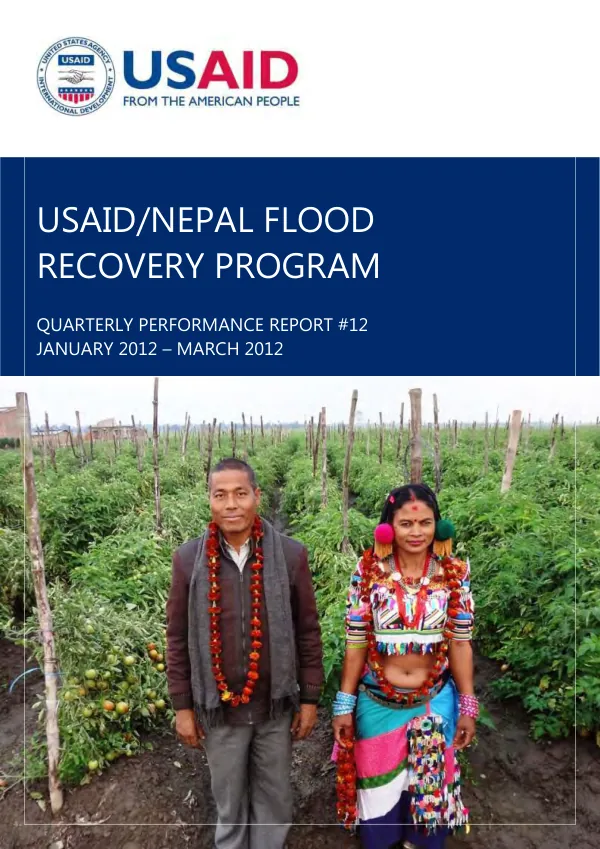
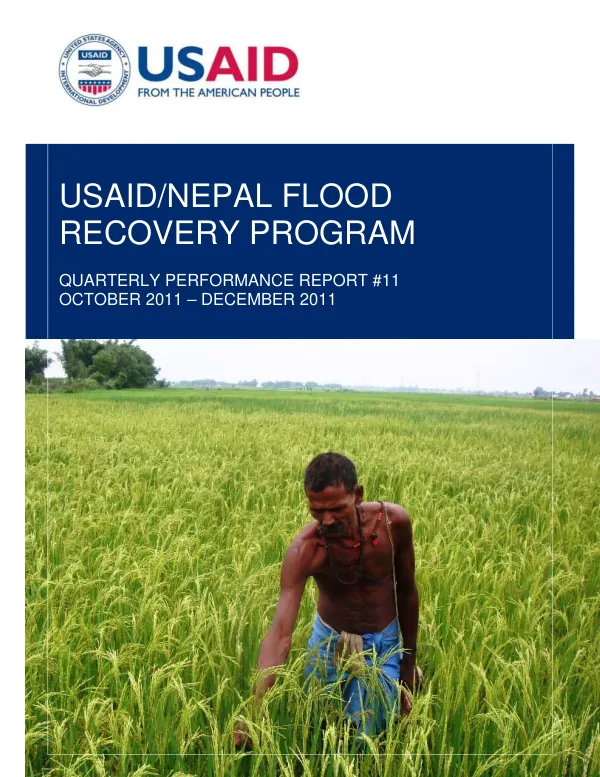
USAID-Nepal Flood Recovery Program Quarterly Performance Report #11
The USAID/Nepal Flood Recovery Program (USAID-NFRP) is a 24-month activity designed to respond to the 2007 floods in Nepal.
2011 · 40 pages
Sign in to readA free account is required to download.
Abstract
The program was initially extended for 10 months to expand operations to regions affected by the 2008 floods. In March 2011, USAID extended the program for an additional 18 months, focusing on improving food security by expanding training to farmers in new food production technologies, linking producers to markets and input suppliers, and addressing infrastructure constraints. The program is implemented by Fintrac Inc. in partnership with Nepal-based METCON Consultants, FORWARD, and a diverse group of local and national-level nongovernmental organizations (NGOs) and private contractors. The geographic focus of Phase III is the Feed the Future initiative, which aims to increase the availability, access, use, and sustainability of food for families in developing countries like Nepal. USAID-NFRP works with flood-affected communities throughout the Terai region to increase farmer productivity and income, rehabilitate and develop small-scale community infrastructure, and improve awareness of sanitation, nutrition, and gender issues. The program has been operational in nine districts throughout the Terai, including Sunsari in the Eastern region, Parsa, Bara, and Rautahat in the Central region, and Kanchanpur, Kailali, Bardiya, and Banke in the Mid/Far Western regions, as well as one Hills district, Dadeldhura. Under Phase III, USAID-NFRP is providing technical assistance and improved technologies on 749 hectares for food security and high-value crop initiatives, and on 75 hectares for home gardening in 132 wards of 29 program village development communities (VDCs). The program has formed 364 irrigation clusters from 3,101 commercial agriculture farmers and 110 home garden groups from 2,259 households selected for nutrition and hygiene assistance. Training of farmers and home gardeners is a key component of the program. All 3,101 commercial agriculture farmers, including 1,070 women, have been trained in nursery preparation, production techniques, integrated pest management, pre and postharvest handling, and marketing management. The full syllabus for nutrition awareness, home gardening, and postharvest management was also completed for the 2,259 home gardeners, and all 75 hectares have initiated the second crop cycle. Irrigation is another critical aspect of the program. The installation of 99 shallow tube wells with motorized pumps has been completed, and the initiation of construction of five surface irrigation systems in Dadeldhura has begun. The program's updated performance monitoring plan (PMP) is attached in Annex II, and all project publications are available to USAID through the password-protected USAID-NFRP intranet site: www.fintrac.com/nfrp. A public access site is accessible at www.usaid-nfrp.org. The program's achievements in the new areas of commercial agriculture, nutrition, and productive infrastructure include the provision of technical assistance and improved technologies on 749 hectares for food security and high-value crop initiatives, and on 75 hectares for home gardening. The program has also formed 364 irrigation clusters from 3,101 commercial agriculture farmers and 110 home garden groups from 2,259 households selected for nutrition and hygiene assistance. The program's results for the reporting period include the completion of training for all 3,101 commercial agriculture farmers, including 1,070 women, in nursery preparation, production techniques, integrated pest management, pre and postharvest handling, and marketing management. The full syllabus for nutrition awareness, home gardening, and postharvest management was also completed for the 2,259 home gardeners, and all 75 hectares have initiated the second crop cycle. The program's priorities for the next quarter include continuing to provide technical assistance and improved technologies to farmers and home gardeners, expanding market linkages and trade, and improving the nutritional status of households. The program will also continue to address infrastructure constraints, including roads, bridges, and irrigation access, and will focus on improving food security through targeted assistance in commercial agriculture, nutrition, and productive infrastructure.