FINTRAC
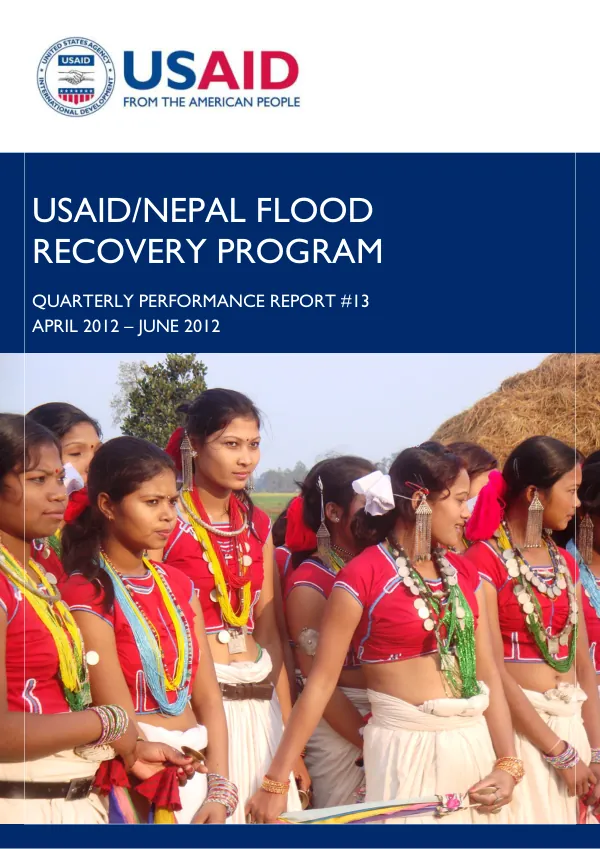
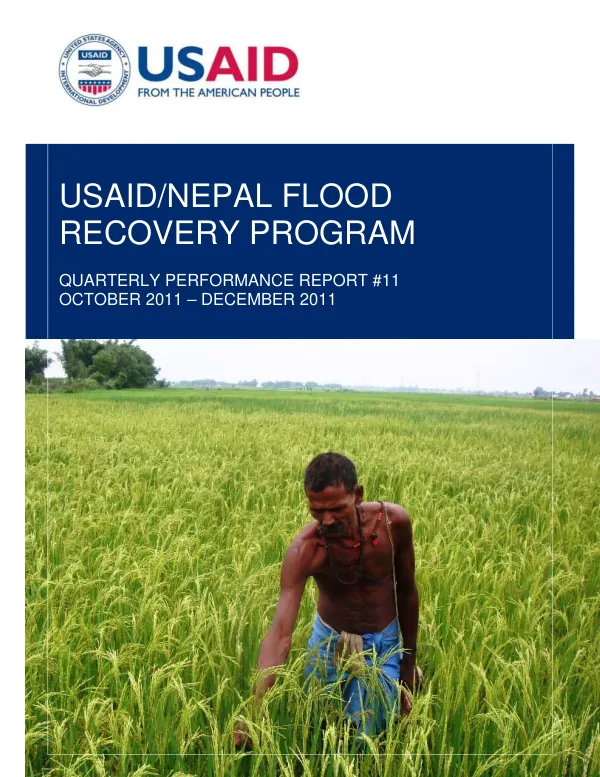
USAID/NEPAL FLOOD RECOVERY PROGRAM QUARTERLY PERFORMANCE REPORT #12
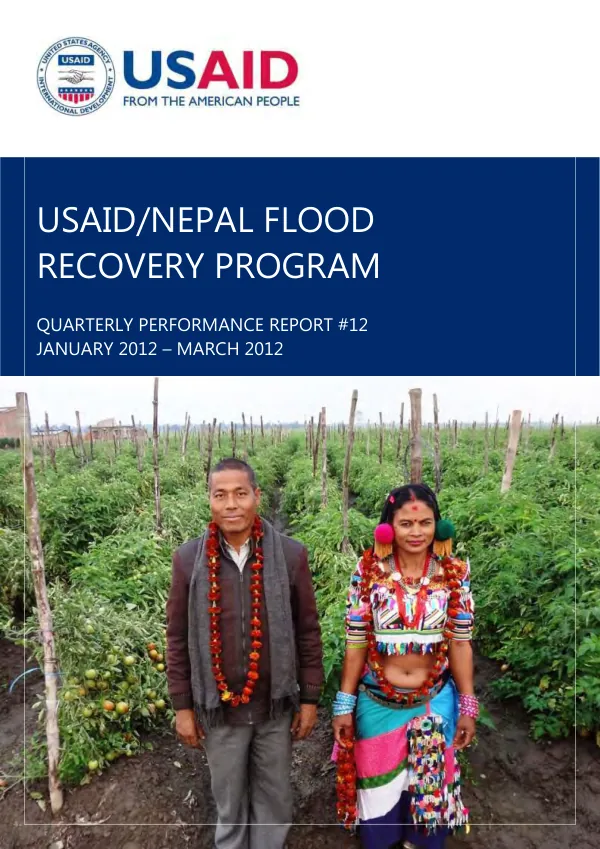
The USAID/Nepal Flood Recovery Program (USAID-NFRP) is a comprehensive initiative aimed at improving the food security of communities in the Far Western region of Nepal.
2012 · 50 pages
Sign in to readA free account is required to download.
Abstract
The program, which began in March 2011, focuses on increasing farmer productivity and income, rehabilitating and developing small-scale community infrastructure, and improving awareness of sanitation, nutrition, gender, and protection issues. Implementation of the program has been ongoing since January 1, 2012, with a focus on commercial agriculture, nutrition, and productive infrastructure. Key achievements in these areas include the provision of technical assistance and improved technologies on 819 hectares for food security and high-value crop initiatives, and on 72 hectares for home gardening in 132 wards of 29 program village development communities (VDCs). Additionally, 362 irrigation clusters were formed from 3,101 commercial agriculture farmers and 110 home garden groups were formed from 2,259 households selected for nutrition and hygiene assistance. The results from the first crop cycle have been impressive, with a total net sales of $1,567,461 achieved by 3,101 farmers, which is $500,794 above the first crop cycle's target. This equates to an average net sales per farmer of $505 in just one crop cycle, a significant increase from the results achieved in the first cycle of Phase II. The average net sales per hectare is $1,914, representing an 80 percent increase in productivity compared to the previous phase. Riverbed farming has also been promoted as a viable option for farmers who can access cultivable riverbed areas. This type of farming focuses on crops that thrive in sandy soils and offers a real economic solution to the dilemma of drought-prone areas. The cost of production on riverbeds is similar to the cost for standard plots, but the gross and net sales per hectare are significantly higher, making it a more profitable option. In addition to commercial agriculture, the program has also made significant progress in nutrition and hygiene. All 3,101 commercial agriculture farmers and 2,259 home gardeners completed trainings in enhanced nutrition actions and nutritious food production, co-developed by USAID-NFRP and Hellen Keller International. The program has also made significant investments in productive infrastructure, including the installation of 119 shallow tube wells with improved motorized pumps and 74 protective sheds. To date, $45,741 has been collected in farmer contributions for the cost of the wells and pumps. Additionally, four piped irrigation systems and one lift/piped system were completed in Dadeldhura, using a cost-benefit analysis to select project designs based on the three most common micro-irrigations systems in Nepal. Overall, the USAID/Nepal Flood Recovery Program has made significant progress in improving the food security of communities in the Far Western region of Nepal. The program's focus on commercial agriculture, nutrition, and productive infrastructure has resulted in impressive achievements, including increased farmer productivity and income, and improved awareness of sanitation, nutrition, gender, and protection issues.