FINTRAC
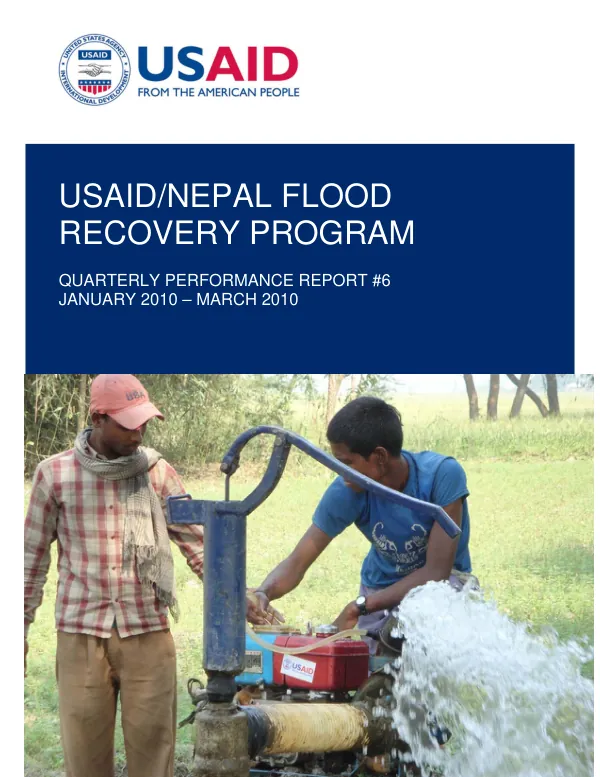
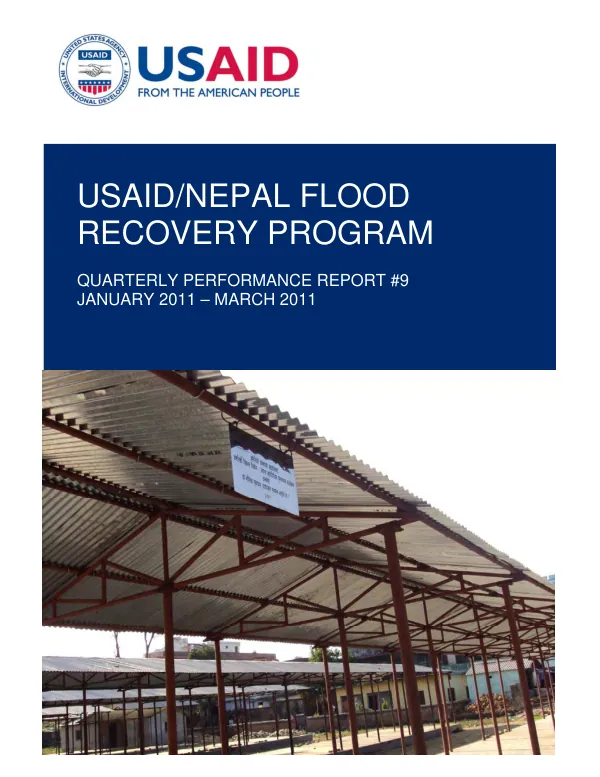
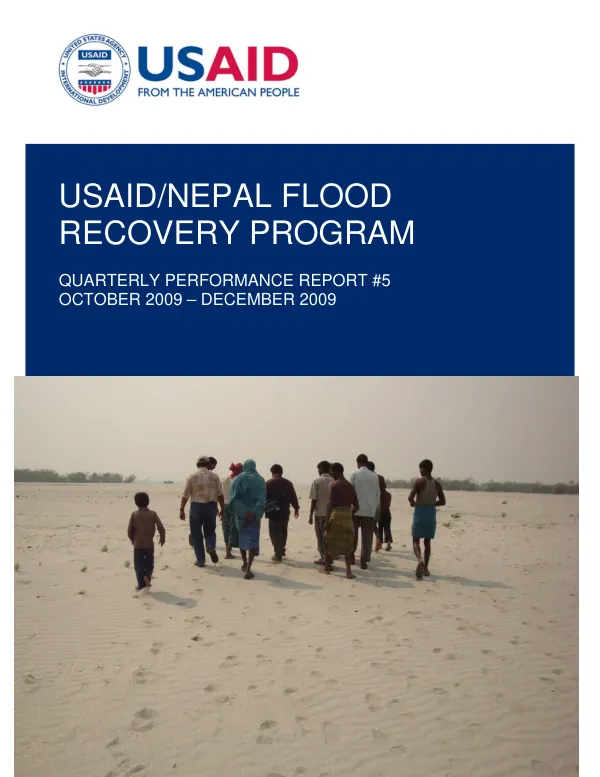
USAID/NEPAL FLOOD RECOVERY PROGRAM QUARTERLY PERFORMANCE REPORT #5
The USAID/Nepal Flood Recovery Program (USAID-NFRP) is a 24-month activity designed to respond to the 2007 floods in Nepal.
2009 · 28 pages
Sign in to readA free account is required to download.
Abstract
The program was initially implemented in 24 districts but received a cost and 10-month time extension from USAID/Nepal on October 21, 2009, to expand program operations to regions affected by the 2008 floods. As a result, the program now operates in eight districts throughout the Terai region, including Sunsari in the Eastern region, Parsa, Bara, and Rautahat in the Central region, and Kanchanpur, Kailali, Bardiya, and Banke in the Mid/Far Western regions. The program works with flood-affected communities and NGOs throughout the Terai region to increase farmer productivity and income, rehabilitate and develop small-scale community infrastructure, improve awareness of sanitation, nutrition, and gender and protection issues, and strengthen local organizations by expanding participation among youth and vulnerable populations. The program is implemented by Fintrac Inc. in partnership with Nepal-based METCON Consultants and a diverse group of local and national-level NGOs and private contractors. During the reporting period from October 1, 2009, to December 31, 2009, the program achieved several key milestones. Twelve community infrastructure projects were completed, leaving only one left to complete. A total of 26,004 days of temporary employment were generated by infrastructure component activities. Additionally, 10,784 beneficiaries received training across USAID-NFRP's five program components. Individuals, communities, local governments, and other donors invested $37,086 in project activities during the quarter. The program's updated performance monitoring plan is attached as an annex to this report. This document and all other project publications are available to USAID through the password-protected USAID-NFRP intranet site: www.fintrac.com/nfrp. A public access Web site is accessible at www.usaid-nfrp.org. The program's geographic focus has expanded to include eight districts throughout the Terai region. A comprehensive process of field assessments and data analyses developed in conjunction with USAID has selected 76 village development committees (VDCs) for program support based on the severity of flood damage and current levels of vulnerability. Within each VDC, clusters of communities considered most affected have been prioritized for intervention. The program has established 49 detailed indicators, of which 47 have specifically established targets. Higher-level program indicators require that the Program will assist 66,600 beneficiaries, build or rehabilitate 150 community structures and/or road infrastructure, train 8,100 clients under all program components, generate $820,000 in net sales for beneficiary farmers, create 135,000 person-days of temporary employment, and generate $367,000 in cost-share investments by communities, local governments, and other donors.