USAID
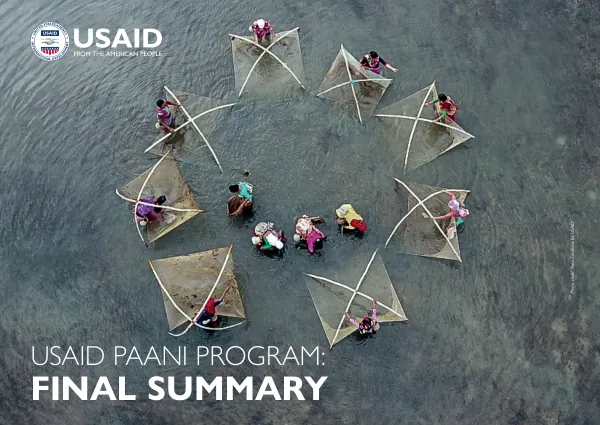
USAID PAANI Program: Final Summary
The Paani program is a five-year initiative led by DAI and partners, with the goal of enhancing Nepal's ability to manage water resources for multiple uses and conserving freshwater biodiversity in 12 priority watersheds.
2021 · 132 pages
Sign in to readA free account is required to download.
Abstract
The program focuses on an integrated approach to address the challenges of water scarcity, poor infrastructure, and inadequate knowledge and awareness about the importance of water resources. The program's approach is centered on four key components: co-management of rivers, resilience and livelihoods, hydroelectric power and infrastructure, and community engagement and awareness. Through these components, Paani aims to promote sustainable use of water resources, improve food security, and enhance the livelihoods of local communities. Paani has achieved significant milestones in its five-year tenure. The program has formed 101 Community Aquatic Animal Conservation Groups, which have been instrumental in promoting river stretch co-management and conservation. Paani has also supported the development and enactment of the Aquatic Animals and Biodiversity Conservation Act in Dailekh District, Middle Karnali watershed. In addition, Paani has launched a grants program, funding 54 partners to lead interventions addressing watershed issues. The program has also supported the establishment of the Karnali River Basin Conservation Fund and the Karnali Basin Conservation Foundation, which aim to promote sustainable development of water resources. Paani has also made significant contributions to policy development, including the enactment of the National Water Resource Policy, which provides a framework for social transformation and equitable development of water resources. The program has also supported the development of the National Environment Protection Act, which includes five sections drafted by Paani. The Paani program has also supported the establishment of the Freshwater Center of Excellence at Tribhuvan University, which aims to promote research and innovation in freshwater conservation and management. The program has also launched a data-sharing platform, the Freshwater Center of Excellence, to facilitate collaboration and knowledge sharing among stakeholders. Through its efforts, Paani has promoted sustainable use of water resources, improved food security, and enhanced the livelihoods of local communities. The program has also contributed to policy development and policy development, promoting social transformation and equitable development of water resources. The Paani program has concluded its five-year tenure, but its legacy will continue to benefit Nepal's water resources and communities. The program's achievements and lessons learned will inform future initiatives and policies, promoting sustainable development of water resources and conservation of freshwater biodiversity. The program's success has been recognized by the Government of Nepal, which has expressed its gratitude to the Paani team and USAID for their efforts and contributions to the program's success. The program has also been praised for its inclusive approach, which has engaged local communities, NGOs, and government agencies in the conservation and management of water resources. The Paani program has demonstrated the importance of integrated approaches to water resource management, which address the challenges of water scarcity, poor infrastructure, and inadequate knowledge and awareness about the importance of water resources. The program's achievements and lessons learned will inform future initiatives and policies, promoting sustainable development of water resources and conservation of freshwater biodiversity. The program's success has also highlighted the need for continued support and investment in water resource management and conservation. The Government of Nepal has expressed its commitment to continue the program's work, scaling up its efforts to other parts of the country and promoting sustainable development of water resources. The Paani program has left behind a valuable legacy, which will continue to benefit Nepal's water resources and communities. The program's achievements and lessons learned will inform future initiatives and policies, promoting sustainable development of water resources and conservation of freshwater biodiversity.