DAI
Bridging Business and Biodiversity: Conservation for a Climate-Resilient Future
The USAID Biodiversity (Jal Jangal) activity in Nepal focuses on bridging business and biodiversity conservation for a climate-resilient future.
2024 · 2 pages
Sign in to readA free account is required to download.
Abstract
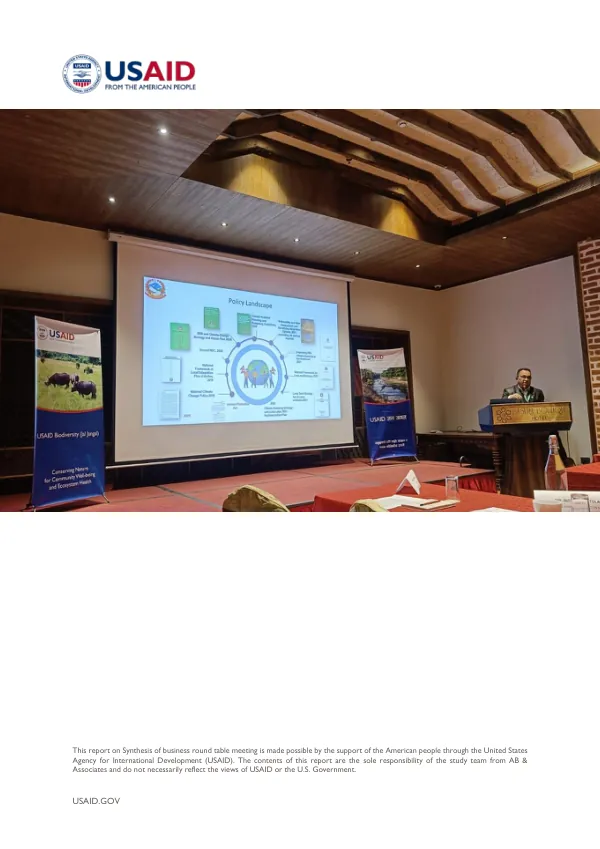
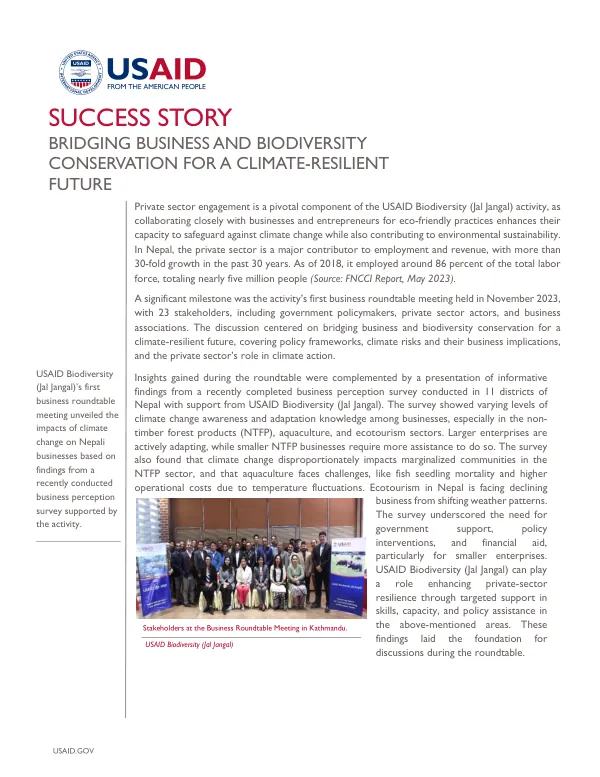
Private sector engagement is a pivotal component of this initiative, as collaborating with businesses and entrepreneurs for eco-friendly practices enhances their ability to safeguard against climate change while contributing to environmental sustainability. The private sector is a major contributor to employment and revenue in Nepal, with over 30-fold growth in the past 30 years. As of 2018, it employed nearly five million people, totaling around 85% of the total labor force. A significant milestone was the activity's first business roundtable meeting held in November 2023, which brought together 23 stakeholders, including government policymakers, private sector actors, and business associations. The meeting centered on bridging business and biodiversity conservation for a climate-resilient future, discussing policy frameworks, climate risks, and the private sector's role in climate action. The roundtable was complemented by a presentation of findings from a recently completed business perception survey conducted in 11 districts of Nepal with support from USAID Biodiversity (Jal Jangal). The survey showed varying levels of climate change awareness and knowledge among businesses, especially in the non-timber forest products (NTFP), aquaculture, and ecotourism sectors. The survey found that climate change disproportionately impacts marginalized communities in the NTFP sector, and that aquaculture faces challenges such as fish mortality and higher operational costs due to temperature fluctuations. Ecotourism in Nepal is facing declining business from shifting weather patterns. The survey underscored the need for government support, policy interventions, and financial aid, particularly for smaller enterprises. USAID Biodiversity (Jal Jangal) can play a role in enhancing private-sector resilience through targeted support in skills, capacity, and system assistance in the above-mentioned areas. The response to the announcement of the business roundtable was overwhelming, with 290 registrations demonstrating a strong commitment to conservation efforts across Nepal. The roundtable unveiled the impacts of climate change on Nepali businesses based on findings from the business perception survey supported by the activity. Stakeholders at the Business Roundtable Meeting in Kathmandu emphasized the importance of integrating environmental, climate, and social risk into sustainable development through the development of a Green Finance Taxonomy. The meeting concluded with recommendations to effectively address climate change and biodiversity conservation, highlighting the importance of fostering collaboration between the public and private sectors, formulating innovative policies, and prioritizing capacity building for micro, small, and medium enterprises (MSMEs) in this space. Additional commitments included promoting climate-resilient infrastructure, encouraging green investments, implementing climate and biodiversity conservation awareness programs, and leveraging innovation and technology for conservation within businesses. The group also underscored the significance of strengthening disaster and emergency preparedness, particularly in vulnerable sectors like tourism and hydropower. As expressed by the Nepal Banker's Association, the roundtable sparked new ideas for future programs on climate finance literacy. USAID Biodiversity (Jal Jangal) envisions planning activities and collaborations based on the event's findings. To build on this momentum, the activity is planning a series of capacity-building events on climate change impacts on business, building climate resilience, and nature-based enterprises, followed by another business roundtable.
Related documents