CHEMONICS
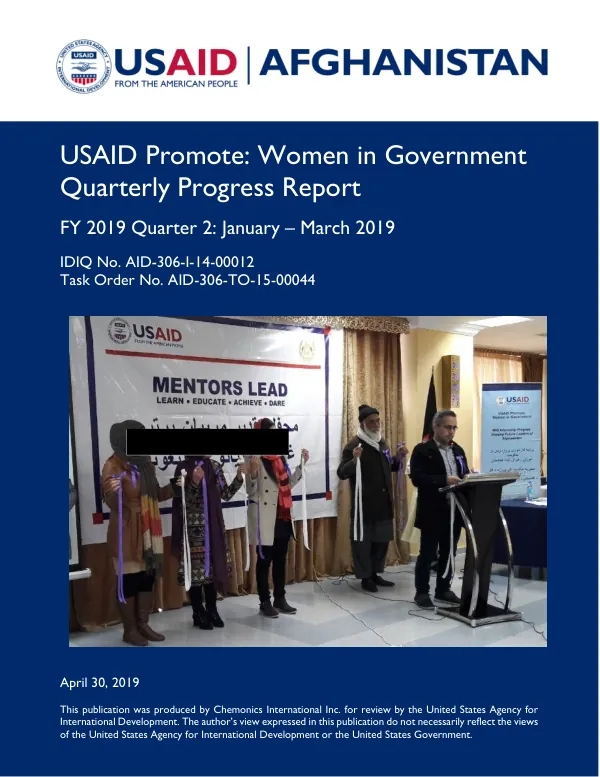
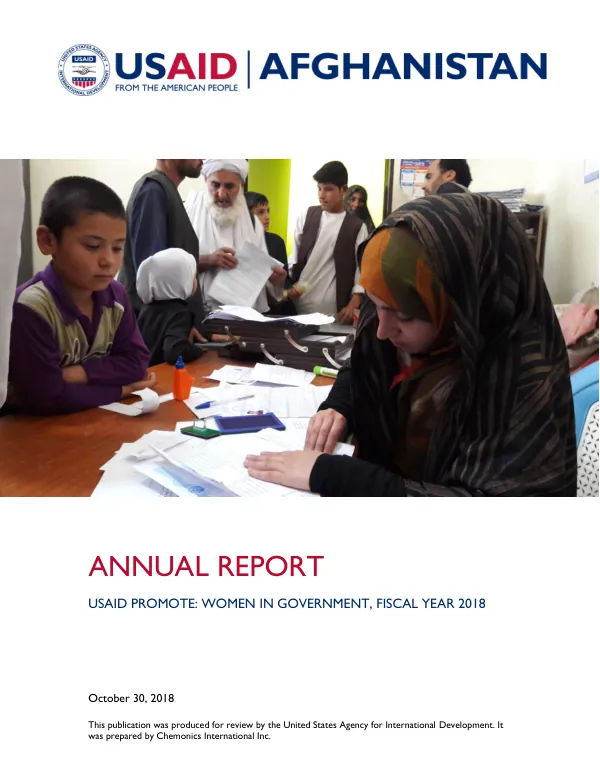
USAID PROMOTE: WOMEN IN GOVERNMENT FY 2018 ANNUAL REPORT
USAID Promote: Women in Government is a program aimed at increasing women's representation in the Afghan civil service.
2018 · 62 pages
Sign in to readA free account is required to download.
Abstract
The program began in 2014 with a contract from the United States Agency for International Development (USAID). The program's goal is to increase the number of women in government positions, particularly in leadership positions. The program focuses on three main areas: increasing women's representation in the civil service, creating a hospitable environment for women in government, and cultivating local stakeholder support. The program's approach includes training programs, internships, and capacity building for civil servants. The program also focuses on creating a supportive work environment for women, including addressing workplace obstacles and cultural constraints. The program's internship program is a key component, providing training and work experience for young women. The program has a strong focus on employment, with a focus on placing interns in permanent positions. The program also works with the Afghan Civil Service Institute to develop the capacity of civil servants. The program has made significant progress in increasing women's representation in the civil service. The number of women in government positions has increased, and the program has helped to create a more hospitable environment for women in government. The program has also made progress in cultivating local stakeholder support, including partnering with local and international organizations. The program's monitoring and evaluation framework is designed to track progress and identify areas for improvement. The framework includes performance indicators and targets, which are used to evaluate the program's progress. The program also conducts regular evaluations and assessments to identify areas for improvement. The program has faced challenges, including a centralized recruitment process and internship attrition. The program has also faced challenges related to political will and continuity. However, the program has made progress in addressing these challenges and has implemented measures to address them. The program's impact has been significant, with a 27% increase in the number of women in government positions. The program has also helped to increase the number of women in leadership positions. The program has also had a positive impact on the Afghan economy, with women's participation in the workforce increasing. The program's sustainability is a key priority, with a focus on building capacity and ensuring the sustainability of the program's impact. The program has developed a national trainers' plan to ensure the sustainability of the program's impact. The program also has a legacy policy reform plan to ensure the sustainability of the program's impact. The program has also made progress in targeting employment through outreach, with a focus on reaching women in rural areas. The program has also accelerated policy reform and implementation, with a focus on implementing policies that support women's participation in government. The program's impact has been recognized by the Government of the Islamic Republic of Afghanistan, with the government recognizing the importance of women's participation in government. The program has also received recognition from the international community, with recognition from the United Nations and other international organizations. The program's success is due to its focus on empowering women and promoting gender equality. The program's approach has been effective in increasing women's representation in the civil service and creating a more hospitable environment for women in government.