USAID DEC
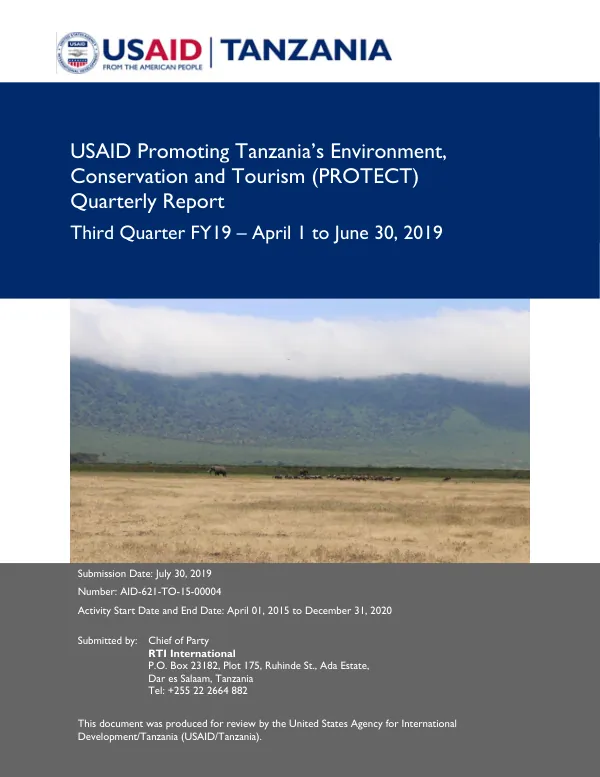
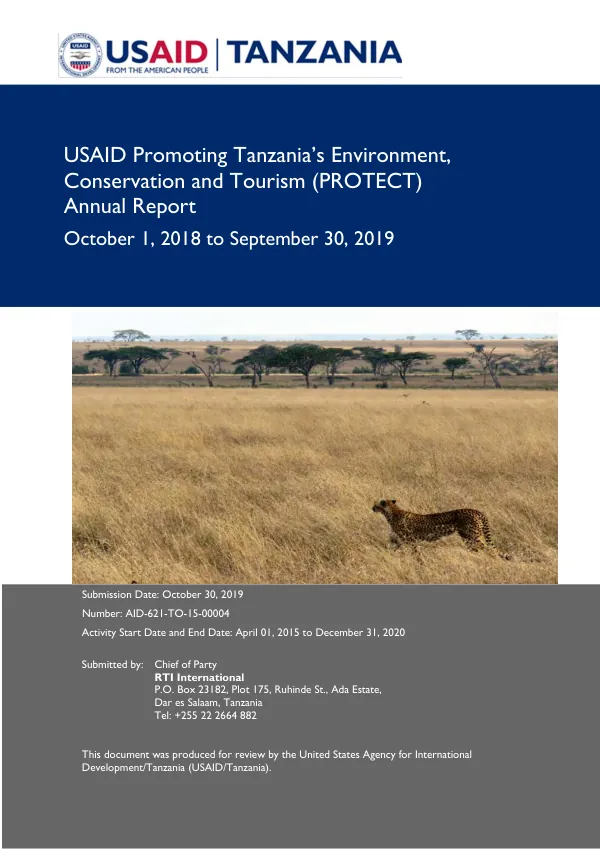
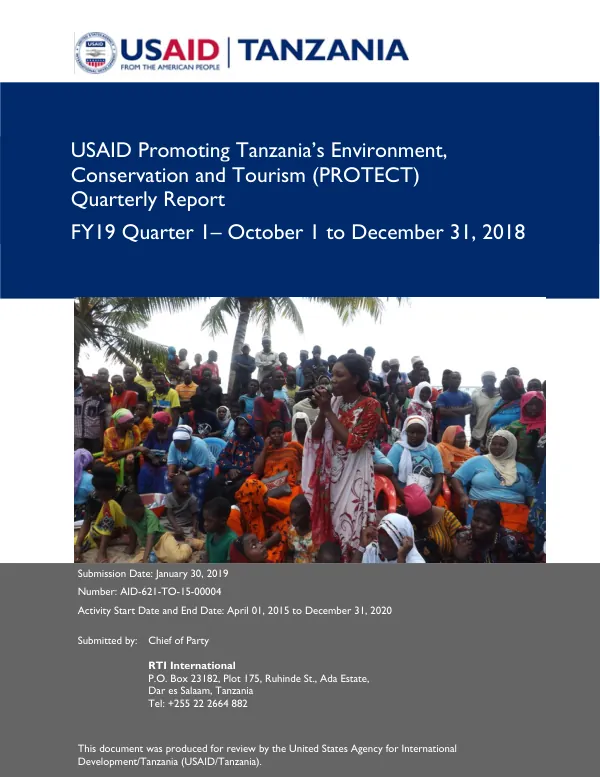
USAID Promoting Tanzania’s Environment, Conservation and Tourism (PROTECT) Quarterly Report FY19 Q1
Sign inRTI INTERNATIONAL
USAID Promoting Tanzania’s Environment, Conservation and Tourism (PROTECT) Quarterly Report FY19 Q1
The USAID Promoting Tanzania's Environment, Conservation and Tourism (PROTECT) activity began in April 2015 and is set to conclude in December 2020.
2019 · 44 pages
Sign in to readA free account is required to download.
Abstract
The activity is implemented by RTI International, with a prime contract number of AID-621-TO-15-00004. The PROTECT activity has several subcontractors and grantees, including Trade Record Analysis of Flora and Fauna in Commerce (TRAFFIC), Journalist Environmental Association of Tanzania (JET), and Community Wildlife Management Areas Consortium (CWMAC), among others. The PROTECT activity has a national-level focus, with specific support to USAID Priority Landscapes, including the Greater Ruaha / Rungwa/ Kitulo landscape, northern Tanzania's conservation tourism zone, and western Gombe, Masit. The activity aims to promote Tanzania's environment, conservation, and tourism sectors through various interventions. The PROTECT activity has made significant progress in its first quarter of FY19, from October 1 to December 31, 2018. The activity has achieved several intermediate results, including policy, research, and advocacy, institutional strengthening, and strengthened private sector investment in the wildlife sector. In terms of policy, research, and advocacy, the PROTECT activity has supported the development of a national conservation strategy, which aims to promote conservation and sustainable use of natural resources in Tanzania. The activity has also supported research on human-wildlife conflict and its impact on local communities. Institutional strengthening is another key area of focus for the PROTECT activity. The activity has supported the development of capacity-building programs for government agencies, civil society organizations, and private sector entities involved in conservation and tourism. The PROTECT activity has also made significant progress in strengthening private sector investment in the wildlife sector. The activity has supported the development of public-private partnerships and has facilitated investment in conservation and tourism projects. In terms of integration of cross-cutting issues and USAID forward priorities, the PROTECT activity has made significant progress in promoting gender equality and women's empowerment, youth engagement, local capacity development, and sustainability. The activity has also made progress in integrating and collaborating with other stakeholders, including government agencies, civil society organizations, and private sector entities. The PROTECT activity has also made significant progress in stakeholder participation and involvement, with a strong focus on community engagement and participation. The activity has established a community wildlife management areas consortium, which brings together local communities, government agencies, and private sector entities to manage and conserve wildlife resources. In terms of management and administrative issues, the PROTECT activity has made significant progress in staff development and finance management. The activity has also made progress in monitoring, evaluation, and learning, with a strong focus on data collection and analysis. Overall, the PROTECT activity has made significant progress in its first quarter of FY19, with a strong focus on promoting Tanzania's environment, conservation, and tourism sectors. The activity has achieved several intermediate results and has made significant progress in integration of cross-cutting issues and USAID forward priorities.