ANOTHER OPTION, LLC
USAID Read Liberia Quarter 2 Report January-March 2018
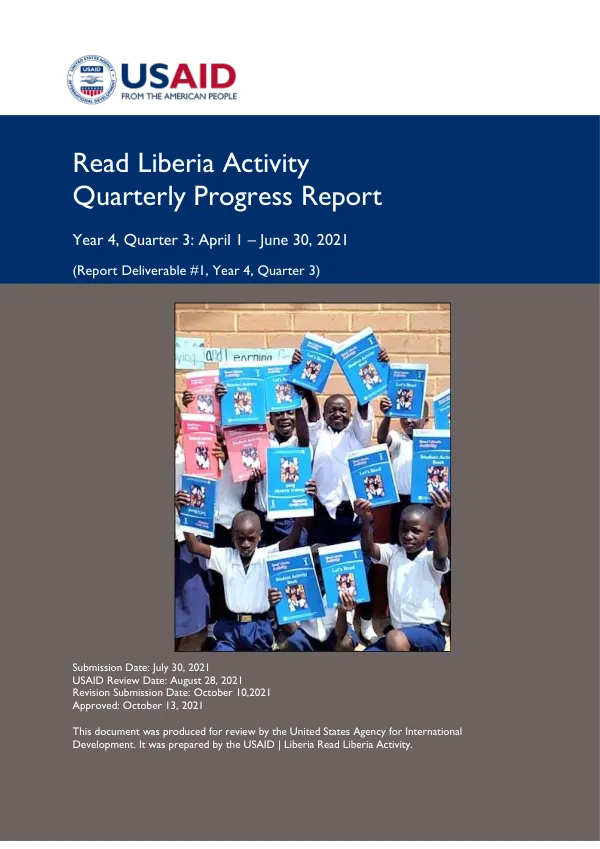
The Read Liberia Activity is a five-year program funded by the United States Agency for International Development (USAID) and implemented by RTI International with Another Option and Brattle Publishing Group.
2018 · 72 pages
Sign in to readA free account is required to download.
Abstract
The program aims to improve early grade reading outcomes in Liberia through direct partnership with the Liberian Ministry of Education (MOE). The project's geographic coverage includes Bong, Grand Bassa, Lofa, Margibi, Montserrado, and Nimba counties. The project's primary objective is to improve reading outcomes for students in grades 1-3, with a focus on increasing the number of students who can read at grade level by the end of grade 3. To achieve this objective, the project will implement a range of interventions, including teacher training, school-based reading programs, and community-based initiatives. The project will also work to strengthen the capacity of the MOE to support reading instruction and improve the quality of reading materials. The project's implementation progress is being monitored through a range of indicators, including the number of teachers trained, the number of schools participating in the project, and the number of students demonstrating improved reading outcomes. The project's progress is also being evaluated through regular assessments and surveys of students, teachers, and school administrators. The project's integration of cross-cutting issues and USAID forward priorities is a key aspect of its implementation. The project is working to address issues related to gender equality, female empowerment, and social inclusion, as well as sustainability mechanisms, environmental compliance, and global climate change. The project is also working to strengthen the capacity of local partners and to promote public-private partnerships and global development alliances. The project's stakeholder participation and involvement is a critical component of its implementation. The project is working closely with a range of stakeholders, including the MOE, local communities, and private sector partners, to ensure that the project's interventions are responsive to the needs of the target population. The project is also working to engage with a range of partners, including NGOs, community-based organizations, and private sector companies, to leverage resources and expertise. The project's management and administrative issues are being addressed through a range of mechanisms, including regular meetings with the project team, quarterly reports to USAID, and annual evaluations of the project's progress. The project is also working to address lessons learned from previous quarters, including issues related to project implementation, stakeholder engagement, and financial management. The project's planned activities for the next quarter include a range of initiatives, including teacher training, school-based reading programs, and community-based initiatives. The project will also continue to work with the MOE to strengthen its capacity to support reading instruction and improve the quality of reading materials. The project's financial management is being overseen by the project's financial manager, who is responsible for ensuring that the project's budget is managed in accordance with USAID's financial regulations. The project's progress is being summarized in a range of annexes, including Annex A, which provides a summary of the project's progress, and Annex B, which provides a financial management report. The project's GPS information is also being tracked through a range of mechanisms, including the use of GPS coordinates to monitor the location of schools and project staff. The project's success story is being documented through a range of mechanisms, including case studies and success stories. The project's travel plans for the next quarter are also being finalized, including a range of trips to be taken by project staff to monitor project implementation and engage with stakeholders. The project's planned versus actual analysis table is also being updated to reflect the project's progress and any changes to the project's work plan.
Related documents