USAID
USAID's New Biodiversity Policy: Building on Decades of Conservation Experience
The Biodiversity Policy of USAID prioritizes investments in specific geographic areas, utilizing the best available science and partnering with various stakeholders to achieve cost-effective results.
2014 · 2 pages
Sign in to readA free account is required to download.
Abstract
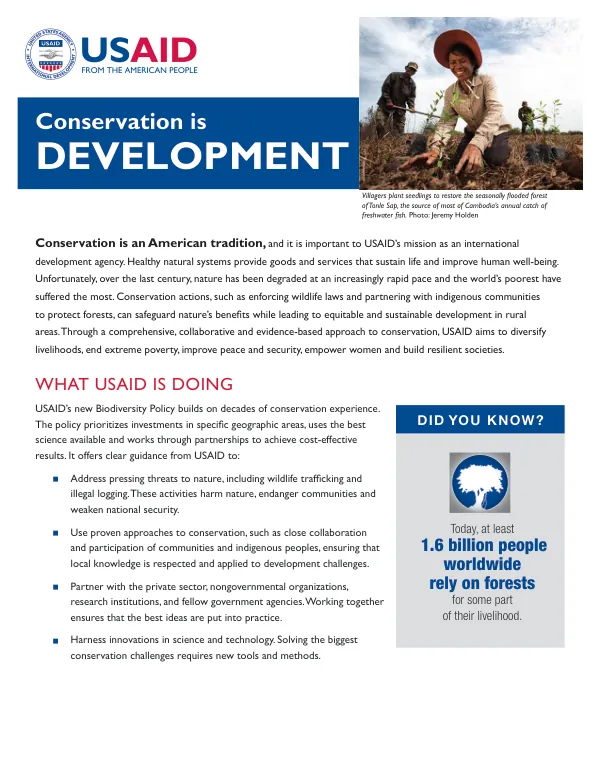
This policy aims to address pressing threats to nature, including wildlife trafficking and illegal logging, which harm ecosystems, endanger communities, and weaken national security. USAID's conservation efforts focus on proven approaches, such as close collaboration and participation of communities and indigenous peoples. This approach ensures that local knowledge is respected and applied to development challenges. The agency also partners with the private sector, nongovernmental organizations, research institutions, and fellow government agencies to leverage the best ideas and expertise. Healthy natural systems provide essential goods and services that sustain life and improve human well-being. Unfortunately, over the last century, nature has been degraded at an increasingly rapid pace, with the world's poorest populations suffering the most. Conservation actions, such as enforcing wildlife laws and partnering with indigenous communities to protect forests, can safeguard nature's benefits while leading to equitable and sustainable development in rural areas. Through a comprehensive, collaborative, and evidence-based approach to conservation, USAID aims to diversify livelihoods, end extreme poverty, improve peace and security, empower women, and build resilient societies. The agency's work in action demonstrates the effectiveness of community-based conservation, as seen in Nepal, where community groups have better managed their forests, leading to greater transparency, less corruption, and more equitable benefit sharing. In Nepal, USAID has engaged the youth to form anti-poaching units, which support park authorities by monitoring wildlife, controlling forest fires, and providing critical information about ongoing illegal activities. These groups also generate awareness of poaching in their communities through various means, including public performances, home visits, and radio programs. USAID's consistent, long-term investments in community conservation have reduced the incentives for poaching and provided a better future for Nepal.