MANAGEMENT SYSTEMS INTERNATIONAL
USAID Solutions for Peace and Recovery Year 4 Quarter 1 Progress Report, FY 2020
The Solutions for Peace and Recovery project in the Democratic Republic of the Congo (DRC) aims to address drivers of conflict and promote community development.
2020 · 53 pages
Sign in to readA free account is required to download.
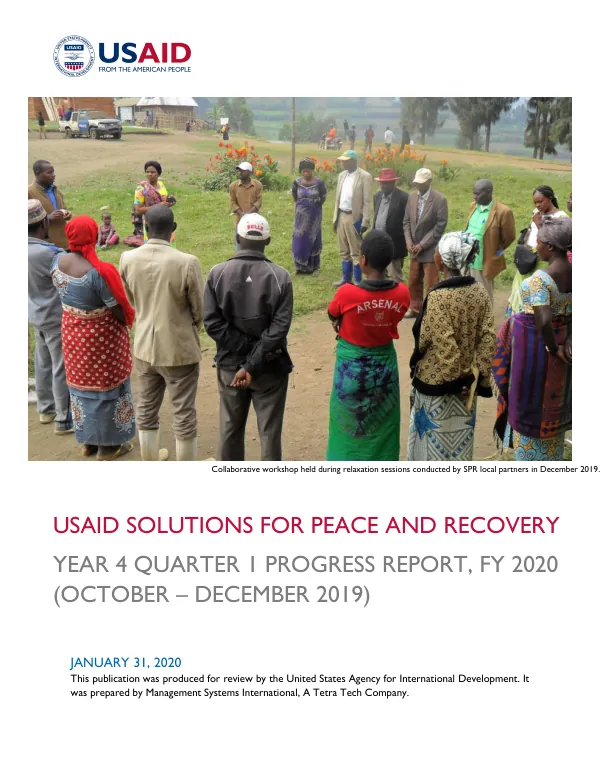
Abstract
In Quarter 1 of Year 4, the project focused on implementing solutions to specific drivers of conflict, participatory solutions, and inclusive resource allocation. Community stakeholders identified and accepted solutions to drivers of conflict through a collaborative workshop held during relaxation sessions conducted by SPR local partners in December 2019. The project implemented solutions to address challenges in the target zone, including managing difficult relationships with the North Kivu Provincial Advocacy Framework. The project also implemented participatory solutions, such as the Leadership Mentoring Club (LMC), which aimed to promote peace and development. The project made significant progress in achieving its objectives, including the implementation of solutions to address drivers of conflict and the promotion of participatory solutions. The project also made progress in inclusive resource allocation, with a focus on supporting local peace and development committees (LPDCs) and other marginalized groups (OMGs). The project's accomplishments included the establishment of a provincial advocacy framework and the implementation of a grants management system. Despite challenges, including funding constraints and managing difficult relationships with the North Kivu Provincial Advocacy Framework, the project made significant progress in Quarter 1 of Year 4. The project's lessons learned and opportunities for improvement included the need for more effective communication with stakeholders and the importance of building trust with local partners. The project's main priorities for the next quarter included continuing to implement solutions to address drivers of conflict and promoting participatory solutions. The project's financial report for Quarter 1 of Year 4 showed a total expenditure of $X, with a balance of $Y remaining in the project's budget. The project's overall challenges, solutions, lessons learned, and opportunities for improvement were discussed in the report, including the need for more effective management of difficult relationships with local partners and the importance of building trust with stakeholders. The project's performance indicators, as outlined in the Performance Indicator Reference Sheet (PIRS), included measures of progress towards achieving the project's objectives, such as the number of community stakeholders engaged in the project and the number of participatory solutions implemented. The project's Monitoring and Evaluation (M&E) plan outlined the procedures for tracking progress towards achieving the project's objectives and for identifying areas for improvement. The project's success stories, as outlined in Annex 3, included the establishment of a provincial advocacy framework and the implementation of a grants management system. The project's partner activity report, as outlined in Annex 4, provided information on the activities and progress of the project's local partners. The project's grant program status, as outlined in Annex 5, provided information on the status of the project's grants and the progress of the grantees.