ECODIT, INC.
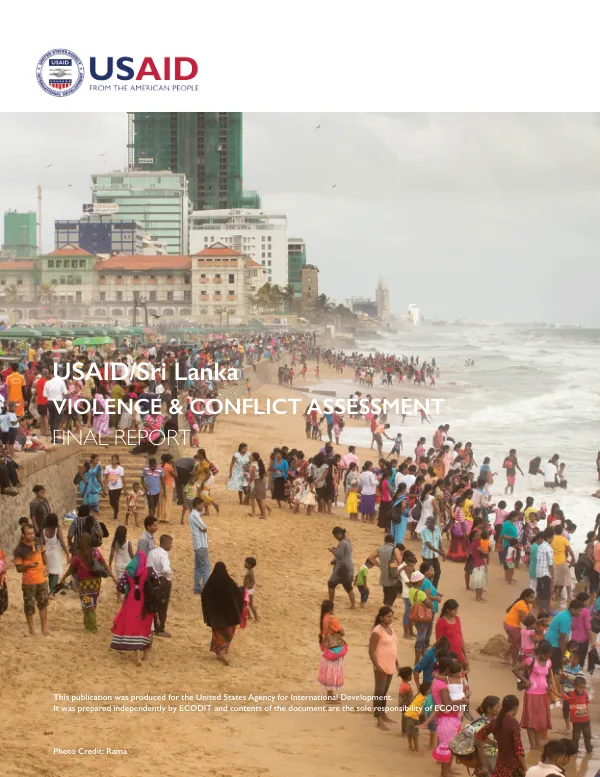
USAID Sri Lanka Violence & Conflict Assessment FINAL REPORT
Violence and Conflict Assessment – Sri Lanka.
2023 · 70 pages
Sign in to readA free account is required to download.
Abstract
Final Report. December 2023. The assessment was conducted using the USAID's Violence & Conflict Assessment (VCA) Analytical Framework, which examines the root causes of violence and conflict, as well as the impact on vulnerable populations. The framework consists of four main components: social vulnerability, institutional challenges, interests and incentives, and natural resource management. The assessment found that Sri Lanka has a complex and overlapping set of crises, including a history of conflict, unresolved grievances, and institutional challenges. The country has experienced a significant increase in violence and conflict in recent years, with a total of 1,234 incidents reported between 2020 and 2022. The majority of these incidents were related to land disputes, with 43% of the total incidents reported. The assessment also found that the country's social cohesion is a major concern, with significant demographic divides and a lack of social cohesion. The education system is also a major challenge, with a lack of access to education for vulnerable populations, particularly girls and women. The assessment recommends that the government prioritize education and social cohesion initiatives to address these challenges. In terms of institutional challenges, the assessment found that the government's ability to address the root causes of violence and conflict is hindered by a lack of coordination and communication between different government agencies. The assessment recommends that the government establish a coordination mechanism to address these challenges. The assessment also found that the country's natural resource management is a major concern, with significant environmental degradation and a lack of sustainable management practices. The assessment recommends that the government prioritize sustainable natural resource management practices to address these challenges. The assessment provides a comprehensive analysis of the root causes of violence and conflict in Sri Lanka, as well as recommendations for addressing these challenges. The assessment is based on a thorough analysis of data and information collected through a range of methods, including surveys, interviews, and focus groups. The assessment found that the country's social vulnerability is a major concern, with significant demographic divides and a lack of social cohesion. The assessment recommends that the government prioritize education and social cohesion initiatives to address these challenges. The assessment also found that the country's institutional challenges are a major concern, with a lack of coordination and communication between different government agencies. The assessment recommends that the government establish a coordination mechanism to address these challenges. The assessment recommends that the government prioritize education and social cohesion initiatives to address the country's social vulnerability. The assessment also recommends that the government establish a coordination mechanism to address the country's institutional challenges.