FINTRAC
USAID-TAPP monthly bulletin #29
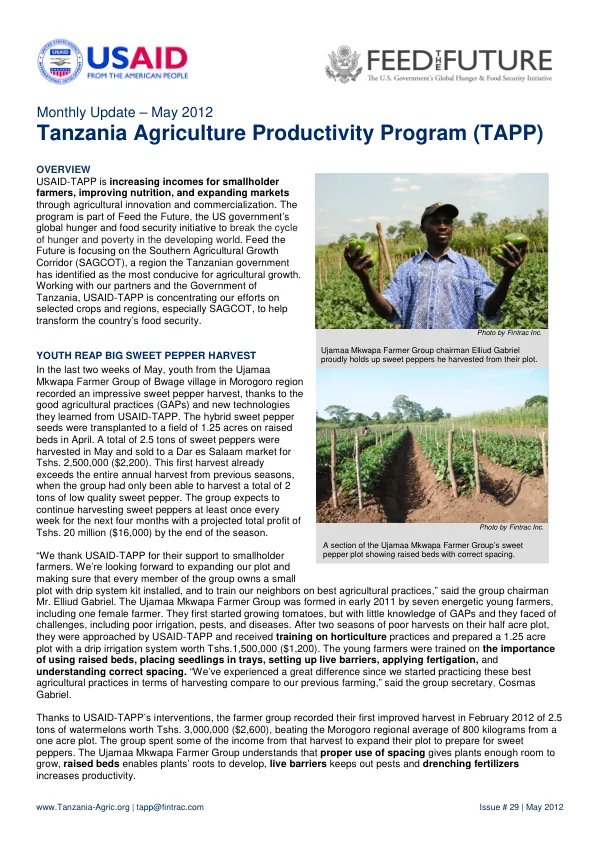
The Tanzania Agriculture Productivity Program (TAPP) is a USAID-funded initiative aimed at increasing incomes for smallholder farmers, improving nutrition, and expanding markets through agricultural innovation and commercialization.
2012 · 2 pages
Sign in to readA free account is required to download.
Abstract
The program is part of the US government's global hunger and food security initiative, Feed the Future, which focuses on the Southern Agricultural Growth Corridor (SAGCOT) in Tanzania. SAGCOT is a region identified by the Tanzanian government and private companies as having the most potential for agricultural growth. TAPP is working with partners and the Government of Tanzania to concentrate efforts on selected crops and regions, particularly SAGCOT, to help transform the country's food security. The program is focused on enhancing productivity through the adoption of good agricultural practices (GAPs) and new technologies. TAPP is providing training and support to smallholder farmers, including the use of raised beds, drip irrigation systems, and trellising methods for better yields. In the Morogoro region, the Ujamaa Mkwapa Farmer Group, consisting of seven young farmers, including one female farmer, has seen significant improvements in their harvests since receiving training from TAPP. The group has adopted GAPs and new technologies, including the use of hybrid sweet pepper seeds, raised beds, and drip irrigation systems. Their first improved harvest in February 2012 yielded 2.5 tons of watermelons, beating the Morogoro regional average. The group expects to continue harvesting sweet peppers at least once every week for the next four months, with a projected total profit of Tshs. 20 million ($16,000) by the end of the season. TAPP also organized a one-day field training on trellising methods for better yields for five smallholder farmers from the Arusha region. The training included a visit to RijkZwaan Afrisem, a company that deals with breeding and supplying of hybrid vegetable seeds in Arusha. The farmers learned about the Wall Type Trellising System, which requires a double stem pruning method on young tomato plants to produce more tomato clusters for higher yields. The farmers are confident that they will be able to increase their production using this new method. In addition, TAPP is supporting SAGCOT to boost agricultural productivity in Tanzania. The program has expanded its reach to Iringa, Mbeya, and Njombe regions, where eleven newly registered farmer groups are adopting GAPs and technologies and increasing their income. The farmer groups are preparing production plots to grow hybrid tomatoes, onions, Irish potatoes, garlic, carrots, banana, and carrots. TAPP will also introduce new varieties of banana by tissue culture to replace the farmers' old banana plantations in the Mbeya region. The two regions have reliable river water sources for irrigation throughout the year, which will improve their agricultural productivity.