FINTRAC
USAID-TAPP monthly bulletin #37
The Tanzania Agriculture Productivity Program (TAPP) is a five-year initiative implemented by Fintrac Inc.
2012 · 2 pages
Sign in to readA free account is required to download.
Abstract
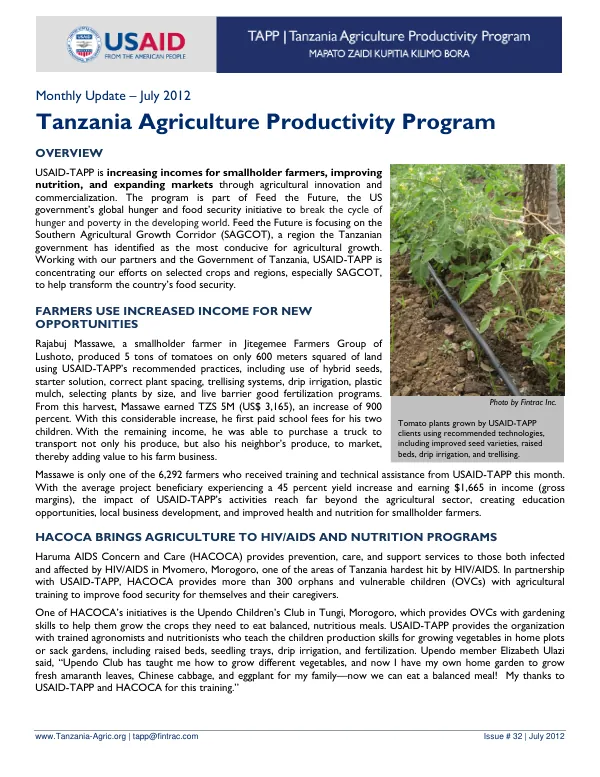
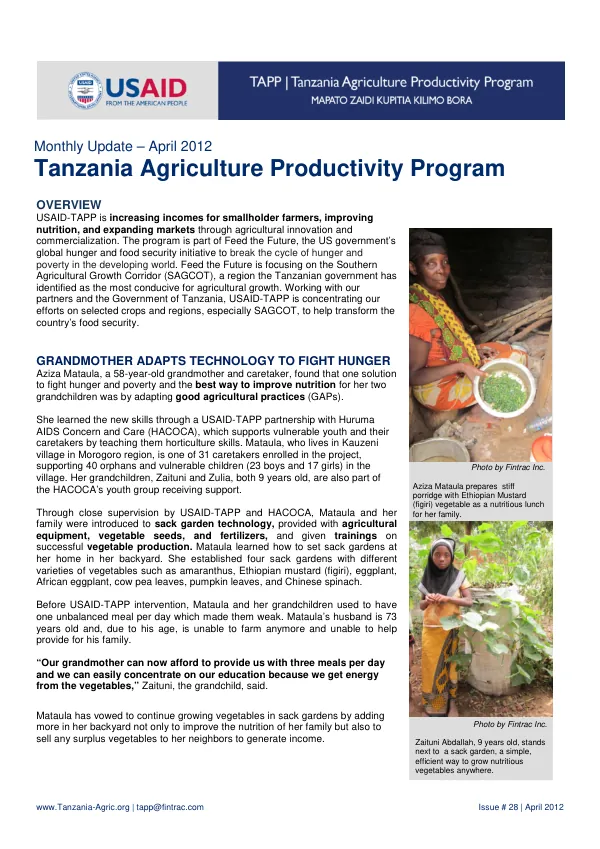
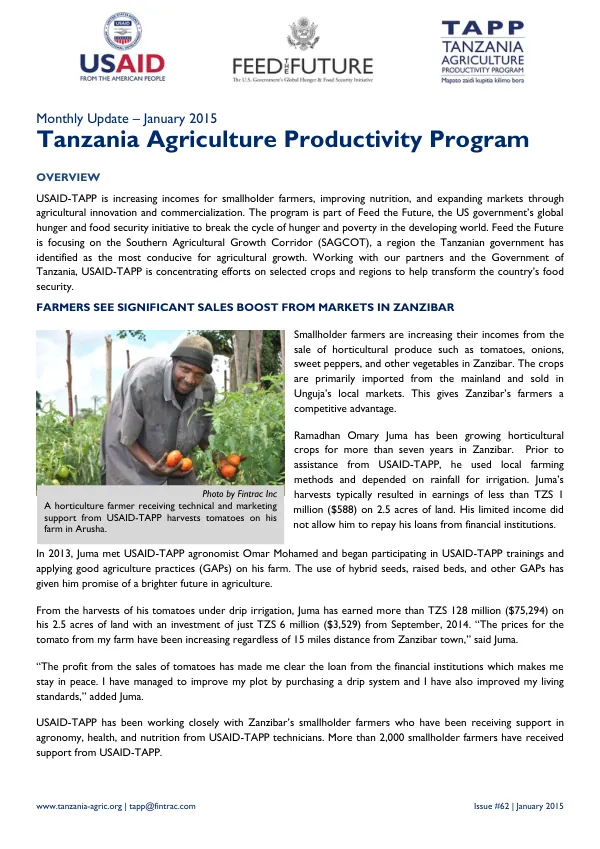
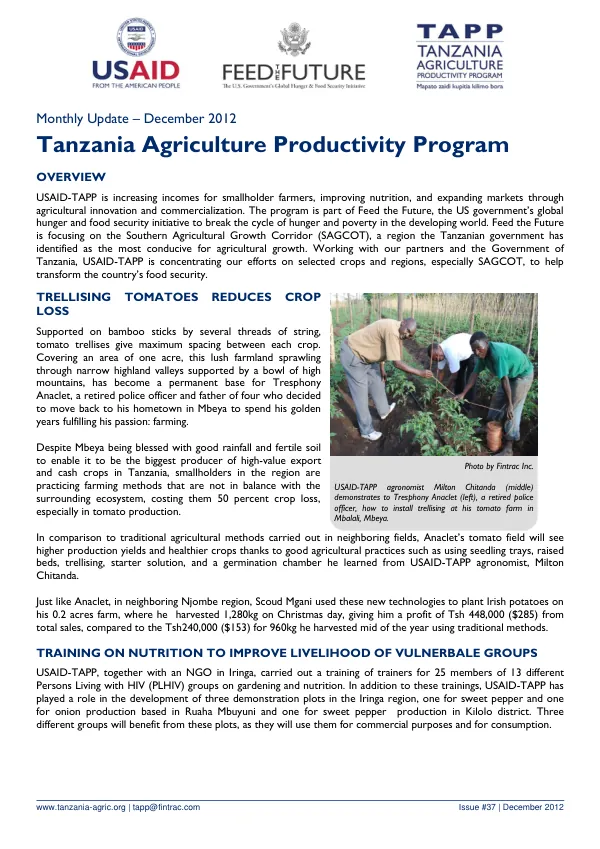
to enhance smallholder farmer incomes through improved productivity, crop diversification, and increased market access. The program is part of the Feed the Future initiative, a global hunger and food security program launched by the US government to break the cycle of hunger and poverty in developing countries. TAPP is focusing its efforts on the Southern Agricultural Growth Corridor (SAGCOT), a region identified by the Tanzanian government as conducive for agricultural growth. The program is working with partners and the Government of Tanzania to concentrate its efforts on selected crops and regions, particularly SAGCOT, to help transform the country's food security. One of the key interventions of TAPP is the promotion of good agricultural practices (GAPs) among smallholder farmers. Agronomists, such as Milton Chitanda, are working with farmers to introduce new technologies, including seedling trays, raised beds, trellising, starter solution, and germination chambers. These practices have resulted in higher production yields and healthier crops, as seen in the case of Tresphony Anaclet, a retired police officer who has increased his tomato production by 50% using GAPs. In addition to GAPs, TAPP is also promoting the cultivation of high-value crops, such as garlic, in the southern highlands of Mbeya and Iringa. With favorable climatic conditions and a growing market demand, USAID-TAPP is working with smallholders to introduce garlic production, which is expected to increase their profits by five times. The program is also promoting the use of Moringa tree leaves as a dietary supplement and live barrier, which has multiple health benefits, especially for individuals living with HIV. TAPP is also supporting female farmers, such as Mama Elly, who has managed to restructure her 3 acres of farmland to accommodate a variety of crops, including tomatoes, banana tissue culture, and avocado. With a good source of water supply and a reservoir currently under construction, Mama Elly has made a profit of Tsh 500,000 from her small beetroot plot and Tsh 4,000,000 from her first tomato harvest. The program is also working with partner organizations, such as ZAPHA+, to promote the adoption of USAID-TAPP technologies among smallholder farmers. In Zanzibar, 16 members of ZAPHA+ have made a profit of Tsh 1,591,980 from selling sweet potato leaves, tomato, sweet pepper, okra, eggplant, African eggplant, Chinese cabbage, and amaranth. The program is also supporting the development of demonstration plots in various regions, including Iringa and Mbeya, to promote the adoption of new technologies and practices among smallholder farmers.
Related documents