USAID DEC
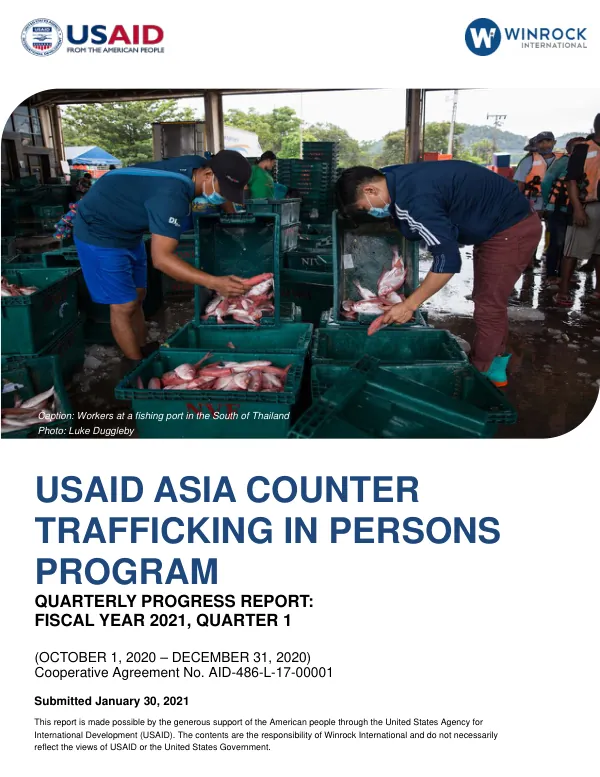
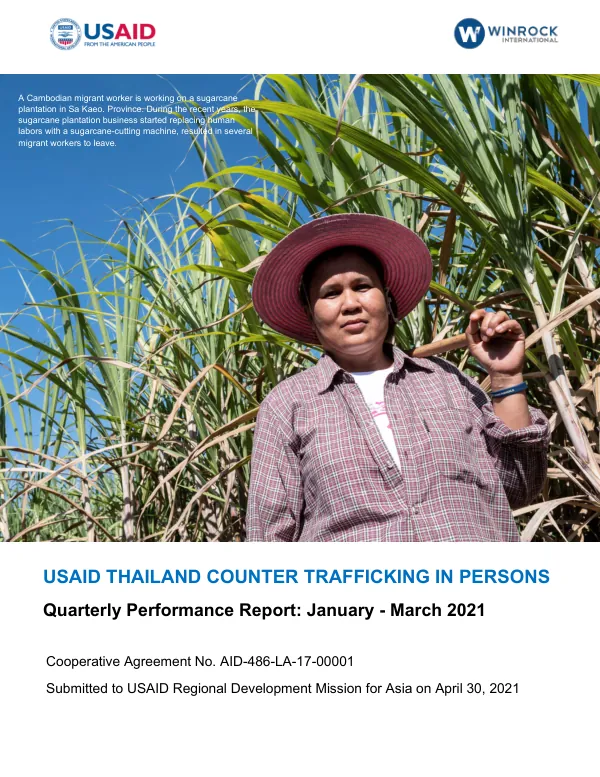
USAID Thailand Counter Trafficking in Persons Quarterly Performance Report: January - March 2021
Sign inUSAID/REGIONAL DEVELOPMENT MISSION FOR ASIA
USAID Thailand Counter Trafficking in Persons Quarterly Performance Report: January - March 2021
The USAID Thailand Counter Trafficking in Persons project is a cooperative agreement between USAID and the Regional Development Mission for Asia.
2021 · 258 pages
Sign in to readA free account is required to download.
Abstract
The project aims to reduce demands and incentives for trafficked labor, empower at-risk populations to safeguard their rights, and strengthen protection systems. The project operates under the Cooperative Agreement No. AID-486-LA-17-00001 and is submitted to USAID Regional Development Mission for Asia on April 30, 2021. The project focuses on three intermediate results: reducing demands and incentives for trafficked labor, empowering at-risk populations, and strengthening protection systems. To achieve these results, the project has several sub-intermediate results, including improving ethical standards and practices among employers and businesses, increasing consumer awareness of trafficked labor, and strengthening the voice of at-risk populations. The project has made significant progress in the first quarter of 2021. In terms of reducing demands and incentives for trafficked labor, the project has improved ethical standards and practices among employers and businesses through initiatives such as the "A Journey to Enabling Fishers' Voice from the Sea" and the "Response Protocol: Equipping Actors with Tools for Effective Response in Phuket." The project has also increased consumer awareness of trafficked labor through campaigns such as "Changing Thai Behaviors Towards Migrants: 'Inside Khonnok'." In terms of empowering at-risk populations, the project has increased awareness and understanding of rights among most at-risk populations through initiatives such as the "Ongoing Collaboration with Private Sector in Surat Thani" and the "Local Community Mobilized to Fight against TIP." The project has also improved access to support services by at-risk populations through initiatives such as the "Construction Workers are Assisted to Protect Their Rights" and the "Provincial Case Management System Strengthened." The project has also strengthened protection systems through initiatives such as the "Multi-Disciplinary Team (MDT) Lessons Learned Meetings in Two Provinces" and the "Developing Annual Provincial Anti-Trafficking in Persons Action Plans." The project has also strengthened support services to better address the needs of trafficked persons through initiatives such as the "Strengthening Provincial Case Referral Mechanisms" and the "Revision of Indicator Tracking Table." The project has made significant progress in achieving its targets, with a 27% increase in household income among program participants compared to the control group. The project has also strengthened the voice of at-risk populations through initiatives such as the "Strengthening the Voice of Migrants through Roundtable Forums" and the "Strengthening the Voice of Migrants in Provincial Policy and Service Delivery." The project has also faced several challenges, including the replacement of human labor with sugarcane-cutting machines in the sugarcane plantation business, which has resulted in several migrant workers leaving their jobs. The project has also faced challenges in implementing the "Ethical Recruitment" initiative, which aims to improve the recruitment practices of employers and businesses. The project plans to continue its efforts in the next quarter, with a focus on implementing the "Supply Chain Visibility in the Sugarcane Industry" initiative and strengthening the "Partnership" between stakeholders. The project also plans to continue its efforts in improving the "Connectivity at Sea" initiative and implementing the "Science, Technology, and Innovation" initiative.