MICHIGAN STATE UNIVERSITY FOUNDATION
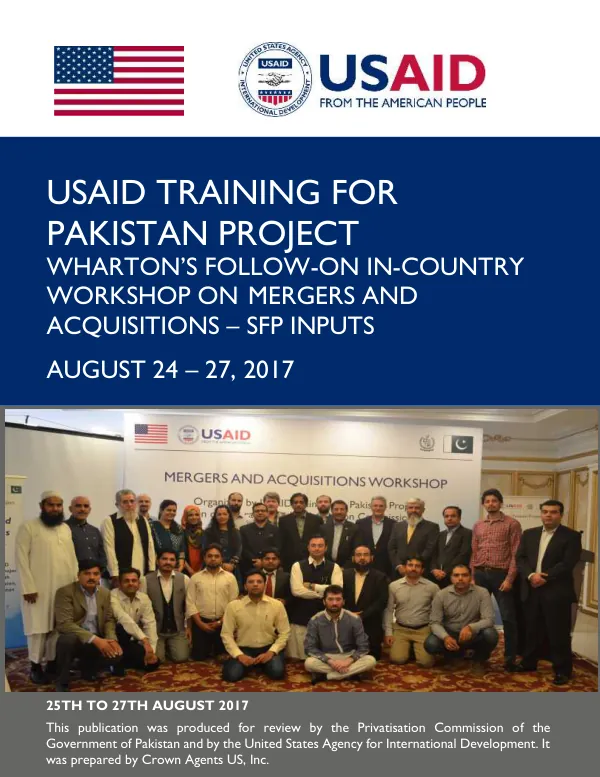
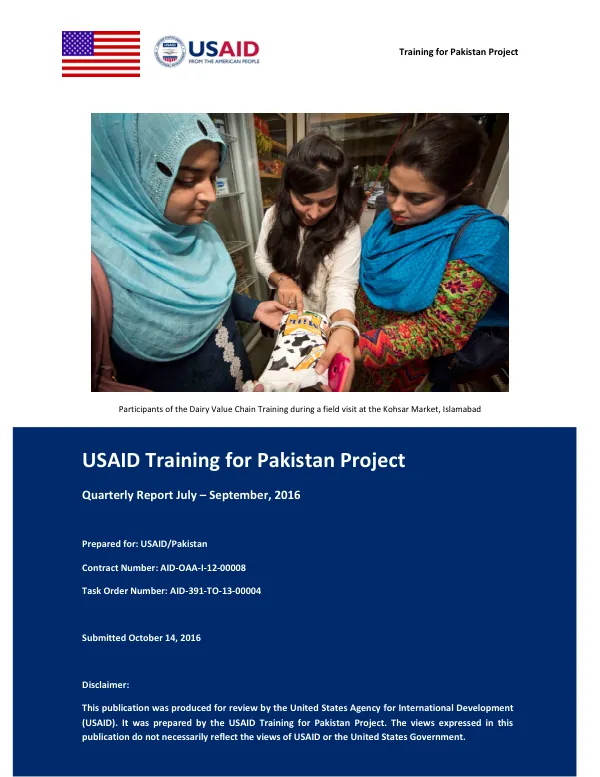
USAID Training for Pakistan Project, Year 1 Semi-Annual Report, May-November, 2013
The USAID Training for Pakistan Project began on May 24, 2013, following the execution of the Task Order contract between USAID and World Learning under the FORECAST II-PT IDIQ.
2013 · 7 pages
Sign in to readA free account is required to download.
Abstract
The four-year project is designed to support USAID Pakistan Development Objective (DO) team goals with the full range of tools available through the mechanism of USAID participant training, including long- and short-term training, technical assistance, small grants, and support for alumni. The security situation in Pakistan remained volatile during this period, but it did not significantly affect World Learning's ability to implement programs, as most in-country work took place in Islamabad, where the security situation is relatively stable. However, the overall security situation did affect the Project's ability to visit a few secondary schools where FATA scholarship students are enrolled and studying. In addition, the Project had to close its office or limit staff mobility on a small number of occasions when the security situation called for such action. Field visits from US Headquarters and office opening were key milestones in the Project's start-up phase. Three World Learning personnel from the Washington, DC office spent much of June 2013 in Islamabad on overlapping visits to support administrative and programmatic aspects of start-up, with an emphasis on staffing, office identification, establishing communications with USAID, and security considerations. The Project's Islamabad-based staff moved into a long-term office space in July, and a Procurement Plan, Branding Strategy and Marking Plan, and Local Compensation Plan and Addendum were submitted to the Mission and received approval. The Project's staffing was also a significant focus during this period. The COP and Finance Director were joined by two other key personnel, the Deputy Chief of Party (DCOP) and Communications Specialist, immediately on start-up. An expatriate Participant Training Advisor arrived in Pakistan shortly thereafter, and a replacement was recruited for the vacant Training Manager position. However, the replacement resigned in a few weeks, and World Learning proposed an internal replacement, but USAID did not approve the nomination. The Project terminated its DCOP on October 10, 2013, and began recruiting a replacement. Subcontracting was also an important aspect of the Project's start-up phase. World Learning signed a subcontract with the U.S. small business RSM to oversee security on the Project in June, and an RSM security consultant spent much of August in Islamabad conducting security assessments and trainings. The Project made significant progress toward obtaining USAID consent to subcontract with a local Pakistani partner, LEAD Pakistan, during this period as well. The Project achieved several significant programmatic accomplishments during the second quarter. The handover of support for 28 U.S. PhD Scholars from the previous Training for Pakistan implementer, the Institute for International Education (IIE), was effectively accomplished within days of award. The U.S. scholar portfolio grew by seven when the Project assumed responsibility for this number of additional students from a closing project implemented by EDC. A particular highlight of this period was that Ms. Afshan Huma successfully defended her dissertation, was awarded a doctoral degree from Michigan State University, and returned home to Pakistan in November. The Project also assumed responsibility for 80 continuing in-country secondary school scholars from the FATA region, placing them at institutions in multiple (non-FATA) regions of Pakistan. The Project signed contracts with seven institutions to host the students, and the students began their studies. In some cases, where the Project was unable to sign contracts with the institutions, agreements were signed directly with the students' guardians, who the Project will reimburse for costs associated with the program. A significant programmatic accomplishment during the second quarter was the administration in-country of the MIT Business Acceleration Program's Conference on Innovation and Entrepreneurship. The conference represented the culmination of a two-month training program for Pakistani entrepreneurs and was attended by nearly 400 participants. At the conference's close, two participants were selected to join the Massachusetts Institute of Technology Business Acceleration Program in the U.S. to participate in a "road show" in the U.S. where they will promote their entrepreneurial concepts to potential investors in America. The Project also recommended a training provider to conduct an "On-Farm Water Management" training in Australia and received approval for a Training Implementation Plan for the activity from the Mission. The Project met with USAID's OSG and EGA DOs to discuss their training plans and expectations. By the end of the period, the Project had received approval for the following Training Requests: FATA Scholarship Program, GAO International Auditor Fellowship Program, LUMS Executive Certificate in Agribusiness Management Program, Australia and U.S. On-Farm Water Management Trainings, MIT Enterprise for Pakistan Conference and Training, and Halal Meat Production and Marketing Training. The Project website design was completed during the second quarter, and was undergoing final revisions at the end of the period. The Project's English and Urdu-language press releases were covered in leading newspapers in November. Project staff in Pakistan presented a description of the TFP Project to USAID implementing partners at the USAID Communications Working Group meeting to generate