USAID DEC
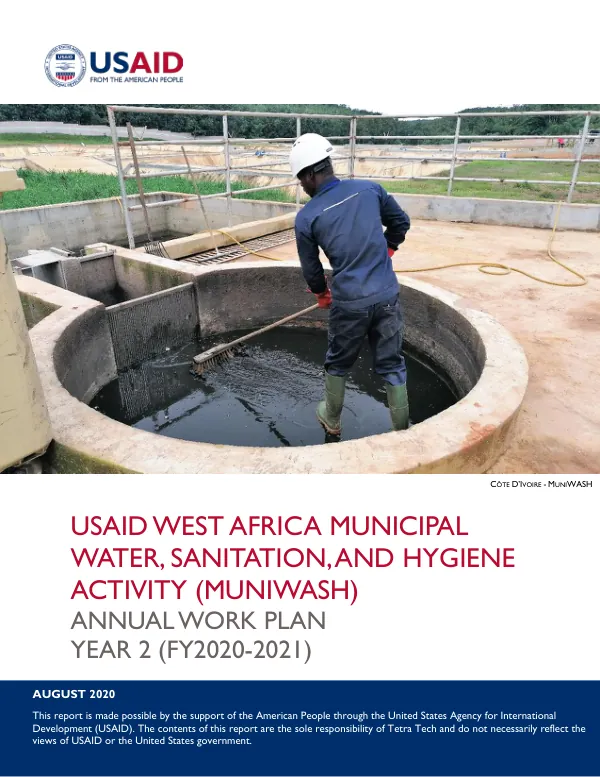
USAID West Africa Municipal Water, Sanitation, and Hygiene Activity (MuniWASH): Annual Work Plan Year 2 (FY2020-2021)
Sign inTETRA TECH
USAID West Africa Municipal Water, Sanitation, and Hygiene Activity (MuniWASH): Annual Work Plan Year 2 (FY2020-2021)
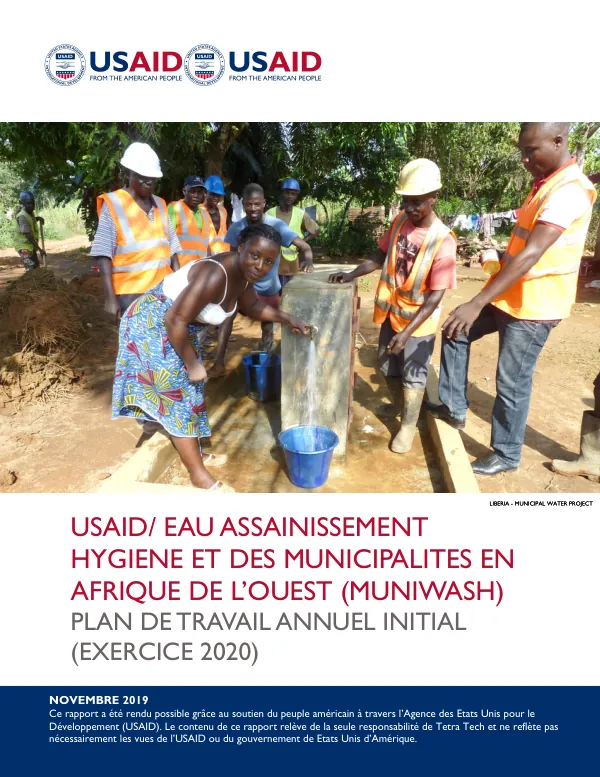
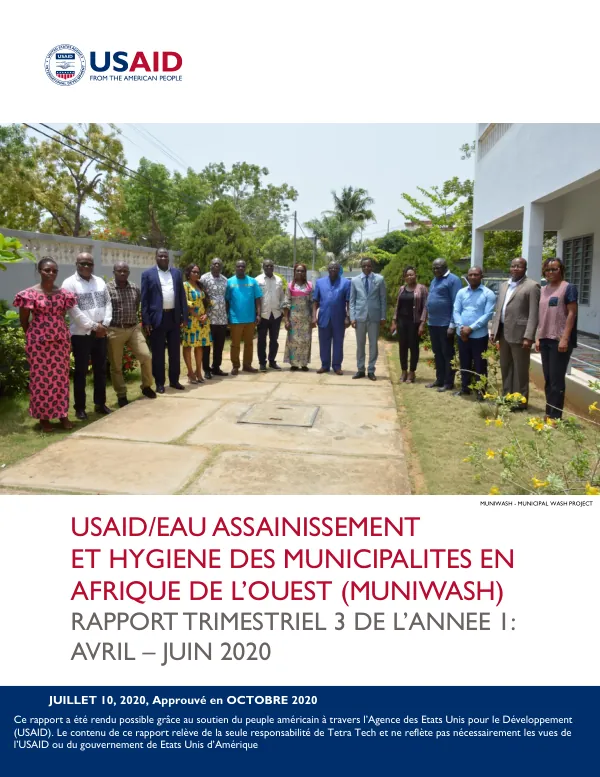
The USAID West Africa Municipal Water, Sanitation, and Hygiene Activity (MUNIWASH) is a project aimed at improving water, sanitation, and hygiene services in West Africa.
2020 · 54 pages
Sign in to readA free account is required to download.
Abstract
The project is implemented by Tetra Tech and is funded by the United States Agency for International Development (USAID). The project's main purpose is to increase access to safe and sustainable water, sanitation, and hygiene services in urban areas of West Africa. The project is organized into four service areas: Financial Sustainability and Private Sector Investment, Operational Reliability, Municipal Governance and Management, and Regional Learning and Knowledge Sharing. Each service area has specific tasks and objectives that are designed to achieve the project's overall goals. For example, Service Area 1 focuses on increasing financial sustainability and private sector investment in water and sanitation utilities and service providers, while Service Area 2 aims to improve operational reliability of water and sanitation utilities and service providers. The project's implementation plan includes a range of activities, such as conducting feasibility studies, preparing feasibility studies, negotiating memoranda of understanding (MOUs), and providing financial support to the sanitation sector. The project also includes tasks related to building capacity of water utilities, improving financial viability of WASH utilities and service providers, and expanding service provider and customer access to financial products. One of the key achievements of the project during Year 1 was the launch of the Municipal WASH Institutional Strengthening Index (ISI), which aims to improve municipal governance and management capacity. The project also conducted market mapping and customer satisfaction reviews, developed tools and resources to support service provider business processes, and improved service delivery and quality of customer service. The project's schedule and major events are outlined in the Work Plan, which includes a range of activities and milestones that are expected to be achieved during Year 2. The project also includes a risk management plan, which identifies potential risks and mitigation strategies to address them. The project's monitoring, evaluation, and learning plan includes activities such as training partners in monitoring, evaluation, and learning, internal data review, and routine data collection and reporting. The project's budget is outlined in the Work Plan, which includes a range of costs associated with project implementation, including personnel costs, travel costs, and equipment costs. The project also includes a staffing and project management plan, which outlines the organizational structure and senior program staffing plan. Overall, the MUNIWASH project aims to improve water, sanitation, and hygiene services in West Africa by increasing access to safe and sustainable water, sanitation, and hygiene services in urban areas. The project's implementation plan includes a range of activities and tasks that are designed to achieve the project's overall goals, and the project's budget and staffing plan are outlined in the Work Plan.